

 Abdullah Kabeer
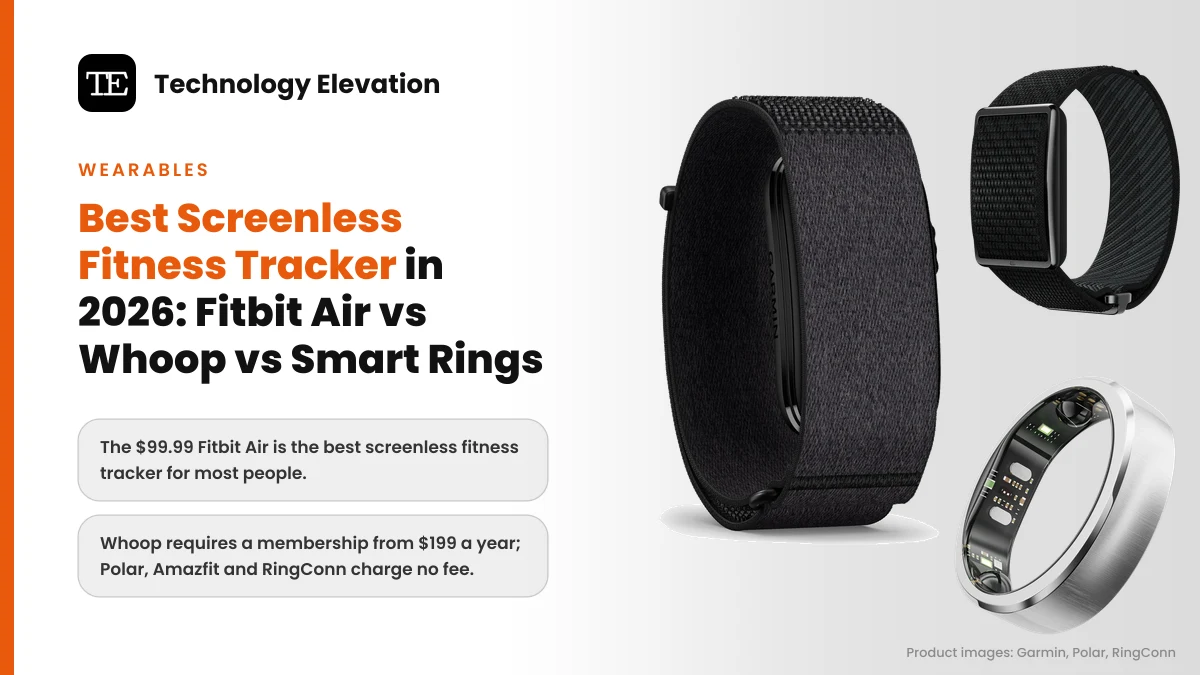
Walk into any gym this year and count the wrists. Plenty of people are back to wearing a plain fabric band with no screen at all, or nothing on the wrist and a ring on one finger. The best screenless fitness tracker does one job well: it collects heart rate, sleep and recovery data quietly, then leaves the reading to your phone.
Google made the category mainstream in May 2026. Its Fitbit Air launched at $99.99 with up to a week of battery life, and it costs less than a single year of Whoop. Garmin followed in July with the CIRQA, while Polar, Amazfit, Oura, RingConn and Samsung already had screen-free options on sale.
The price on the box is only half the story, though. Some of these trackers work fully for free, some lock their best features behind an optional plan, and Whoop sells only a membership with the hardware included. Over two years, the gap between the cheapest and the most expensive pick here is more than $600.
We compared eight screenless trackers on sale in the US using the makers’ own specs, launch announcements and subscription pages, plus named independent reviews. Every battery figure below is the maker’s own rating.
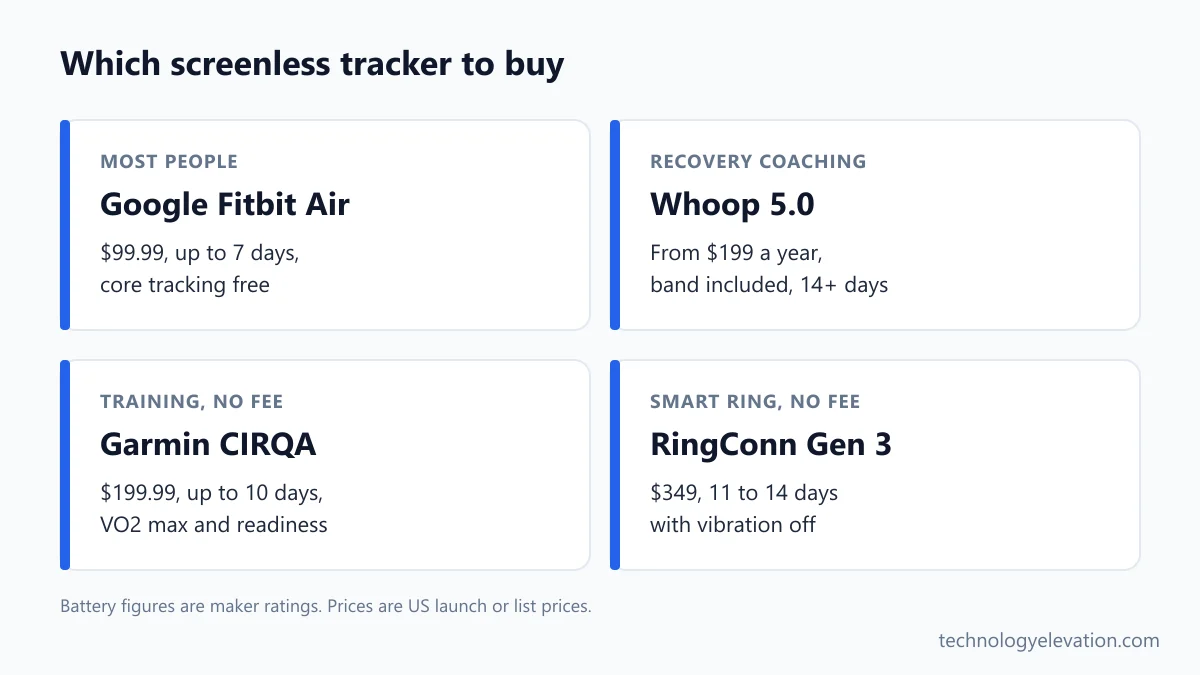
The best screenless fitness tracker for most people is the Fitbit Air
The Fitbit Air is the best screenless fitness tracker for most people. It launched at $99.99, Google rates it at up to a week per charge, and sleep score, readiness, HRV and SpO2 all work without paying for Google Health Premium. Serious athletes should look at Whoop or Garmin.
Every pick, by the job it does best:
- Best overall: Google Fitbit Air
- Best for recovery coaching: Whoop 5.0 (with Whoop MG for ECG)
- Best for training data with no fee: Garmin CIRQA Smart Band
- Best subscription-free heart rate band: Polar Loop
- Best on a budget: Amazfit Helio Strap
- Best smart ring: Oura Ring 5
- Best smart ring with no subscription: RingConn Gen 3
- Best for Samsung Galaxy phones: Samsung Galaxy Ring
| Tracker | Type | Battery (maker rating) | Launch price | Subscription | Two-year cost |
|---|---|---|---|---|---|
| Fitbit Air | Band | Up to 7 days | $99.99 | Optional, $9.99/mo or $99.99/yr | $99.99 free tier, $299.97 with Premium |
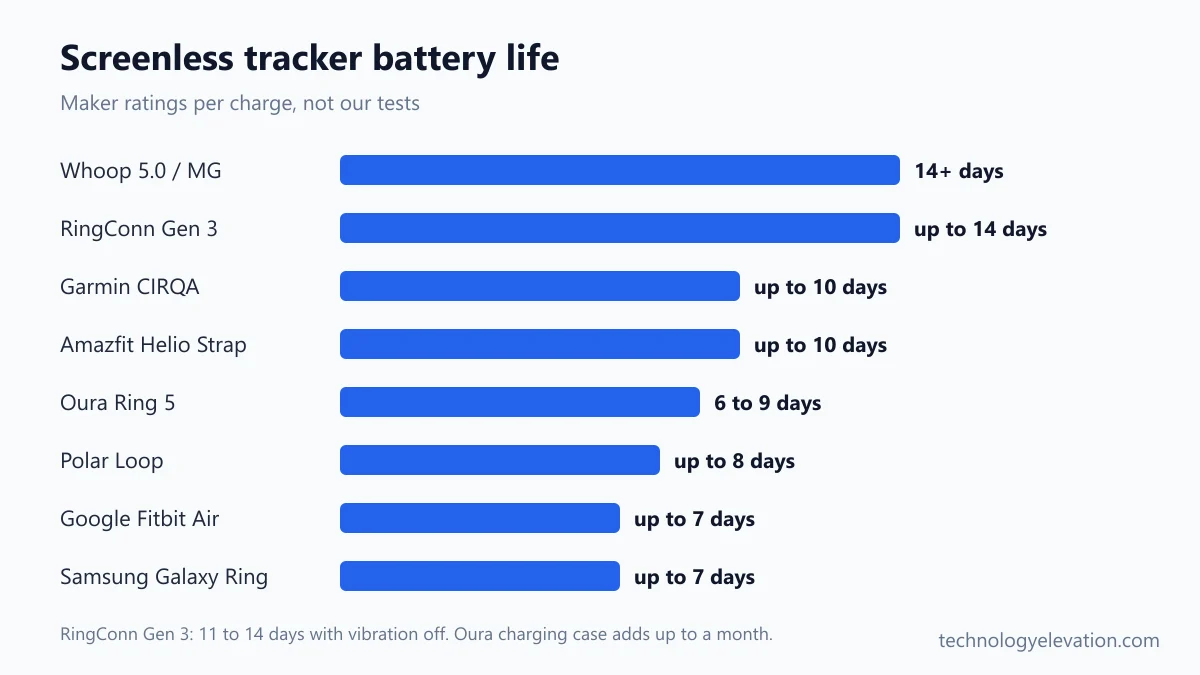
| Whoop 5.0 / MG | Band | 14+ days | Hardware included | Required, $199, $239 or $359 a year | $398 to $718 |
| Garmin CIRQA | Band | Up to 10 days | $199.99 | None needed (Connect+ optional) | $199.99 |
| Polar Loop | Band | Up to 8 days | $199.99 | None needed | $199.99 |
| Amazfit Helio Strap | Band | Up to 10 days | $99.99 | None needed | $99.99 |
| Oura Ring 5 | Ring | 6 to 9 days | $399 / $499 | Needed for full use, $5.99/mo or $69.99/yr | $538.98 and up |
| RingConn Gen 3 | Ring | 11 to 14 days | $349 | None needed | $349 |
| Samsung Galaxy Ring | Ring | Up to 7 days | $399.99 | None needed | $399.99 |
Two-year cost means the launch price plus two years of the cheapest plan that unlocks the tracker’s main features, on annual billing. Free trials would shave a little off the subscription totals. Retail prices on Amazon move often, so treat the launch prices as a ceiling.
Google Fitbit Air: the best screenless tracker for most people
The Fitbit Air is the easiest screenless tracker to recommend. It costs $99.99, works with Android and iPhone, lasts up to a week, and gives you sleep stages, readiness, HRV and heart rhythm alerts for free. Premium adds Google’s Gemini-powered coach for $9.99 a month.
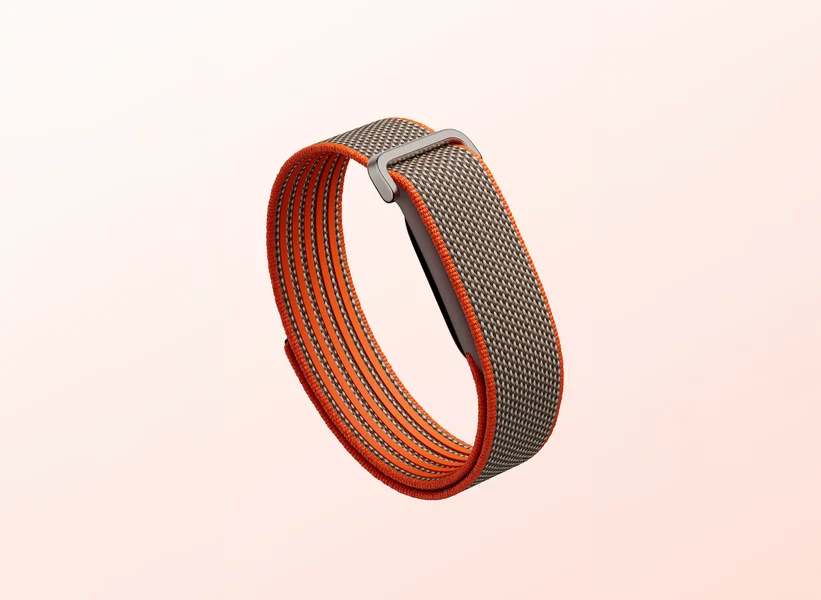
Key specs: Screen-free tracker pod with a Performance Loop band, 24/7 heart rate, heart rhythm monitoring with AFib alerts, SpO2, resting heart rate, HRV, sleep stages. Google rates the battery at up to a week, and five minutes of fast charging gives a full day. Needs Android 11 or later or iOS 16.4 or later. Launch price $99.99, or $129.99 for the Special Edition designed with Stephen Curry.
Google calls the Air its smallest tracker yet, and the whole design leans into sleeping in it. A soft loop band, no screen to light up at 3 a.m., and nothing on the wrist that needs a nightly charge. Extra bands start at $34.99, including a sweatproof silicone Active Band for the gym.
The subscription question is the reason it wins. Google Health Premium costs $9.99 a month or $99.99 a year, and every Air comes with a three-month trial. But Droid Life’s breakdown of the plans shows that sleep score, sleep stages, readiness, HRV, heart rate and SpO2 all stay in the free tier. Premium buys the Google Health Coach, adaptive fitness plans, deeper sleep insights and the workout library.
Already pay for Google AI Pro or AI Ultra? Premium is included at no extra cost, which makes the Air an even easier call.
The honest catch is that the Air is a passive tracker first. It has no GPS of its own, and you will not get the deep training metrics a Garmin offers. Tom’s Guide called it the best no-fuss, subscription-free fitness tracker available, and “no-fuss” is exactly the point.
Buy the Google Fitbit Air now on Amazon
Whoop 5.0: the best for recovery coaching, if you accept the fee
Whoop 5.0 is the best screenless tracker for people who want daily recovery and strain coaching and will pay for it. You do not buy the band. You buy a membership from $199 a year, and the hardware comes included, with a battery Whoop rates at 14+ days.
Key specs: Screen-free sensor in a knit band, 14+ day battery rating, smaller than Whoop 4.0. Memberships: One at $199 a year, Peak at $239 a year, Life at $359 a year with the Whoop MG. Announced in May 2025.
The three tiers matter more than the hardware. One covers sleep tracking, steps, heart rate zones and hormonal insights. Peak adds real-time stress monitoring and Healthspan, Whoop’s estimate of your “Whoop Age” and pace of aging. Life swaps in the Whoop MG band and adds ECG readings, irregular heart rhythm notifications and daily Blood Pressure Insights.
Blood Pressure Insights had a bumpy start. The FDA sent Whoop a warning letter about the feature in July 2025, then issued a closeout letter on June 17, 2026, after Whoop changed the feature and its labeling. The feature shows trends, not a cuff-style reading.
Battery is where Whoop clearly leads the bands. Fourteen days means charging twice a month. Peak and Life members get a wireless battery pack, while One comes with a wired one.
The catch is simple maths. Two years of Peak costs $478, more than a Garmin CIRQA and a Polar Loop combined. If you stop paying, the band stops being useful. Buy Whoop if you will actually read the recovery score every morning and train around it.
Buy the Whoop 5.0 now on Amazon
Garmin CIRQA Smart Band: the best for training data with no fee
The Garmin CIRQA is the best screenless tracker for people who train. It launched at $199.99, Garmin rates it at up to 10 days, and it brings Body Battery, training readiness, HRV status and VO2 max to a band with no required subscription.
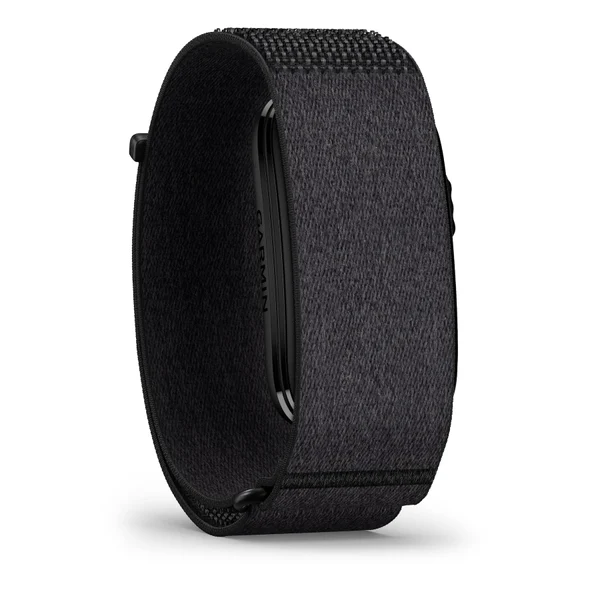
Key specs: Screen-free fabric band, wearable on the wrist or as an armband, wrist heart rate, Pulse Ox, skin temperature, stress, sleep score with stages and nap detection. More than 80 activity profiles, automatic activity detection, connected GPS through your phone and LiveTrack. Up to 10 days of battery. Announced July 21, 2026, at $199.99.
The CIRQA is Garmin’s first screen-free smart band, and it is basically a Garmin watch’s sensor stack without the display. That means the same Garmin Connect app that runners already trust, with training status, workout benefit and recovery time all included.
Wearing it on the upper arm is a nice touch for lifters and rowers. A wrist band can slide around during curls; an armband stays put.
Garmin does sell an optional Garmin Connect+ plan for $6.99 a month or $69.99 a year, which adds AI insights and extra coaching. Everything the CIRQA tracks works without it.
The catch is GPS. Like every band here, the CIRQA uses your phone’s GPS for outdoor runs, so you still carry the phone. Runners who want pace on the wrist should buy a watch instead.
Buy the Garmin CIRQA now on Amazon
Polar Loop: the best subscription-free heart rate band
The Polar Loop is the best pick for anyone who wants Whoop-style recovery data with no subscription at all. It launched at $199.99, Polar rates it at up to 8 days, and every feature works from day one through the free Polar Flow app.
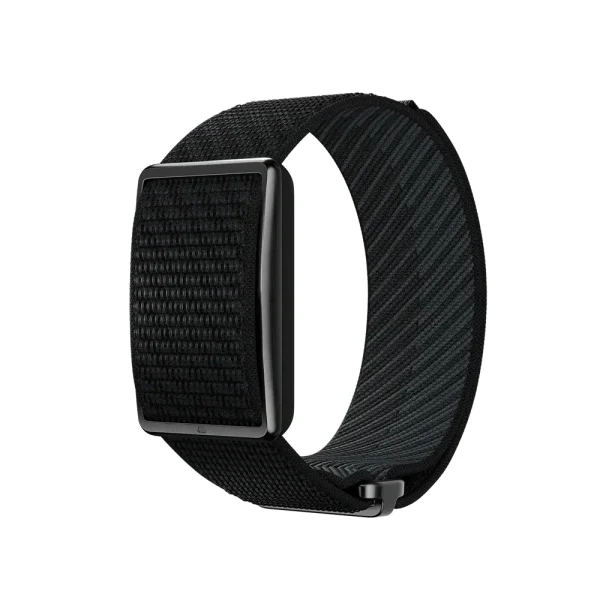
Key specs: Screen-free band with Polar’s optical heart rate sensor, 24/7 heart rate, nightly HRV, sleep stages and a morning sleep score, Nightly Recharge recovery readings, phone GPS for workouts, WR30 water rating, about 29 g with the band. Launched in September 2025 at $199.99.
Polar has built heart rate gear for decades, and the Loop leans on that. Nightly Recharge rolls your sleep, heart rate, HRV and breathing into one morning reading, and a Daily Alertness forecast estimates how sharp you will feel later in the day.
The pricing story is refreshingly plain. Polar’s launch release called it a one-time purchase with every feature ready on day one. Polar does sell an optional training plan add-on, Polar Fitness Program, but the Loop does not need it.
The catch is the app. TechRadar’s review headline put it bluntly: good on heart rate, but a software let-down. Polar Flow is built for athletes and can feel dense next to Google’s or Oura’s apps.
Buy the Polar Loop now on Amazon
Amazfit Helio Strap: the best cheap Whoop alternative
The Amazfit Helio Strap is the best cheap screenless tracker. It launched at $99.99, Amazfit rates it at up to 10 days, and the Zepp app gives you sleep, recovery and training insights without a required monthly fee. Expect less polish than Google or Garmin.
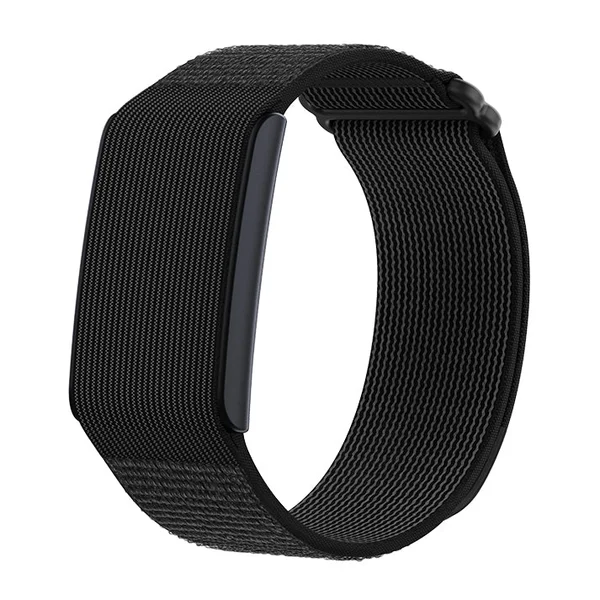
Key specs: Screen-free strap, 24/7 heart rate, sleep and recovery tracking, 5 ATM water resistance, about 0.6 oz, magnetic charger. Up to 10 days of battery. Launched in June 2025 at $99.99.
The Helio Strap costs the same as the Fitbit Air and lasts longer between charges on paper. Ten days is a full working week plus a weekend, which suits anyone who forgets chargers on trips.
Amazfit’s own watches use the same Zepp app, so it slots neatly beside an Amazfit watch if you want a band for sleep and a watch for runs.
The catch is software accuracy in the gym. Android Authority’s review called its automatic workout detection “laughably unreliable.” Start workouts manually and the problem mostly goes away.
Turning on continuous blood oxygen and stress tracking also cuts into that 10-day figure, as Wareable noted. Leave those off unless you need them. If you want an even cheaper band with a screen, our list of the cheap fitness trackers starts well below $100.
Buy the Amazfit Helio Strap now on Amazon
Oura Ring 5: the best smart ring for sleep
The Oura Ring 5 is the best smart ring for sleep and readiness tracking. Oura says it is 40% smaller than the Ring 4 and lasts 6 to 9 days. It starts at $399, and full use needs a $5.99 monthly or $69.99 yearly membership.
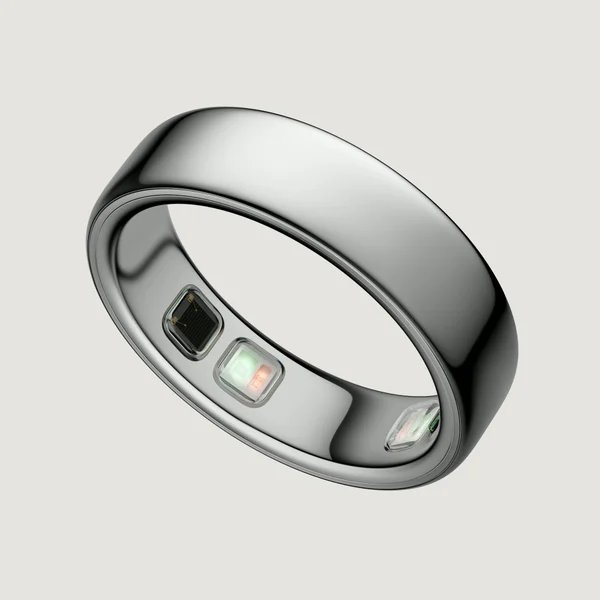
Key specs: 6.09 mm wide and 2.28 mm thick, wearable on the index, middle or ring finger, 6 to 9 days of battery. Silver and Black cost $399; Gold, Stealth, Brushed Silver and Deep Rose cost $499. An optional $99 charging case adds up to a month of battery. Announced May 28, 2026, shipping from June 4.
Oura has led smart rings for years, and the Ring 5 is mostly about comfort. At 2.28 mm thick, it sits closer to a wedding band than a gadget, which matters when you sleep with your hand under a pillow.
Oura calls the Ring 5 its most accurate generation yet and says the finger gives a pulse signal up to 100 times stronger than wrist-based wearables. Those are Oura’s claims, not lab results we can check. The new Health Radar features add Blood Pressure Signals, which watch for nighttime blood pressure trends rather than giving a reading.
The membership is the catch. Without it, you get only the basic daily scores. Over two years, a $399 ring becomes $538.98. The Oura Ring 4 in ceramic is still sold at $349 if you want the same app for less.
Buy the Oura Ring 5 now on Amazon
RingConn Gen 3: the best smart ring with no subscription
The RingConn Gen 3 is the best smart ring if you refuse to pay a monthly fee. It starts at $349, RingConn rates it at 11 to 14 days with vibration off, and it tracks sleep, activity and wellness without a mandatory subscription.
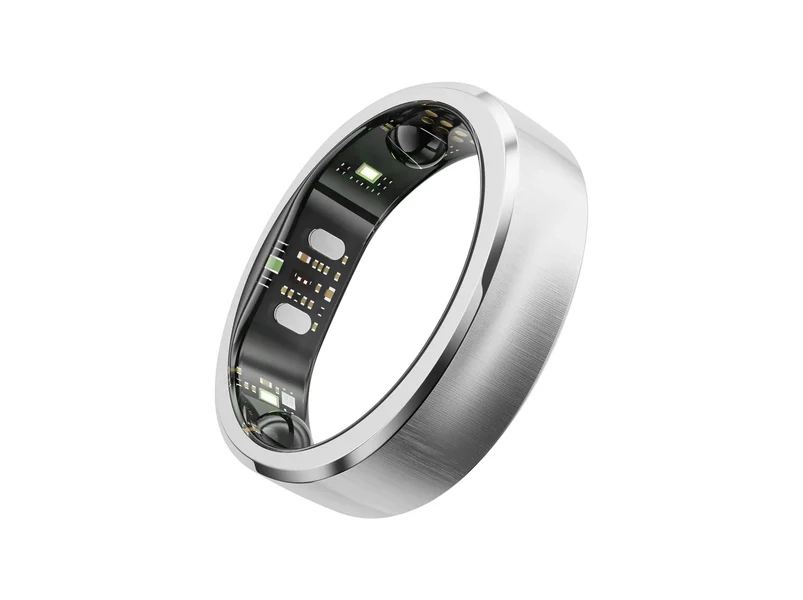
Key specs: 2.3 mm thick, 2.5 to 3.5 g, sizes 6 to 15 on a new sizing system. 11 to 14 days of battery with vibration off, 10 to 12 days with vibration on. Vibration alerts for health events, sitting too long and low battery. Vascular health trend insights. Charging case sold separately for $79. US starting price $349.
Two weeks between charges is the headline. Most smart ring owners charge weekly. A Gen 3 owner can charge on the first and fifteenth of the month and forget about it.
The new vibration motor is useful but limited. RingConn says it does not buzz for phone messages or wake-up alarms, so it will not replace a watch for notifications.
Sizing is the trap. Gen 3 uses a different sizing system from earlier RingConn rings, so use the dedicated sizing kit even if you owned a Gen 2.
RingConn is also safe to buy in the US after Oura’s patent fight. RingConn signed a patent license with Oura in October 2025, while Ultrahuman’s Ring Air was hit by a US import ban that took effect on October 21, 2025.
Buy the RingConn Gen 3 now on Amazon
Samsung Galaxy Ring: the best ring for Galaxy phone owners
The Samsung Galaxy Ring is the best smart ring for people who already own a Samsung Galaxy phone. It launched at $399.99 with no subscription, Samsung rates it at up to seven days, and Energy Score works inside the Samsung Health app you already have.
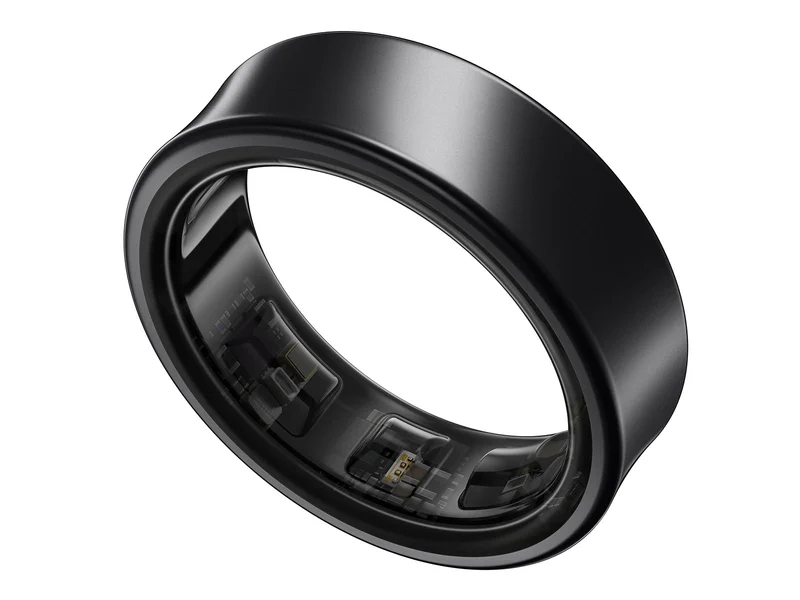
Key specs: Titanium ring in Black, Silver or Gold, nine sizes from 5 to 13, accelerometer, optical heart rate sensor and skin temperature sensor, 10ATM and IP68 ratings, charging case with LED indicators. Up to seven days of battery. Launched in July 2024 at $399.99.
Galaxy owners get a few tricks nobody else offers. Double-pinch your fingers to snap a photo on your phone, find a lost ring through Find My Ring, and see your Energy Score next to your Galaxy Watch data in the same app.
The big limitation is compatibility. Samsung says the ring needs a compatible Galaxy phone, and Galaxy AI features plus Energy Score need a Galaxy AI phone. iPhone owners and Pixel owners should skip it.
The ring is also from 2024, and Samsung has said it is working on the next generation without giving a date. Samsung discounts it often, so it makes most sense on sale.
Buy the Samsung Galaxy Ring now on Amazon
Subscription costs decide the real price of a screenless tracker
Subscriptions decide what a screenless tracker really costs. Whoop requires a membership from $199 a year, Oura needs $69.99 a year for full use, and Google and Garmin sell optional plans. Polar, Amazfit, RingConn and Samsung charge nothing extra.
Here is every fee, taken from the makers’ own pricing:
- Whoop: required. One $199 a year, Peak $239 a year, Life $359 a year. The band is included.
- Oura: needed for full features. $5.99 a month or $69.99 a year after a free first month.
- Google Health Premium (Fitbit Air): optional. $9.99 a month or $99.99 a year, three months free with a new Air, included with Google AI Pro and Ultra.
- Garmin Connect+ (CIRQA): optional. $6.99 a month or $69.99 a year.
- Polar Loop, Amazfit Helio Strap, RingConn Gen 3, Samsung Galaxy Ring: no subscription needed for tracking.
Monthly billing is the expensive way to pay. Twelve months of Google Health Premium at $9.99 comes to $119.88, about $20 more than the annual plan. Oura is the same story: $71.88 a year paid monthly against $69.99 upfront.
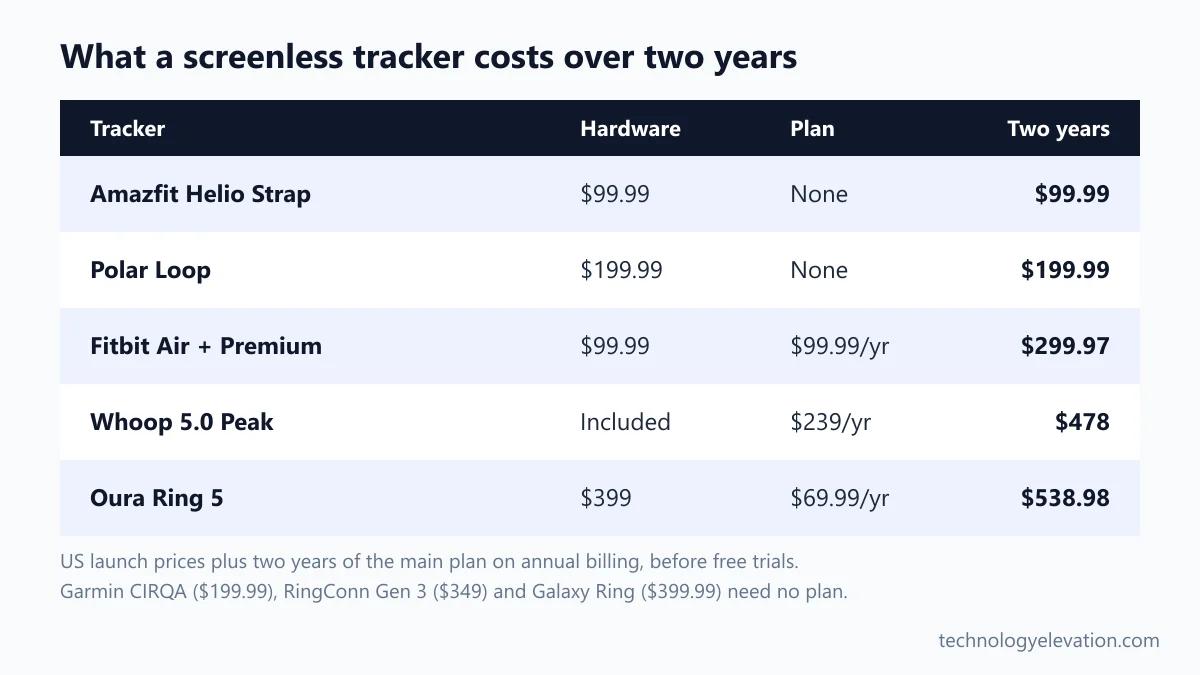
Over three years, the fee gap grows fast. A Whoop Peak member pays $717, while a Polar Loop owner is still at $199.99. That does not make Whoop a bad deal. It means you should be honest about whether you will use the coaching you pay for.
Pick a screenless tracker by fee, form and phone
Choose a screenless tracker by deciding three things in order: whether you will pay a subscription, whether you want a band or a ring, and which phone you use. Battery life and training depth decide the rest once those are settled.
- Decide on the fee first. No fee ever: Polar Loop, Amazfit Helio Strap, RingConn Gen 3, Galaxy Ring, or the Fitbit Air and CIRQA free tiers. Happy to pay for coaching: Whoop or Oura.
- Choose band or ring. Bands are easier to size and stay out of the way when you lift weights. Rings are more comfortable for sleep and look like jewellery at work.
- Check your phone. The Galaxy Ring needs a Galaxy phone. The Fitbit Air needs Android 11 or iOS 16.4 or later. The rest work with both platforms.
- Match battery to your habits. Whoop and RingConn Gen 3 go about two weeks. Fitbit Air and Galaxy Ring go about a week.
- Think about training depth. Garmin CIRQA gives training readiness, VO2 max and training status. The Fitbit Air and rings focus on sleep and daily readiness.
- Size a ring properly. Use the maker’s sizing kit for a full day and night. Fingers swell overnight and after workouts.
Long-time Fitbit fans can compare it with the older bands in our best Fitbit roundup.
Sleep and recovery accuracy claims come from the makers
Every sleep and recovery score here is an estimate built from heart rate, HRV, movement and temperature. Makers describe them as wellness tools, not medical tests. Google’s own footnotes say heart rate and sleep tracking on the Fitbit Air are not medical features.
Be careful with marketing. Oura’s “100 times stronger” pulse signal is Oura’s figure. Whoop’s Blood Pressure Insights and Oura’s Blood Pressure Signals both track trends rather than replacing a cuff. RingConn says Gen 3 does not give systolic or diastolic readings at all.
What you can trust is consistency. A tracker worn every night shows you when your resting heart rate jumps or your HRV drops, and that pattern is useful even if the exact “sleep stage” split is off by a few minutes. If sleep is the real problem, a tracker helps you spot patterns, while habits fix them; these steps to a good night’s rest are a sensible start.
Anything flagged as an irregular rhythm, like the Fitbit Air’s AFib alerts or Whoop MG’s ECG, belongs in front of a doctor, not just in an app.
Buy a smartwatch instead if you need a screen on your wrist
Buy a smartwatch instead of a screenless tracker if you want live pace on runs, built-in GPS, notifications, payments or the time at a glance. Every band here relies on your phone for GPS, and none show messages on your wrist.
Runners are the clearest case. Seeing your pace mid-run is the whole point of a running watch, and a band cannot show it. A cheap running watch with GPS often costs less than a CIRQA.
Garmin fans can get the same Body Battery and training readiness data on a watch; the Garmin watch range adds maps and on-wrist workouts. And if battery anxiety is why you looked at bands, a smartwatch with long battery life can match a Whoop between charges.
Plenty of people end up with both: a watch for the day, and a ring or band for sleep. That is a fine setup, as long as you are not paying two subscriptions for the same data.
Frequently asked questions about screenless fitness trackers
What is the best screenless fitness tracker in 2026?
The Google Fitbit Air is the best screenless fitness tracker for most people. It launched at $99.99, lasts up to a week, and keeps sleep, readiness and HRV tracking free without Google Health Premium.
Does the Fitbit Air need a subscription?
No. Sleep score, sleep stages, readiness, HRV, heart rate and SpO2 work for free. Google Health Premium costs $9.99 a month or $99.99 a year and adds the Gemini-powered Google Health Coach and fitness plans.
How much does Whoop cost per year?
Whoop memberships cost $199 a year for One, $239 a year for Peak and $359 a year for Life. The Whoop 5.0 or Whoop MG band is included, so there is no separate hardware price.
Which screenless tracker has no subscription?
The Polar Loop, Amazfit Helio Strap, RingConn Gen 3 and Samsung Galaxy Ring need no subscription. The Garmin CIRQA also works fully without one, with Garmin Connect+ sold as an optional extra.
Does the Oura Ring 5 require a membership?
Yes, for full use. Oura membership costs $5.99 a month or $69.99 a year in the US after a free first month. Without it, you see only basic daily scores.
Which screenless tracker has the longest battery life?
Whoop rates the Whoop 5.0 and Whoop MG at 14+ days, and RingConn rates the Gen 3 ring at 11 to 14 days with vibration off. The Garmin CIRQA and Amazfit Helio Strap are rated at up to 10 days.
Do screenless fitness trackers have GPS?
No. None of the trackers here has built-in GPS. The Garmin CIRQA and Polar Loop use your phone’s GPS for outdoor workouts, so you need to carry your phone to map a run.
Is a smart ring better than a band for sleep tracking?
A ring is usually more comfortable for sleep, which helps you wear it every night. Bands are easier to size and stay out of the way when you lift weights. Pick the one you will actually wear.
Last checked and sources
Last checked on 15 November 2026 by Abdullah Kabeer. We compared every screenless tracker on sale in the US using the makers’ published specs, launch announcements and subscription pages, then checked fees and features against named independent reviews.
- Google, Fitbit Air announcement and Google Health Premium support page
- Garmin newsroom, CIRQA Smart Band announcement, July 21, 2026
- Whoop, Whoop 5.0 and Whoop MG launch announcement and membership tiers
- US Food and Drug Administration, Whoop closeout letter, June 17, 2026
- Polar, Polar Loop launch release and product page
- Amazfit, Helio Strap product page
- Oura, Oura Ring 5 announcement, store and membership pricing
- RingConn, Gen 3 product and feature pages
- Samsung, Galaxy Ring product page
- Independent reviews and reports by Engadget, Droid Life, MacRumors, Tom’s Guide, TechRadar, Android Authority and Wareable
We update this buying guide when new screenless trackers launch or makers change their subscription prices.
Technology Elevation is reader-supported. As an Amazon Associate, we earn from qualifying purchases. When you buy through links on this page, we may earn a small commission at no extra cost to you.

GIPHY App Key not set. Please check settings