

 Haris Khan
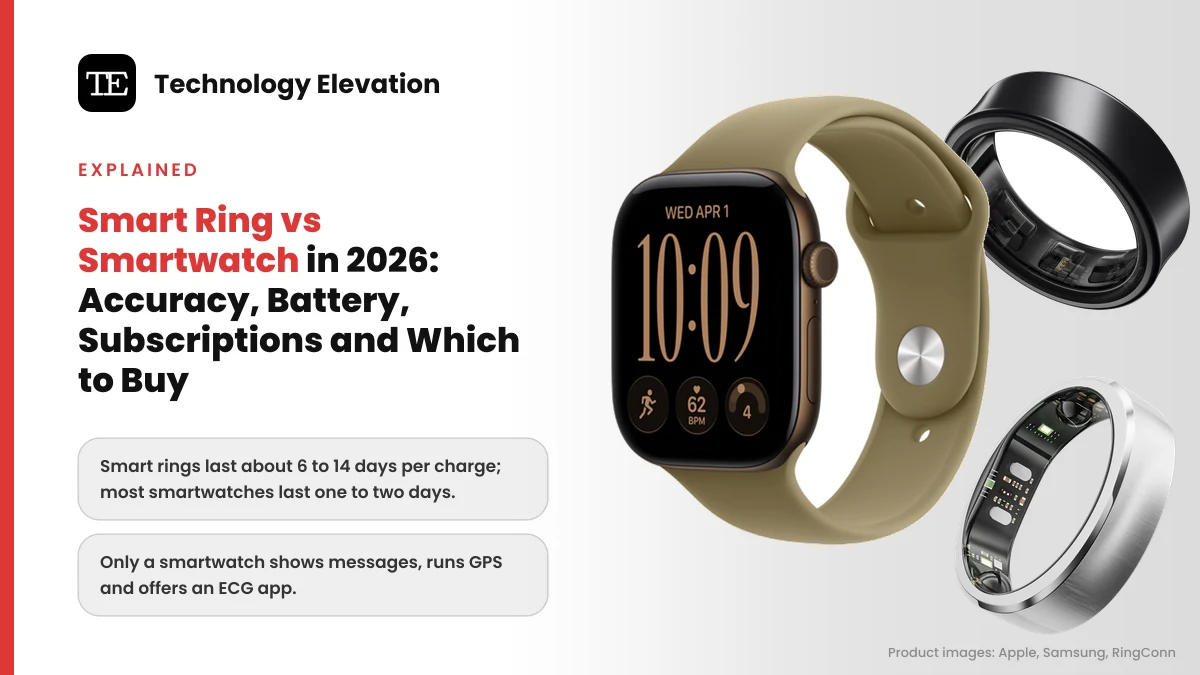
Look at the hands of anyone who tracks their sleep seriously and you will often see two devices: a watch on the wrist and a plain titanium band on one finger. One buzzes all day with messages. The other sits quietly and collects data until morning. That split is the heart of the smart ring vs smartwatch question.
Both measure heart rate, sleep and activity with the same basic optical sensor. Where they differ is everything around that sensor: a screen or no screen, a day of battery or a week, GPS or none, and in one case a monthly fee to see your own data. Oura, the biggest ring brand, charges $5.99 a month or $69.99 a year in the US for its membership, and without it you see only three daily scores.
So the right pick depends less on which device is “better” and more on what you want it to do. Below we compare what each one measures, how the finger and wrist change accuracy, battery, notifications, subscriptions and comfort, using current models from Oura, Samsung, RingConn, Apple and Google. If you already know you want a ring, the best smart ring picks rank the models on sale now.
A smartwatch does more, a smart ring sleeps better
A smartwatch is the better choice for most people because it adds a screen, notifications, GPS, payments and medical-style features like ECG. A smart ring is better if your main goal is sleep and recovery tracking, because it lasts close to a week and disappears on your finger overnight.
| What you care about | Smart ring | Smartwatch |
|---|---|---|
| Battery (maker ratings) | About 6 to 14 days | About 18 to 50 hours |
| Screen and notifications | No screen, no messages | Full screen, messages, calls |
| Built-in GPS | No | Yes |
| ECG app | Not on Oura, Galaxy Ring or RingConn | Yes on Apple Watch Series 12 and Ultra 4 |
| Comfort in bed | Very good | Fine, but bulkier |
| Subscription | Oura needs one for full use; Samsung and RingConn do not | Optional extras only |
| Phone support | Oura and RingConn: iPhone and Android; Galaxy Ring: Galaxy phones | Apple Watch: iPhone; Pixel and Galaxy watches: Android |
If you only ever look at your sleep score and step count, a ring does the job with far less fuss. If you want to see who is calling while your phone is in a bag, only a watch can do that.
Rings and watches measure the same core signals
Smart rings and smartwatches both track heart rate, heart rate variability, sleep stages, skin temperature, blood oxygen and steps. Watches add GPS, an ECG app on many models and live workout screens. Rings focus on overnight and daily readiness scores read later on your phone.
The core sensor in both is photoplethysmography, or PPG. A small LED shines light into your skin and a sensor reads how much bounces back as blood pulses through. From that one signal, software works out heart rate, HRV (the tiny variation between beats that hints at recovery and stress) and breathing rate.
Samsung’s spec list for the Galaxy Ring is a good example of how lean a ring is. It has three sensors: an accelerometer, an optical bio-signal sensor and a skin temperature sensor. RingConn lists heart rate, HRV, blood oxygen, respiratory rate, skin temperature, stress, steps and calories for its Gen 3 ring.
A watch carries much more. Apple’s Apple Watch comparison page lists the ECG app, wrist temperature sensing, the Blood Oxygen app, sleep apnea notifications and a sleep score on the Series 12, plus precision GPS. The Pixel Watch 5 adds irregular heart rate notifications, Loss of Pulse Detection and ECG in select countries.
Workouts show the gap most clearly. A ring can count a run afterwards. A watch shows your pace, distance and heart rate zone while you are still running, and it records the route without your phone.
Finger sensors can read a cleaner pulse, but motion still causes errors
A finger has dense blood vessels close to the skin, so a ring can read a strong pulse signal, especially at rest and during sleep. Oura says its Ring 5 sees a signal up to 100 times stronger than wrist wearables. During exercise, every optical sensor loses accuracy.
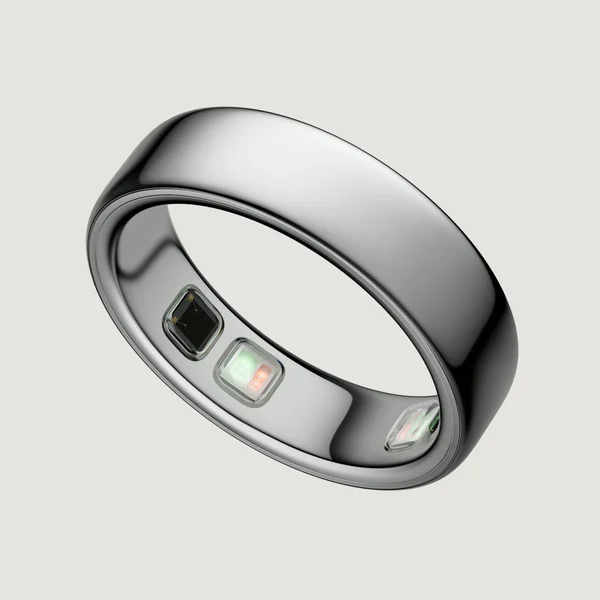
Oura’s “100 times stronger” figure is its own marketing claim, so treat it as a direction rather than a lab result. The practical idea behind it holds up, though: a watch shifts around on the arm more than a snug ring shifts on a finger.
Movement is the bigger problem for both. A 2020 study of 53 people in npj Digital Medicine, “Investigating sources of inaccuracy in wearable optical heart rate sensors”, found that absolute heart rate error during activity was on average 30% higher than at rest. The same study found no statistically significant difference in accuracy across skin tones.
Rings have one specific weak spot in the gym. Gripping a barbell or a kettlebell squeezes the finger and can press the ring into the bar, which is uncomfortable and can scratch the ring. Plenty of ring owners take it off for heavy lifting or wear it on a non-dominant hand.
For sleep, rings have a real practical edge. A watch can slide or lift off the skin when your arm is under a pillow. A properly sized ring stays in contact all night, and no data is useful if the sensor loses touch with your skin at 3 a.m.
Battery life is the clearest win for smart rings
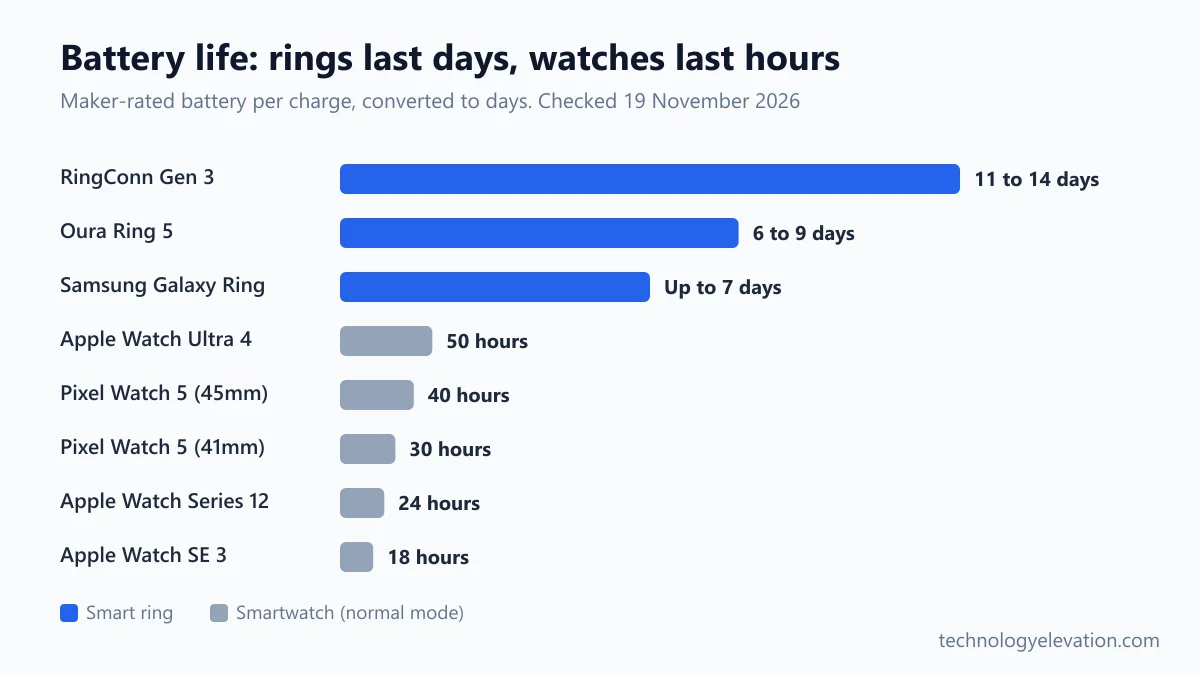
Smart rings last about 6 to 14 days per charge, while most smartwatches last one to two days. The RingConn Gen 3 is rated at 11 to 14 days, the Oura Ring 5 at 6 to 9 days, and the Apple Watch Series 12 at up to 24 hours.
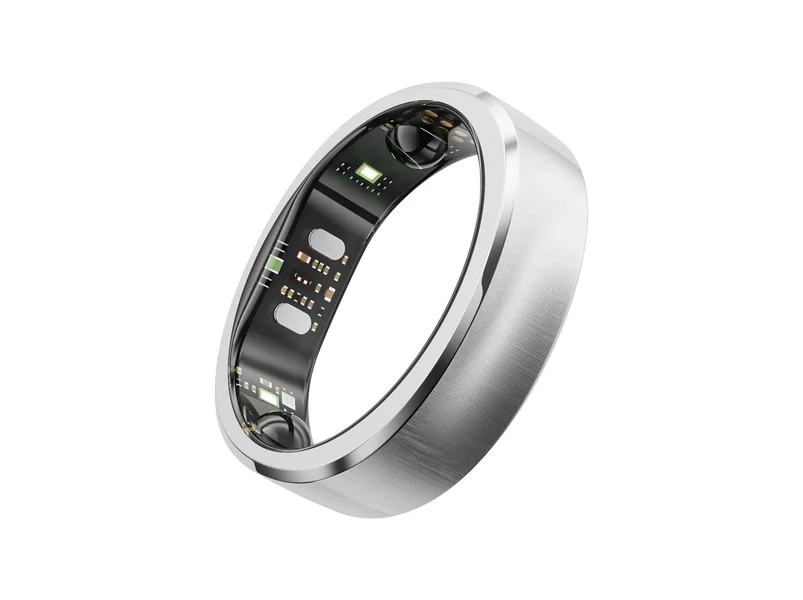
Here are the makers’ own ratings for current models:
- RingConn Gen 3: 11 to 14 days with vibration off, 10 to 12 days with vibration on.
- Oura Ring 5: 6 to 9 days, depending on ring size and use. An optional $99 charging case adds up to a month.
- Samsung Galaxy Ring: up to 7 days for sizes 12 and 13, up to 6 days for smaller sizes, and up to 14 days with a full charge from the case.
- Apple Watch Ultra 4: up to 50 hours, or 84 hours in Low Power Mode.
- Google Pixel Watch 5: up to 30 hours (41mm) or 40 hours (45mm).
- Apple Watch Series 12: up to 24 hours, or 38 hours in Low Power Mode.
- Apple Watch SE 3: up to 18 hours, or 32 hours in Low Power Mode.
Battery is not just about convenience. Sleep tracking only works if the device is on you at night. Many watch owners charge before bed and lose the night’s data, or charge in the morning and miss the shower-to-commute window. Ring owners charge once a week while they cook dinner.
If battery is the main reason you are looking at rings, consider that some watches now last far longer than a day. Some Garmin and Amazfit models are rated in weeks, and our list of the best smartwatch with long battery life covers them.
Notifications and screens belong to the smartwatch
Only a smartwatch can show messages, answer calls, run apps, pay at a till or display the time. Smart rings have no screen at all. The RingConn Gen 3 has a vibration motor, but RingConn says it buzzes for health alerts and reminders, not messages or alarms.
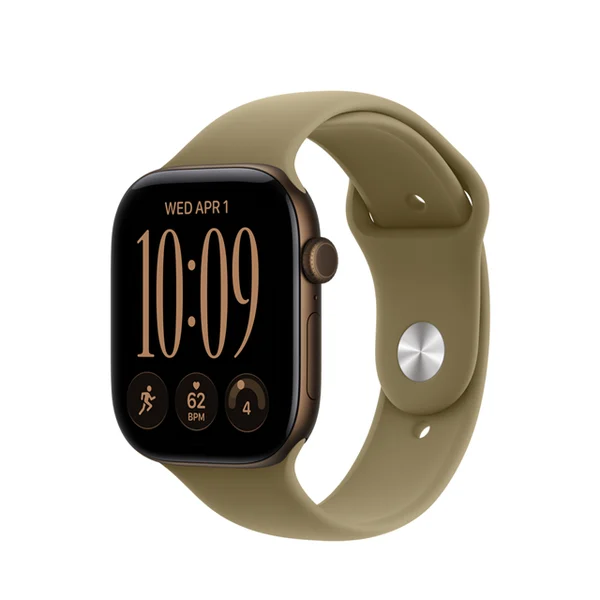
That is the dealbreaker for a lot of people. If you like glancing at your wrist in a meeting to see whether a message is urgent, a ring will frustrate you within a day. Everything a ring knows, you read later in its phone app.
Samsung goes a little further with gestures. On a compatible Galaxy phone, a double pinch of your fingers while wearing the Galaxy Ring can take a photo, and Find My Ring shows where you left it on a map. Neither replaces a screen.
Watches also handle jobs that need a screen or a speaker: emergency calls and, on cellular models, calls with the phone left at home. Apple notes that cellular service on the Series 12 needs a wireless plan. If those jobs matter to you, the best smartwatch picks are the place to start. Pool swimmers should note that a watch also shows laps as you swim, which is why the best watch for swimming list is all watches.
Subscriptions can make a ring cost more than a watch
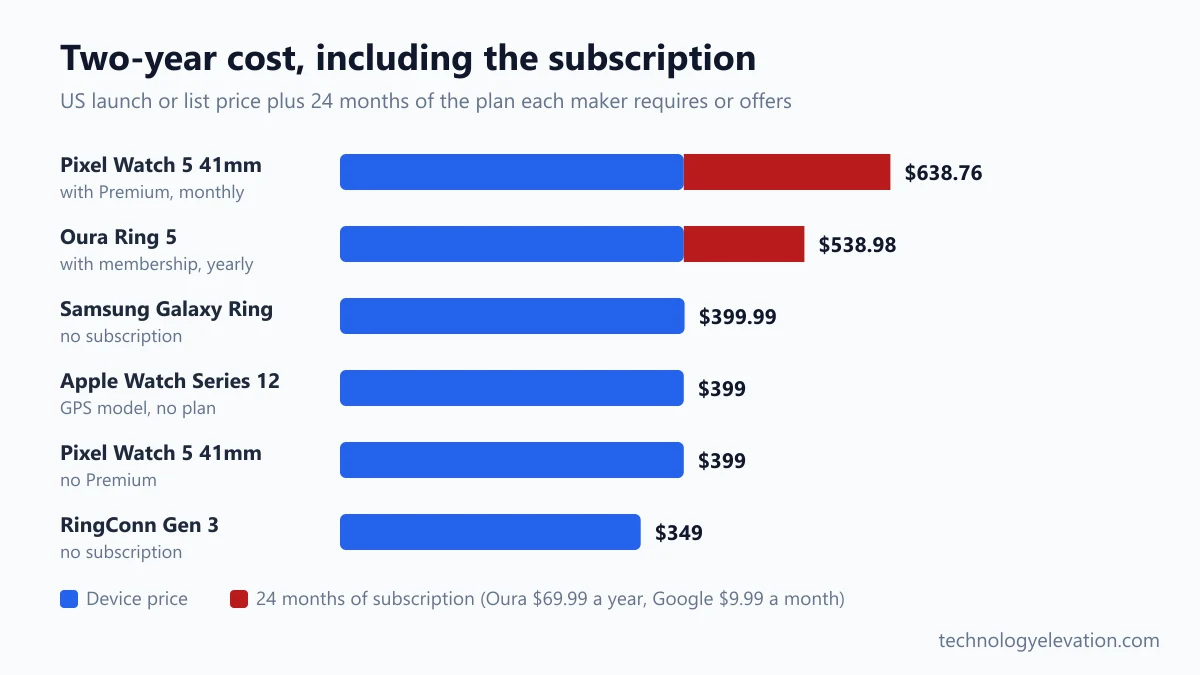
Oura needs a $5.99 monthly or $69.99 yearly membership for full use, so a $399 Oura Ring 5 costs $538.98 over two years. The Galaxy Ring and RingConn Gen 3 need no subscription. Smartwatch subscriptions, such as Google Health Premium, are optional extras.
Oura’s own support page spells out what you lose without paying. Non-members see three daily scores (Readiness, Activity and Sleep), the ring’s battery, their profile and app settings. The detailed sleep stages, trends and newer features sit behind the membership. New members get the first month free.
Samsung’s Galaxy Ring launched in July 2024 at $399.99 with no fee, and Tom’s Guide titled its review “fitness tracking without subscription fees”. RingConn says the Gen 3 provides sleep, activity and daily wellness tracking without a mandatory subscription, at a US starting price of $349.
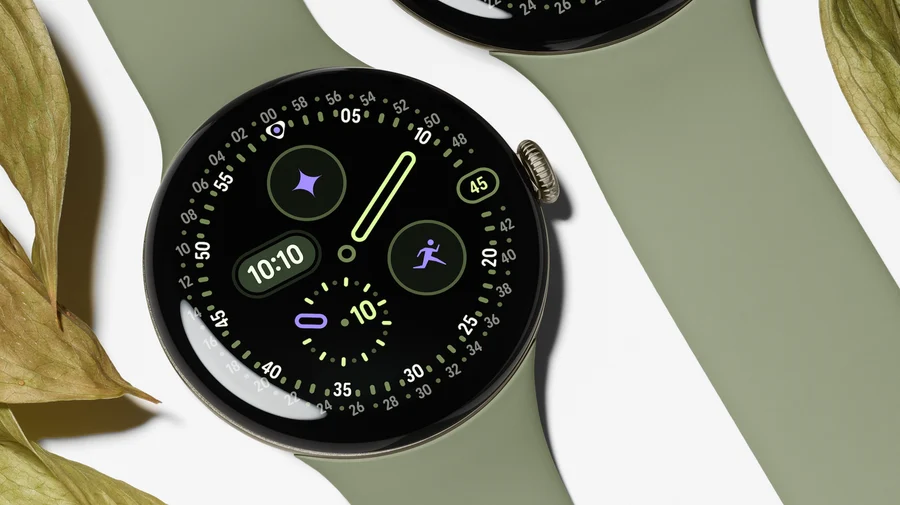
Watches mostly avoid this trap. The Apple Watch’s health features come with the watch. Google’s Pixel Watch 5 tracks your health without a plan, but the Google Health Coach needs Google Health Premium, which renews at $9.99 a month after the trial. An LTE watch adds a monthly carrier fee, which is a separate cost again.
Run the two-year numbers before you buy. A $349 RingConn stays $349. A $399 Oura becomes $538.98 on annual billing. A $399 Apple Watch Series 12 stays $399 unless you add cellular. A $399 Pixel Watch 5 with Google Health Premium paid monthly comes to $638.76, so the fee question applies to watches too.
Comfort and sizing decide whether you keep wearing it
A smart ring is lighter and easier to sleep in than any smartwatch, but it must fit exactly. Fingers swell at night and after exercise, so makers send sizing kits before you buy. A watch strap adjusts in seconds, which makes a watch easier to get right.
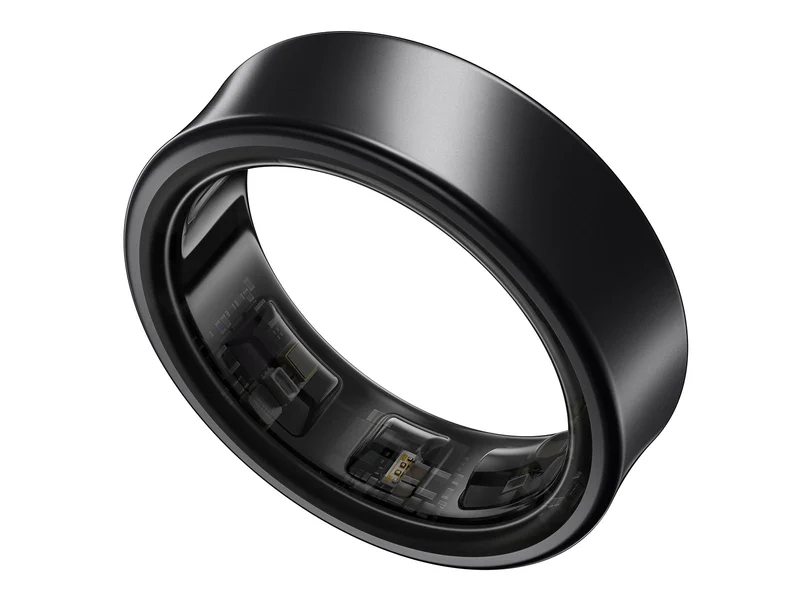
The weight difference is large. Oura says its rings start from 2 grams, and RingConn rates the Gen 3 at 2.5 to 3.5 grams. The Oura Ring 5 is 6.09 mm wide and 2.28 mm thick, closer to a wedding band than a gadget.
Sizing is where rings go wrong. Smart ring sizes do not always match jewellery sizes, and RingConn’s Gen 3 uses a new sizing system that differs from its own earlier rings. Wear the sample from the maker’s kit for a full day and a night, including a workout, before you order. A ring that slips off in the shower is as bad as one that pinches at bedtime.
Oura says its ring can go on any finger of either hand. Samsung’s sample rings come in nine sizes, from 5 to 13, and RingConn offers sizes 6 to 15.
Rings handle water well too. Oura rates the Ring 5 as waterproof to 100 meters, and Samsung gives the Galaxy Ring a 10ATM rating.
Who should pick a smart ring and who should pick a smartwatch
Pick a smart ring if you mainly want sleep and recovery data, hate charging and dislike screens. Pick a smartwatch if you want notifications, workout screens, GPS, payments or an ECG. Your phone narrows the choice further, since some models only work with one platform.
- Decide if you need a screen. Notifications, maps, payments or the time at a glance all mean a watch.
- Check your phone. Apple Watch needs an iPhone 11 or later. The Galaxy Ring needs a Galaxy phone. Oura and RingConn work with both iPhone and Android.
- Count the charges you will tolerate. Nightly charging suits a watch. Weekly charging suits a ring.
- Price the subscription. Add two years of membership to any ring that needs one, then compare.
- Think about your workouts. Runners and cyclists who want live pace need a watch. Heavy lifters may find a ring awkward on the bar.
- Size it properly. Use the ring maker’s sizing kit for at least a day and a night before ordering.
Choose a smart ring if you are a light sleeper chasing better rest, a frequent traveller who forgets chargers, or someone who wears a classic watch and does not want a second screen. Our best smart ring picks compare Oura, Samsung and RingConn side by side.
Choose a smartwatch if you want one device that does everything, especially for runs, rides and staying reachable without your phone. The best smartwatch list matches watches to iPhone and Android owners. Serious runners and hikers should also look at the Garmin watch range, which pairs multi-day battery with deep training data.
Still undecided? A screenless band sits between the two, with a ring’s quiet tracking on the wrist. The best screenless fitness tracker roundup covers Fitbit Air, Whoop and Garmin’s CIRQA.
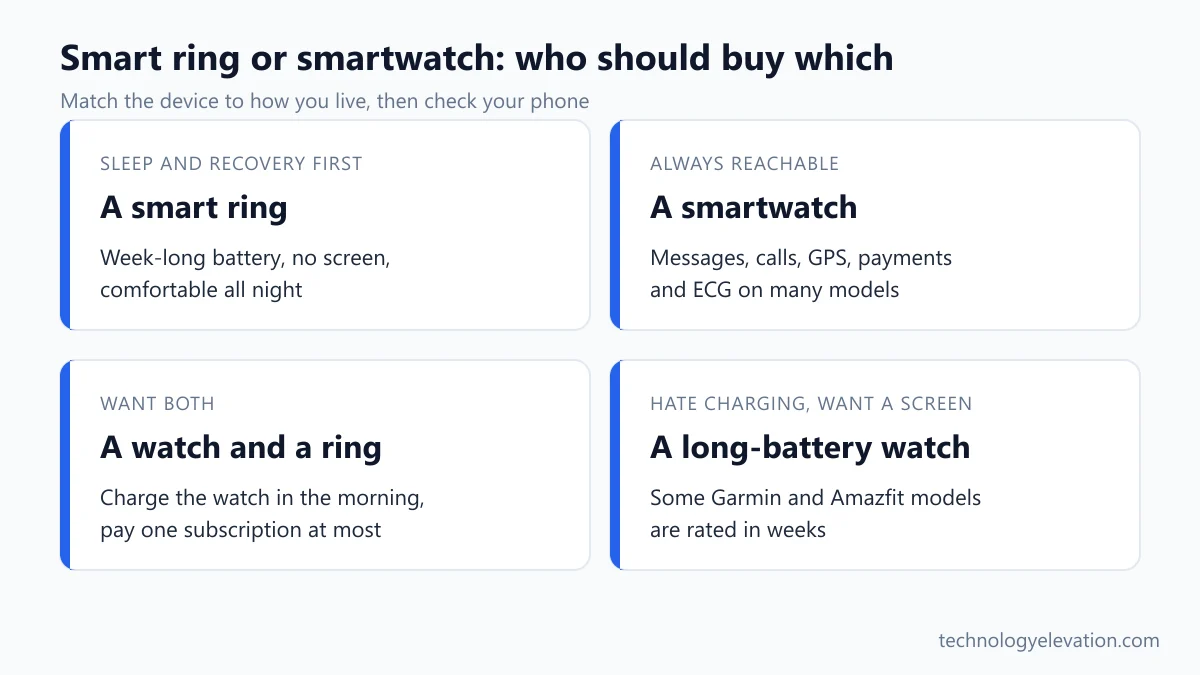
Plenty of people end up with both: a watch by day and a ring at night. Galaxy Ring and Galaxy Watch data both land in the Samsung Health app, and Oura and RingConn run on iPhone and Android, so the pairing works on either platform. Charge the watch while you shower, and avoid paying two subscriptions for the same sleep data.
Sleep and health scores are wellness estimates, not diagnoses
Sleep scores, readiness scores and stress readings on rings and watches are wellness estimates built from heart rate, movement and temperature. They are useful for spotting trends over weeks. They do not diagnose anything, apart from specific cleared features such as an ECG app.
Ring makers are careful with wording here. Oura’s newer Blood Pressure Signals feature looks for nighttime trends rather than giving a cuff-style reading. RingConn says Gen 3 offers vascular health trend insights, not systolic or diastolic numbers.
The most useful thing either device does is notice change. A resting heart rate that jumps by several beats, or an HRV that drops for three nights in a row, often shows up before you feel ill or overtrained. That works on a ring and a watch alike, provided you wear it every night.
Anything a device flags as an irregular rhythm belongs in front of a doctor, with the app’s report on your phone. And better data does not fix poor sleep on its own. If the numbers keep showing short, broken nights, these steps to a good night’s rest are a better next move than a second gadget.
Frequently asked questions about smart rings and smartwatches
Is a smart ring more accurate than a smartwatch?
A smart ring can be as accurate or more accurate for resting heart rate and sleep, because the finger gives a strong pulse signal and a ring stays in place overnight. During exercise, both lose accuracy, and a watch with live heart rate is usually more practical.
Can a smart ring replace a smartwatch?
A smart ring can replace a smartwatch only if you do not need a screen. Rings have no notifications, no built-in GPS and no payments. If you mostly track sleep, steps and recovery, a ring is enough.
Do smart rings need a subscription?
Some do. Oura needs a $5.99 monthly or $69.99 yearly US membership for full use. The Samsung Galaxy Ring and RingConn Gen 3 work fully without any subscription.
How long does a smart ring battery last?
Most smart rings last about 6 to 14 days per charge. Oura rates the Ring 5 at 6 to 9 days, Samsung rates the Galaxy Ring at up to 7 days, and RingConn rates the Gen 3 at 11 to 14 days with vibration off.
Can you wear a smart ring and a smartwatch together?
Yes. Many people wear a watch by day and a ring at night. Galaxy Ring and Galaxy Watch share the Samsung Health app, and Oura and RingConn rings work alongside an Apple Watch or Android watch.
Does a smart ring work with an iPhone?
Oura and RingConn rings work with both iPhone and Android phones. The Samsung Galaxy Ring needs a compatible Samsung Galaxy phone, so iPhone owners should choose Oura or RingConn instead.
Is a smart ring good for working out?
A smart ring is fine for counting steps, calories and casual workouts, but it has no screen and no built-in GPS. Runners who want live pace need a watch, and weightlifters often remove the ring because it presses against the bar.
Last checked and sources
Last checked on 19 November 2026 by Haris Khan. We compared current smart rings and smartwatches using the makers’ published specs, battery ratings and subscription pages, plus one peer-reviewed accuracy study, and kept only facts the sources agree on.
- Oura: Introducing Oura Ring 5 (28 May 2026), Oura Ring 5 store page, Oura membership page and membership support article
- Samsung: Galaxy Ring product page (sensors, battery by size, water resistance, sizing, phone requirement)
- RingConn: Gen 3 what’s new page (price, battery, vibration alerts, sizes, subscription)
- Apple: Apple Watch comparison page and Apple Store pricing for Series 12 and SE 3
- Google: Pixel Watch 5 announcement (Google blog) and Google Health Premium support page
- Bent et al., “Investigating sources of inaccuracy in wearable optical heart rate sensors,” npj Digital Medicine, 2020
- US Food and Drug Administration: General Wellness: Policy for Low Risk Devices (January 2026)
- Independent reviews of the Samsung Galaxy Ring by Tom’s Guide and Engadget, for launch price and no-subscription terms
- US Consumer Product Safety Commission recall database: no recalls listed for Oura, Galaxy Ring, RingConn, Apple Watch, Pixel Watch or Galaxy Watch
We update this guide when ring or watch makers launch new models or change their subscription terms.

GIPHY App Key not set. Please check settings