

 Abdullah Kabeer
Pat your pockets at the front door and one always comes up empty. Keys and wallets vanish in the same places: the car seat, a coat on a chair, the cafe counter. The best tracker for wallet and keys turns that panic into a ten-second job: open an app, play a sound, walk to the noise.
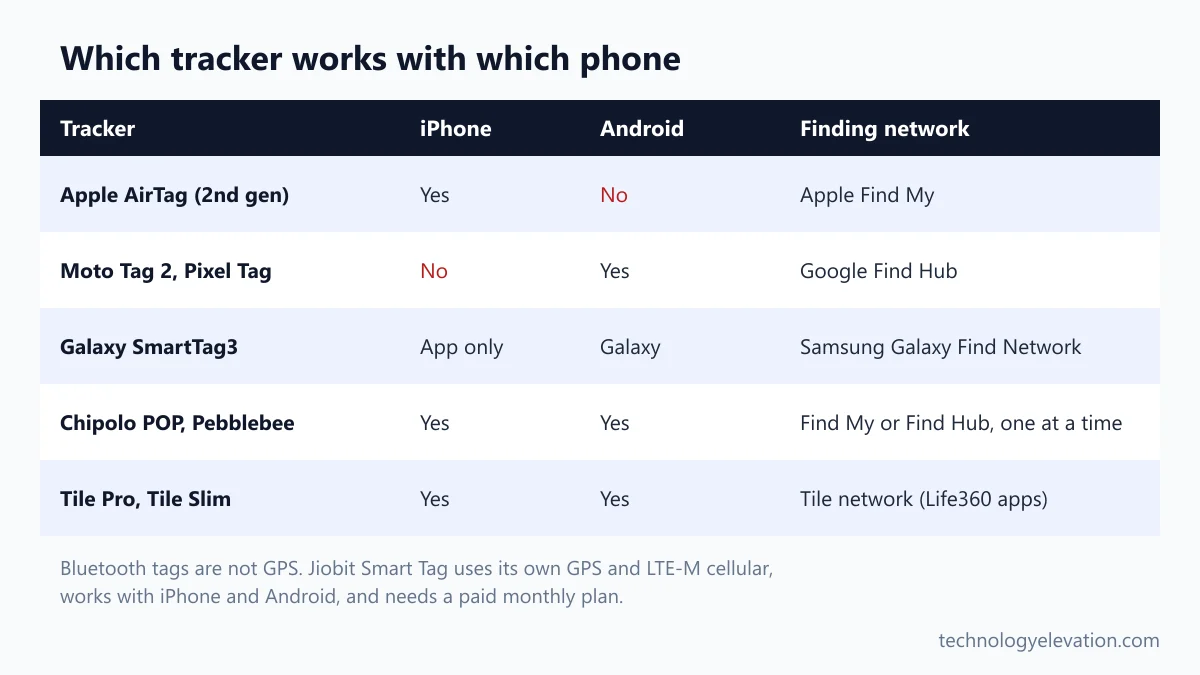
Your phone decides most of the choice. Apple’s AirTag only works with iPhone, Google’s Find Hub trackers only work with Android, and a handful of tags can join either network. Apple refreshed the AirTag in January 2026, and the second-generation model finds items from up to 50 percent farther away with Precision Finding, at the same $29 price.
One correction to the old name of this buying guide: AirTag, Tile, Chipolo and Pebblebee are not GPS trackers. They are Bluetooth tags that borrow millions of nearby phones to report where they are. A true GPS tracker needs a cellular plan, so we included one of those too.
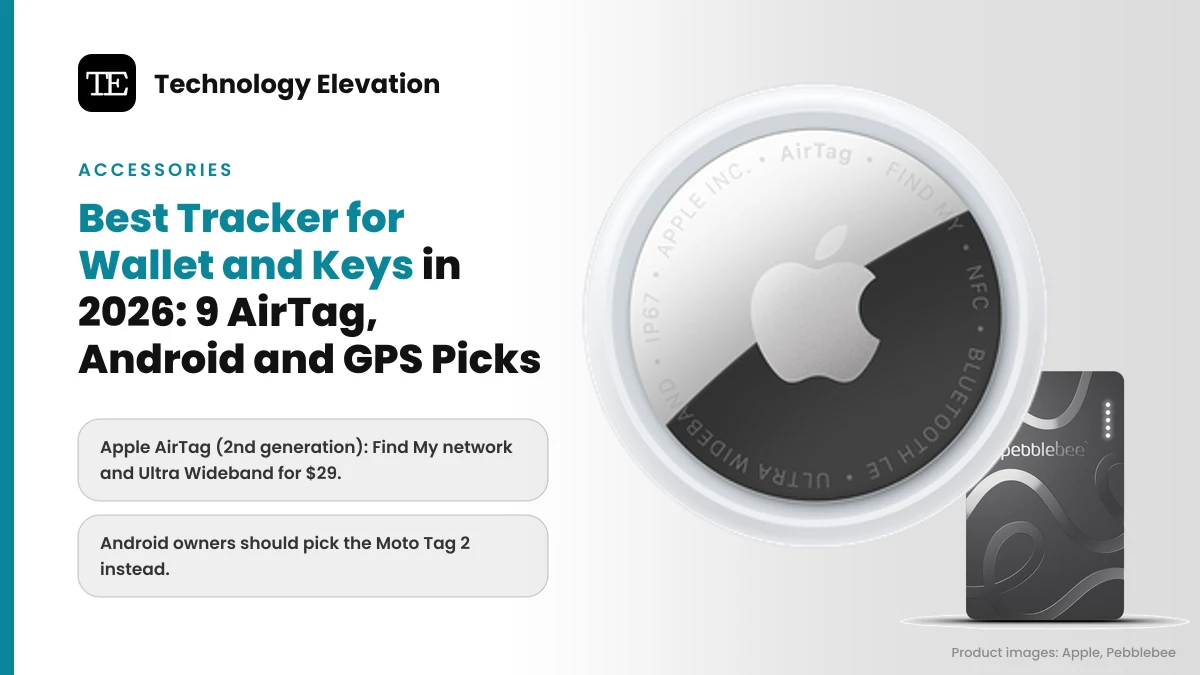
The best tracker for wallet and keys is the Apple AirTag (2nd generation)
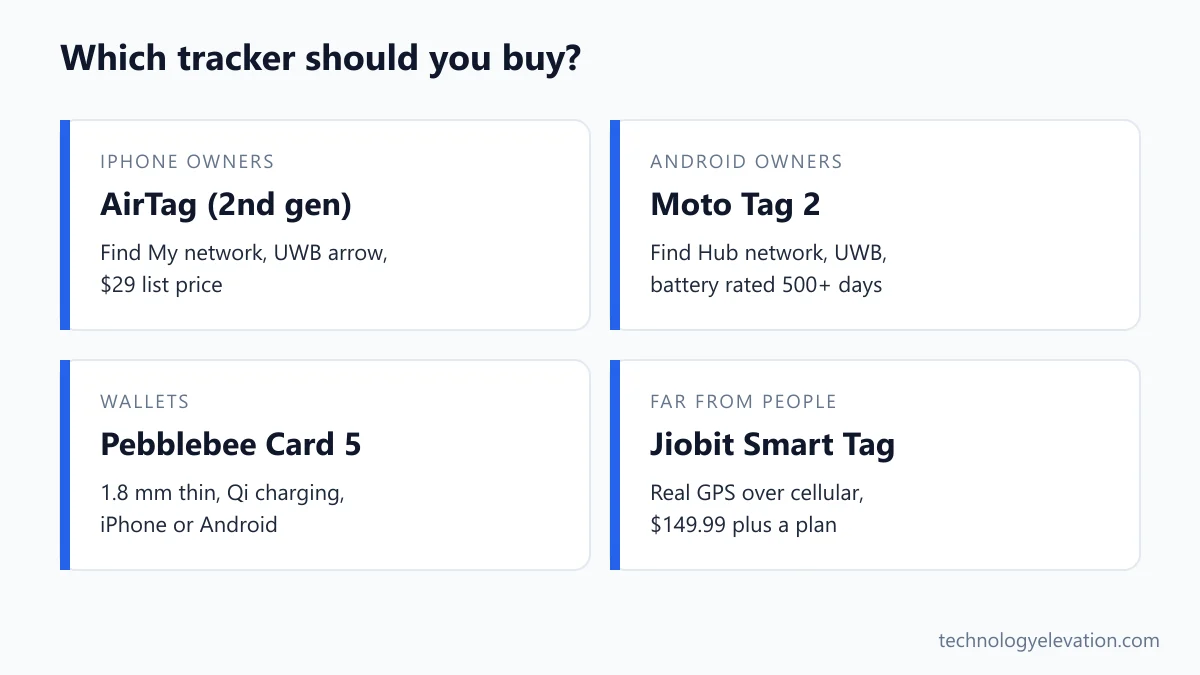
The Apple AirTag (2nd generation) is the best tracker for wallet and keys if you use an iPhone. It taps the Find My network, finds things to the exact spot with Ultra Wideband, and costs $29. Android owners should pick the Moto Tag 2 instead.
Every pick, by job:
- Best overall for iPhone: Apple AirTag (2nd generation)
- Best Android AirTag alternative: Moto Tag 2
- Best for Pixel and newer Android phones: Google Pixel Tag
- Best for Samsung Galaxy phones: Samsung Galaxy SmartTag3
- Best for mixed iPhone and Android homes: Chipolo POP
- Best key finder with the longest range: Tile Pro
- Best wallet tracker card: Pebblebee Card 5
- Best wallet card with no charging: Tile Slim
- Best true GPS tracker for keys and bags: Jiobit Smart Tag
| Tracker | Phones | Network | Battery | List price |
|---|---|---|---|---|
| Apple AirTag (2nd gen) | iPhone, iPad | Apple Find My | CR2032, replaceable, over 1 year | $29 |
| Moto Tag 2 | Android 9 or later | Google Find Hub | CR2032, replaceable, 500+ days | $29.99 |
| Google Pixel Tag | Android 9 or later | Google Find Hub | CR2032, replaceable, over 1 year | $29.99 |
| Galaxy SmartTag3 | Galaxy phones, iPhone via app | Galaxy Find Network | CR2032, up to 550 days | $29.99 |
| Chipolo POP | iPhone or Android | Find My or Find Hub | CR2032, replaceable, 1 year | $29 |
| Tile Pro | iPhone and Android | Tile (Life360) | Replaceable, 1 year | $34.99 |
| Pebblebee Card 5 | iPhone or Android | Find My or Find Hub | Qi rechargeable, 18 months | $34.99 |
| Tile Slim | iPhone and Android | Tile (Life360) | Sealed, 3 years | $29.99 |
| Jiobit Smart Tag | iPhone and Android | LTE-M cellular, GPS, Wi-Fi | Rechargeable, up to 30 days | $149.99 plus plan |
List prices come from each maker’s US store or launch announcement. Four-packs cost less per tag.
Apple AirTag (2nd generation): the best tracker for iPhone owners
The second-generation AirTag is the easiest tracker to recommend to iPhone owners. Setup takes one tap, the Find My network covers almost anywhere people carry iPhones, and Precision Finding points an arrow straight at your keys. Apple lists it at $29, or $99 for four.

Key specs: 31.9 mm across, 8.0 mm thick, 11.8 g, IP67 water and dust resistance, second-generation Ultra Wideband chip, Bluetooth, NFC for Lost Mode, speaker 50% louder than before, user-replaceable CR2032 coin cell rated for more than a year, needs iOS 26 or later. Launched January 26, 2026. List price: $29.
You can now hear the speaker from up to twice as far away. Expanded Precision Finding needs an iPhone 15 or later or an iPhone Air, but not the iPhone 16e or 17e.
The catch: the AirTag has no hole. Budget for a key ring or wallet holder, because the tag will not attach to anything on its own. The first-generation AirTag is discontinued but still sold by some retailers, so check the box says 2nd generation.
Check the Apple AirTag (2nd generation) price on Amazon
Moto Tag 2: the best Android AirTag alternative
The Moto Tag 2 is the best Android AirTag alternative because it pairs Google’s Find Hub network with Ultra Wideband precision finding and a battery Motorola rates for more than 500 days. It works with most Android phones and lists at $29.99.
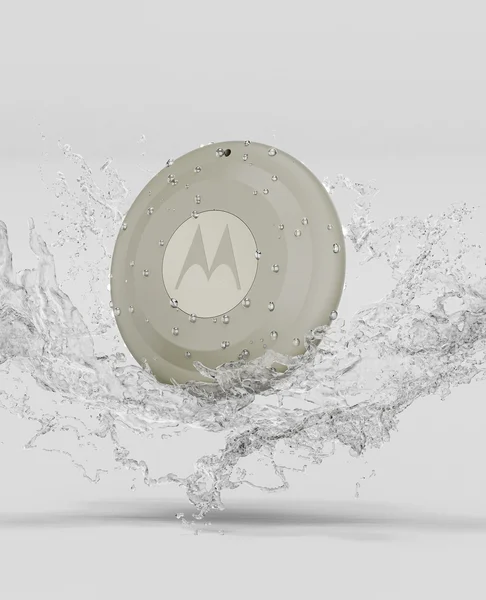
Key specs: Google Find Hub network, Ultra Wideband plus Bluetooth 6.0 Channel Sounding, IP68, replaceable CR2032 coin cell rated for 500+ days, works with Android 9 or later. US launch June 30, 2026. List price: $29.99, or $69.99 for four.
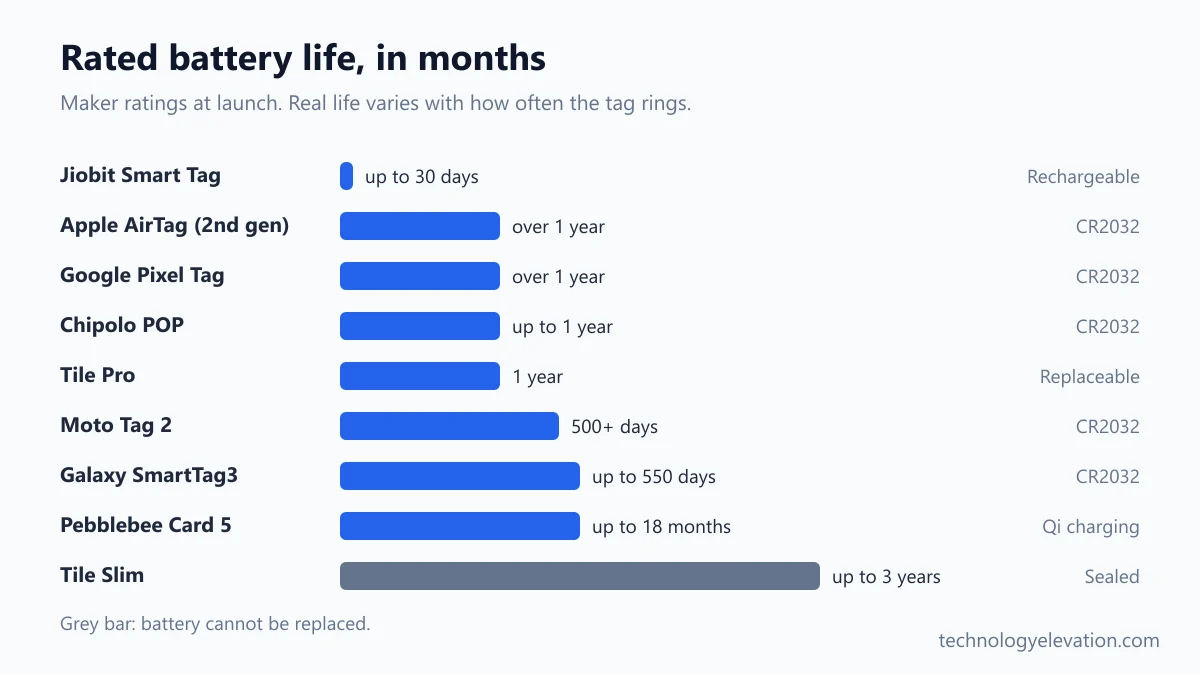
Battery life is the standout. Most coin-cell tags last about a year, and the Moto Tag 2 adds roughly four more months before you need a fresh cell.
The catch: arrow-style finding needs a phone with Ultra Wideband, mostly flagships. Budget phones get a map and a ring button.
Check the Moto Tag 2 price on Amazon
Google Pixel Tag: the best tracker for Pixel and newer Android phones
The Google Pixel Tag is Google’s first own-brand tracker, and the best pick for Pixel owners. It went on sale on November 11, 2026, works on Android 9 or later, and adds Ultra Wideband precision finding on supported phones. The Google Store lists it at $29.99.
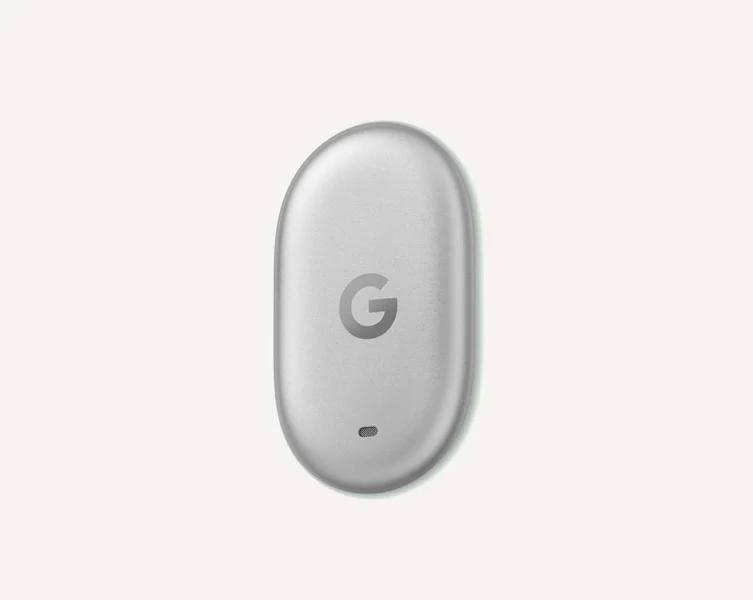
Key specs: 28 x 46.1 x 5.4 mm, 11.8 g with battery, IP67, Ultra Wideband and Bluetooth Channel Sounding, built-in speaker, user-replaceable CR2032 coin cell rated for over a year, share with up to 10 people. List price: $29.99, or $99.99 for four.
At 5.4 mm, it sits flatter on a key ring than a round tag, and sharing with up to 10 people suits family car keys.
The catch: Channel Sounding needs Android 16 and Bluetooth 6.0, and precision finding needs Ultra Wideband. Older phones get the map and ring.
Check the Google Pixel Tag price on Amazon
Samsung Galaxy SmartTag3: the best tracker for Galaxy phones
The Galaxy SmartTag3 is the best tracker for Samsung phone owners. It uses the Galaxy Find Network of more than 900 million devices, offers the longest rated battery of any coin-cell pick, and lists at $29.99. iPhone users can now share it too.
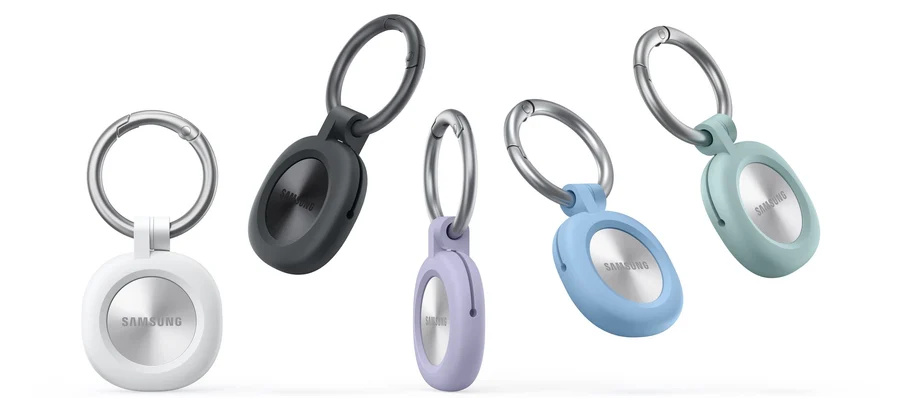
Key specs: About 35% smaller and 33% lighter than the SmartTag2, IP67, Ultra Wideband plus Bluetooth 6.0 Channel Sounding, Compass View from up to 60 meters, CR2032 cell rated for up to 550 days (790 days in Power Saving Mode). Announced September 30, 2026. List price: $29.99, or $99.99 for four.
The catch: iPhones can check and share a tag through SmartThings Find, but Compass View, Ring Phone and Left Behind alerts stay on Galaxy phones.
Check the Galaxy SmartTag3 price on Amazon
Chipolo POP: the best tracker for mixed iPhone and Android homes
The Chipolo POP is the best key finder for families who own both kinds of phone. Each tag joins either Apple Find My or Google Find Hub, so one four-pack can serve everyone. Its ring reaches up to 120 dB, and it launched at $29.
Key specs: Works with Apple Find My or Google Find Hub (one network at a time), ring up to 120 dB through the Chipolo app, IP55, replaceable CR2032 coin cell rated for up to a year, built-in key ring hole, 38.8 mm across. Launch price: $29, or $89 for four.
The built-in hole means no extra holder to buy, and 120 dB cuts through a sofa cushion.
The catch: IP55 means splash resistance, not a dunk in a puddle. Each tag also joins only one network, so decide who will own it before setup.
Check the Chipolo POP price on Amazon
Tile Pro: the best key finder with the longest range
The Tile Pro is the best key finder for people who switch phones or share keys across iPhone and Android. One Tile works with both at the same time, reaches 500 feet over Bluetooth, and rings at 110 dB or more. Tile lists it at $34.99.
Key specs: Bluetooth range up to 500 feet (152 m), alarm 110 dB+, IP68, replaceable battery with a 1-year lifespan, 34.0 x 52.1 x 7.5 mm, works with iOS and Android through the Tile and Life360 apps, SOS alert. List price: $34.99.
Tile is owned by Life360, so tags show up on the same family map as phones. Press the button to ring a silenced phone.
The catch: the Tile network is built from phones running the Tile or Life360 app, so it is much smaller than Apple’s or Google’s. In a crowded city, AirTags and Find Hub tags update far more often.
Check the Tile Pro price on Amazon
Pebblebee Card 5: the best wallet tracker card
The Pebblebee Card 5 is the best wallet tracker card because it is just 1.8 mm thick, recharges on any Qi wireless charger and lasts up to 18 months per charge. It works with Apple Find My or Google Find Hub, and launched at $34.99.
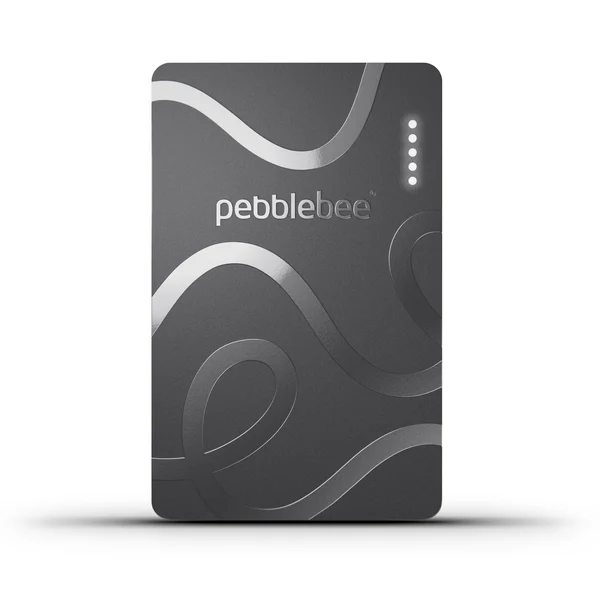
Key specs: Credit-card size, 1.8 mm thick, Qi wireless charging, up to 18 months per charge, Apple Find My or Google Find Hub (one at a time), Bluetooth only, QR code on the back for lost-and-found. Launched November 2025. Launch price: $34.99.
A round AirTag in a bifold wallet makes a lump. A card slips into a card slot, and the Card 5 is thinner than the 2.5 mm Tile Slim.
Rechargeable suits a wallet: the Card 5 tops up on the same pad as your phone. The Chipolo CARD, launched in August 2025 at $39, is the closest rival with the same Qi charging and network choice.
The catch: no Ultra Wideband, so there is no arrow pointing you to the wallet. You follow the map and the ring instead.
Check the Pebblebee Card 5 price on Amazon
Tile Slim: the best wallet card with no charging
The Tile Slim is the best wallet card for anyone who never wants to think about charging. Its sealed battery lasts up to three years, it works with iPhone and Android together, and it is 2.5 mm thick. Tile lists it at $29.99.
Key specs: 53.9 x 85.4 x 2.5 mm, Bluetooth range up to 350 feet (106 m), alarm 104 dB+, IP68, non-replaceable battery with a 3-year lifespan, works with iOS and Android, SOS alert and phone finder. List price: $29.99.
The catch: the same smaller Tile network as the Tile Pro, and a battery you cannot replace.
Check the Tile Slim price on Amazon
Jiobit Smart Tag: the best true GPS tracker for keys and bags
The Jiobit Smart Tag is a real GPS tracker. It reports its own location over a cellular connection, so it works far from any phone. The catch is cost: the device lists at $149.99 and needs a monthly plan, from $8.33 a month.
Key specs: LTE-M cellular plus GPS, Wi-Fi and Bluetooth, 18 g, location accuracy of 1 to 50 feet, updates every 10 seconds in active use, battery up to 30 days, geo-fence alerts, location history. Regular device price: $149.99, plus a subscription.
At 18 g with a monthly bill, the Jiobit is overkill for house keys. Save it for a bag or work keys you cannot afford to lose.
Check the Jiobit Smart Tag price on Amazon
For bigger things, a hardwired GPS tracker for cars handles vehicles, and a GPS tracking watch is the better fit for people.
Bluetooth trackers use crowd-sourced networks, not GPS
A Bluetooth tracker has no GPS chip. It sends out a tiny anonymous signal, and any nearby phone on the same network notes the signal, adds its own location and uploads it, encrypted. You then see where your keys were last heard.
That makes the network more important than the tag. Find My uses Apple devices, Find Hub uses Android phones, and Tile relies on phones running its own apps.
Up close, Ultra Wideband (UWB) takes over: a short-range radio that measures distance and direction, so your phone can show an arrow.
AirTag vs Tile comes down to the phone. On iPhone, the AirTag wins on network size and precision. Tile suits mixed iPhone and Android homes that want every tag in one app.
Six checks for choosing a key finder or wallet tracker
Choose a key finder by matching it to your phone first, then the item. Round tags suit key rings and bags, thin cards suit wallets. After that, decide between a replaceable coin cell and a rechargeable battery, and check for UWB precision finding.
- Match the network to your phone. iPhone means Find My, Android means Find Hub, Galaxy means Samsung’s network. Chipolo and Pebblebee let you choose.
- Pick a shape for the item. Keys need a tag with a hole or a holder. Wallets need a card no thicker than 2.5 mm.
- Look for UWB if you lose things at home. AirTag, Moto Tag 2, Pixel Tag and SmartTag3 point an arrow at your keys on supported phones.
- Check the ring volume. Chipolo POP rings up to 120 dB and Tile Pro at 110 dB+.
- Choose a battery type. Coin cells last about a year. Rechargeable cards need a Qi pad.
- Skip GPS unless you need it. A cellular plan only pays off for items that travel far from people.
Pair a tracker with a MagSafe wallet and your cards stay findable even when they slip off your phone. If you mostly lose house keys, keyless entry door locks remove the problem at the front door.
Unwanted tracking alerts now work on iPhone and Android
Apple and Google built a shared defense against trackers used to follow people. Their Detecting Unwanted Location Trackers specification arrived in May 2024 with iOS 17.5 and Android 6.0 and later. Apple’s announcement names Chipolo, eufy, Jio, Motorola and Pebblebee as makers who committed to compatible tags.
If an unknown tracker travels with you, an iPhone shows an “Item Found Moving With You” alert and Android shows a similar notice with a map, whichever network the tag uses. You can play a sound on it and read how to disable it.
Android adds a manual check. Open Settings, then Safety and Emergency, then Unknown tracker alerts, and tap Scan now. Google says the scan takes about 10 seconds.
Most alerts are innocent, such as a partner’s keys in your car. Apple also states that AirTag is designed for objects, not people or pets.
Coin-cell batteries need care around children
Five of the nine picks run on a CR2032 coin cell, the same flat battery found in key fobs and kitchen scales. A swallowed coin battery can cause severe internal burns in as little as two hours, according to the US Consumer Product Safety Commission.
Reese’s Law, signed in August 2022, made the CPSC set rules for products with button and coin batteries. Since March 19, 2024, these products must keep the battery locked in a compartment that needs a tool or two separate hand movements to open, and carry warning labels.
In January 2025, the CPSC said the original AirTag secured its battery properly but lacked required warnings on units imported after March 2024. Apple added warnings to the battery compartment, box and Find My battery prompt. That was a labeling fix, not a recall.
Store spare cells in their packaging, out of reach, and tape both sides of used ones before disposal. A rechargeable card avoids loose coin cells altogether.
Frequently asked questions about wallet and key trackers
What is the best tracker for wallet and keys?
The Apple AirTag (2nd generation) is the best tracker for iPhone owners, and the Moto Tag 2 is the best for Android. For a wallet, the Pebblebee Card 5 is thin at 1.8 mm and recharges wirelessly.
Is an AirTag a GPS tracker?
No. An AirTag uses Bluetooth and the Find My network of nearby Apple devices to report its location. A true GPS tracker such as the Jiobit Smart Tag has its own GPS and cellular radio and needs a monthly plan.
What is the best Android AirTag alternative?
The Moto Tag 2 is the best Android AirTag alternative for most people. It uses Google’s Find Hub network, supports Ultra Wideband on compatible phones and has a battery rated for more than 500 days. Pixel owners can also choose the Google Pixel Tag.
Which is better, AirTag or Tile?
AirTag is better for iPhone owners because Apple’s Find My network is far larger than Tile’s. Tile is better only if you need one tracker that works with iPhone and Android at the same time.
Can an AirTag work with an Android phone?
No, you need an iPhone or iPad to set up and track an AirTag. Android phones can only detect an unknown AirTag traveling with you and play its sound.
Do wallet tracker cards need charging?
Some do. The Pebblebee Card 5 and Chipolo CARD recharge on a Qi wireless pad, while the Tile Slim has a sealed battery rated for three years that you cannot replace.
Last checked and sources
Last checked on 15 November 2026 by Abdullah Kabeer. We compared Bluetooth and GPS trackers on sale in the US using manufacturer specs, US list prices and launch announcements, and checked each pick for recalls and safety notices.
- Apple, AirTag product page, January 2026 AirTag announcement and May 2024 unwanted tracking announcement
- Google, Pixel Tag announcement, Google Store listing, Pixel Tag specifications and Android unknown tracker alerts help page
- Android, Find Hub compatible devices list
- Samsung US Newsroom, Galaxy SmartTag3 announcement
- Life360, Tile Pro, Tile and Tile Slim product pages, and the Jiobit product site
- Motorola Moto Tag 2 US launch coverage from 9to5Google and Digital Trends
- Chipolo and Pebblebee launch coverage from Engadget, TechCrunch and 9to5Google
- US Consumer Product Safety Commission, Reese’s Law rules, coin battery guidance and recall database
We update this buying guide when trackers launch, change price or are discontinued.
Technology Elevation is reader-supported. As an Amazon Associate, we earn from qualifying purchases. When you buy through links on this page, we may earn a small commission at no extra cost to you.


GIPHY App Key not set. Please check settings
One Comment