

 Abdullah Kabeer
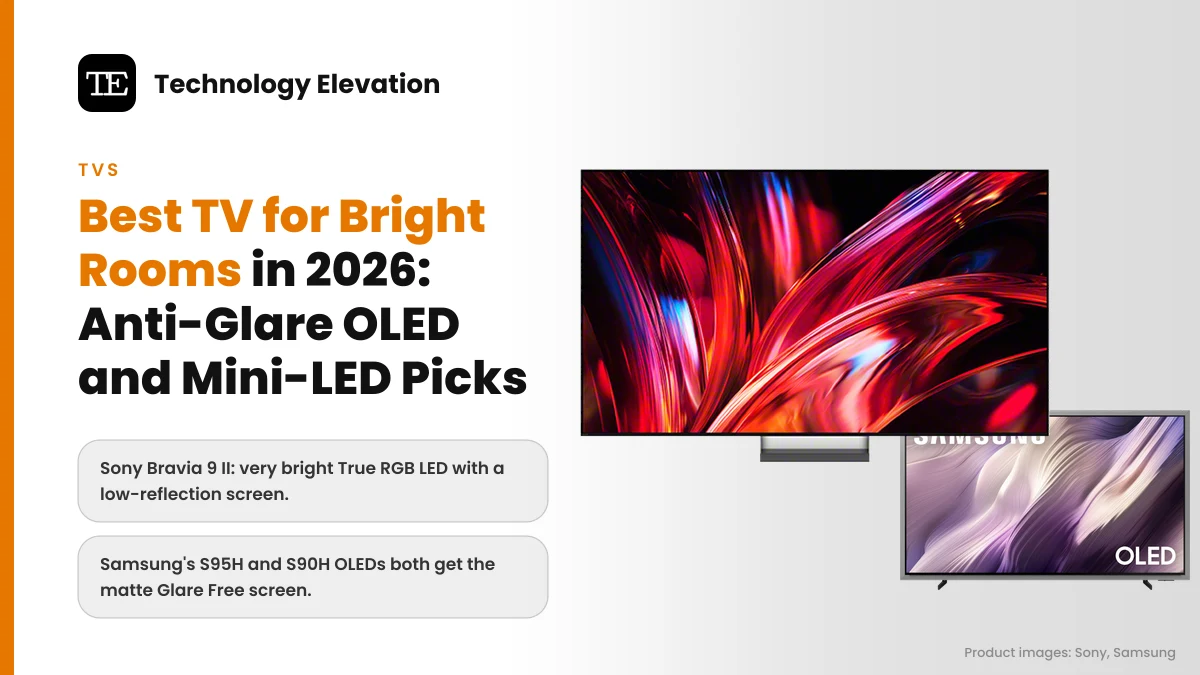
Sit on the sofa at 2pm with the blinds open and look at a dark scene on most TVs. You don’t see the actor’s face. You see the window behind you, the lamp, and a pale version of yourself holding a remote. The best TV for bright rooms fixes both halves of that problem: it shines hard enough to beat the daylight and its screen throws back as little of the room as possible.
That second half is new. Three years ago, a bright-room TV meant a very bright LCD and a lot of hoping. In 2026, every big brand sells a screen coating built for sunny rooms, and Sony’s own Bravia 9 II announcement describes its new Immersive Black Screen Pro as a glare-free, low-reflection treatment for “bright living room environments.”
So the old rule, never buy an OLED for a sunny room, no longer holds. Samsung’s Glare Free OLEDs and LG’s G6 now compete with far brighter mini-LED sets.
We compared the 2026 US lineups from Sony, Samsung, LG and TCL on brightness, screen coatings, HDR formats and price. Every price below is a list or launch price for a named size.
The best TV for bright rooms is the Sony Bravia 9 II
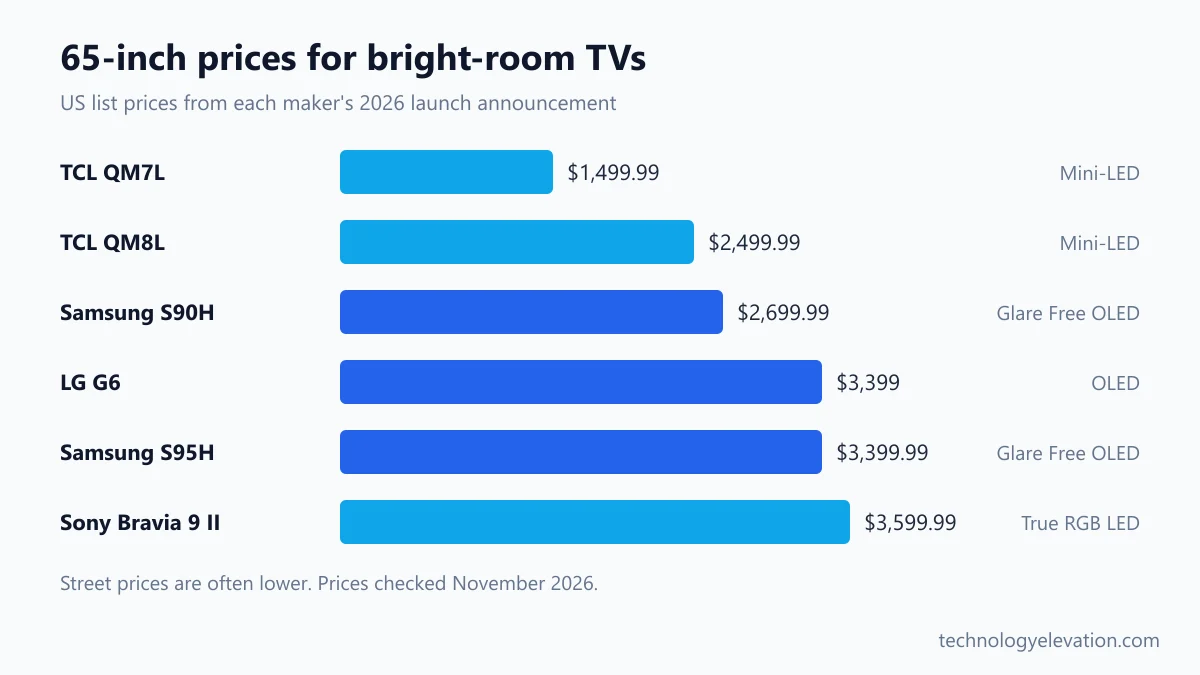
The Sony Bravia 9 II is the best TV for bright rooms. Its True RGB LED backlight gets very bright, its Immersive Black Screen Pro coating fights glare and reflections, and it keeps blacks deep in daylight. The 65-inch lists at $3,599.99, with sizes up to 115 inches.
Every pick, by the job it does best:
- Best overall: Sony Bravia 9 II
- Best OLED for bright rooms: Samsung S95H
- Best for Dolby Vision fans: LG G6 OLED
- Best value for brightness: TCL QM8L
- Best for sunny game rooms: Samsung S90H OLED
- Best on a budget: TCL QM7L
| Model | Panel | Screen treatment | Sizes | 65-inch price |
|---|---|---|---|---|
| Sony Bravia 9 II | True RGB LED (LCD) | Immersive Black Screen Pro | 65 to 115 in | $3,599.99 list |
| Samsung S95H | OLED | Glare Free | 55 to 83 in | $3,399.99 list |
| LG G6 | OLED | Reflection Free Premium (glossy) | 55 to 97 in | $3,399 list |
| TCL QM8L | Mini-LED (LCD) | Anti-Reflection Layer | 65 to 98 in | $2,499.99 list |
| Samsung S90H | OLED | Glare Free | 42 to 83 in | $2,699.99 list |
| TCL QM7L | Mini-LED (LCD) | Anti-Reflection Layer | 55 to 98 in | $1,499.99 list |
TV list prices fall fast once a model has been out for a few months. Samsung’s 2026 OLEDs and Micro RGB sets were already on sale with hundreds of dollars off by summer, so treat every list price here as a ceiling and set a price alert before you buy.
Sony Bravia 9 II: the best TV for bright rooms overall
The Sony Bravia 9 II is the best all-round TV for a sunny living room. It pairs the punch of an LED-backlit set with Sony’s new low-reflection screen, so daytime sport and evening films both look right. Expect to pay $3,599.99 for the 65-inch.
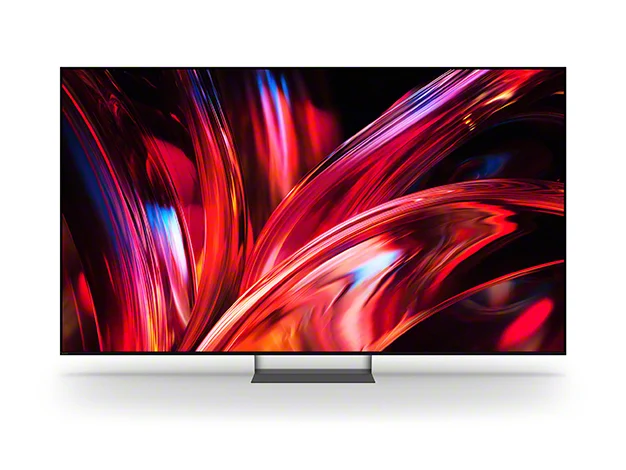
Key specs: 4K LCD with True RGB LED backlight (separate red, green and blue LEDs), Immersive Black Screen Pro screen treatment, Dolby Vision, HDR10 and HLG, Dolby Atmos and DTS:X, Google TV with Gemini. Four HDMI inputs, two of them HDMI 2.1. Sizes 65, 75, 85 and 115 inches. List price: $3,599.99 for the 65-inch, $4,599.99 for the 75-inch, $6,499.99 for the 85-inch.
True RGB is the headline. Instead of shining white or blue light through color filters, Sony uses separate red, green and blue LEDs, so bright colors stay rich rather than washing out.
The screen is the other half. Sony says Immersive Black Screen Pro is new for 2026 and keeps blacks deep “even in bright living room environments.” Reviews are mixed on how well it copes with a window directly opposite the screen, so placement still matters.
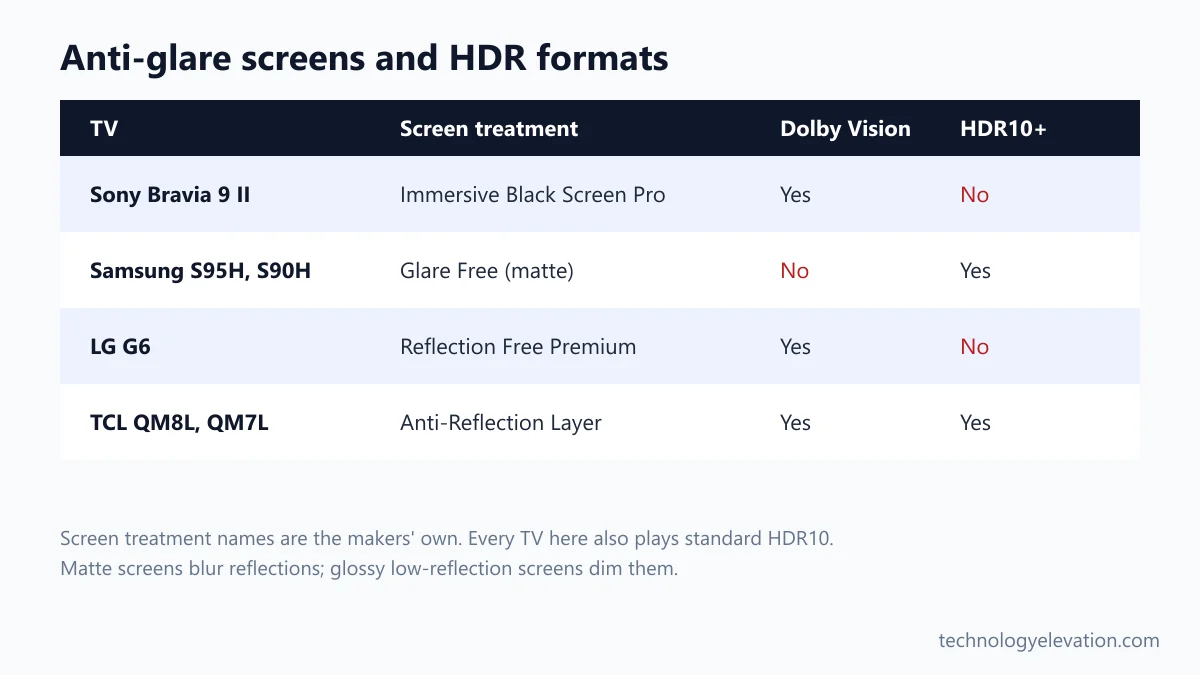
Only two of the four HDMI ports run at full HDMI 2.1 speed, and one of those doubles as the eARC port for a soundbar. Sony also skips HDR10+, so Prime Video shows mastered in it play in standard HDR10.
Check the Sony Bravia 9 II price on Amazon
Samsung S95H: the best OLED for bright rooms
The Samsung S95H is the best OLED TV for a bright room. Its matte Glare Free screen spreads window and lamp reflections into a soft haze instead of a sharp mirror image, and OLED keeps perfect blacks. The 65-inch lists at $3,399.99.
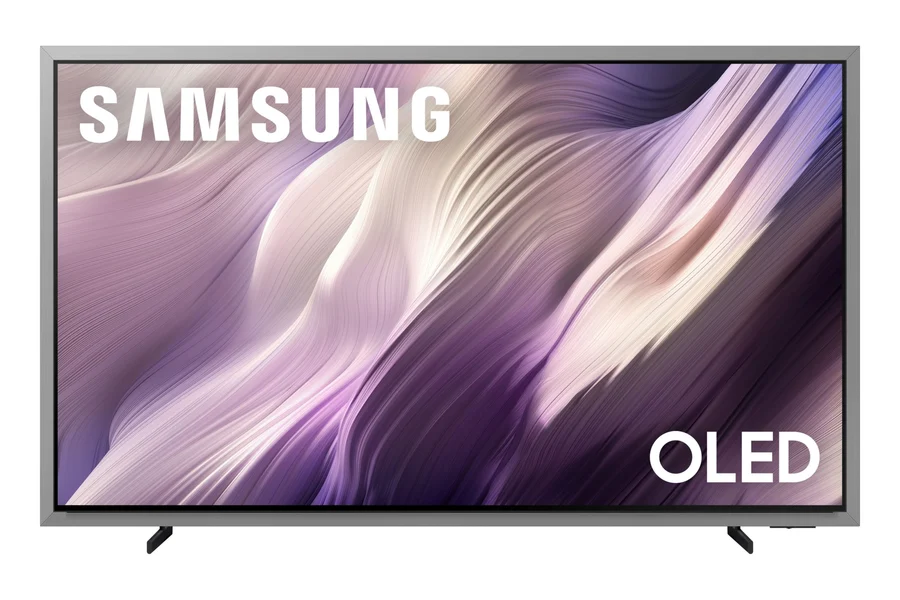
Key specs: OLED panel with Glare Free anti-reflection finish, Motion Xcelerator 165Hz (PC only), NVIDIA G-SYNC Compatible and FreeSync Premium Pro, HDR10 and HDR10+, Dolby Atmos, Filmmaker Mode. Sizes 55 to 83 inches. List price: $3,399.99 for the 65-inch, $2,499.99 for the 55-inch.
Glare Free is a matte coating. A glossy screen shows a window opposite as a clear rectangle; a matte screen scatters that light into a dim blur you stop noticing.
Samsung’s 2026 OLED announcement says Glare Free “virtually eliminates bothersome reflections from lights, windows or other ambient lighting.” Reviewers who put the S95H next to LG’s G6 found Samsung’s screen the better of the two at erasing reflection shapes.
The trade is in the blacks. Under strong direct light, a matte finish can make blacks look slightly grey. In a sunny room, most viewers will happily take that trade.
Samsung still has no Dolby Vision, so films in that format play in HDR10. The included warranty is one year, compared with LG’s five-year panel warranty on the G6.
Check the Samsung S95H price on Amazon
LG G6 OLED: the best bright-room TV for Dolby Vision fans
The LG G6 is the best bright-room TV for people who stream a lot of Dolby Vision. LG’s Brightness Booster Ultra makes it the brightest LG OLED, and its Reflection Free Premium screen cuts reflections while keeping a glossy finish. The 65-inch lists at $3,399.

Key specs: OLED evo panel with Hyper Radiant Tech, Brightness Booster Ultra, Reflection Free Premium screen, Alpha 11 Dual AI Engine Processor, 4K at up to 165Hz (120Hz on the 97-inch), Dolby Vision and Dolby Atmos, Filmmaker Mode with Ambient Light Compensation. Sizes 55 to 97 inches. List price: $3,399 for the 65-inch.
The G6 takes the opposite approach to Samsung. Instead of a matte coating, it keeps a glossy screen and lowers how much light bounces off it. Blacks stay inky in daylight, but bright objects behind you still show as faint shapes.
Netflix, Disney+ and Apple TV lean heavily on Dolby Vision, which neither Samsung pick plays. Ambient Light Compensation also lifts Filmmaker Mode a little when the sun is up, so movies don’t look murky at lunchtime.
LG lists a five-year panel warranty for the G6, the longest of any pick here. LG also skips HDR10+.
Check the LG G6 OLED price on Amazon
TCL QM8L: the best value TV for bright rooms
The TCL QM8L is the best value for raw brightness. TCL rates it at up to 6,000 nits and up to 4,000 local dimming zones, adds an anti-reflection layer, and supports both Dolby Vision and HDR10+. The 65-inch lists at $2,499.99, $1,100 less than the Bravia 9 II.
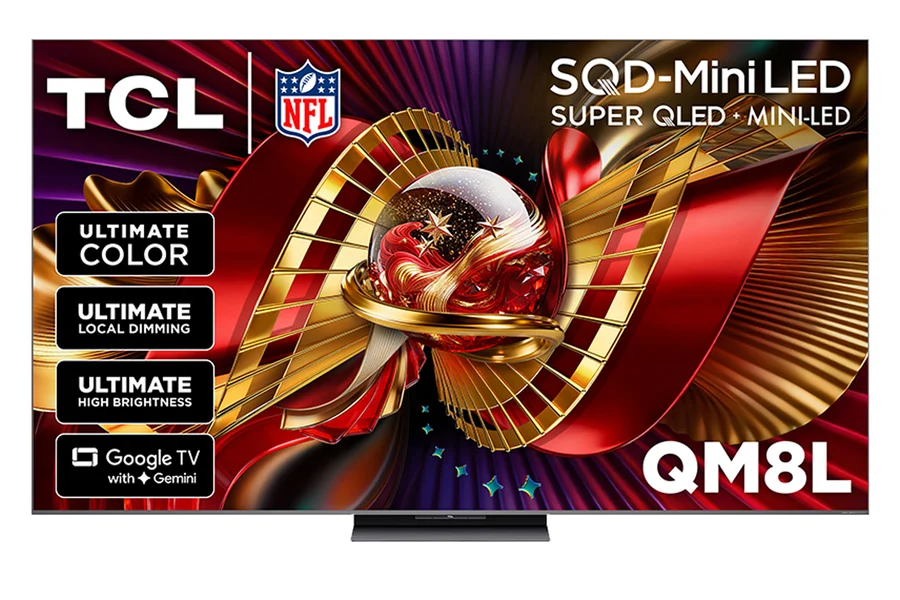
Key specs: SQD-Mini LED backlight, CSOT WHVA 2.0 Ultra panel with Anti-Reflection Layer, up to 4,000 local dimming zones, up to 6,000 nits peak brightness (TCL figures for the series), Dolby Vision IQ, HDR10+, Filmmaker Mode, Google TV. Sizes 65 to 98 inches. List price: $2,499.99 for the 65-inch, $5,999.99 for the 98-inch.
Nits measure brightness, and most OLEDs top out far below TCL’s claimed figure. More nits means HDR highlights still pop with sun pouring through the window.
TCL’s SQD-Mini LED announcement lists those numbers as series maximums, so smaller sizes may have fewer zones.
The honest catch is the screen. Reviewers found the QM8L still picks up direct reflections, so keep it off the wall facing a big window. Size is the payoff: the 98-inch QM8L lists at $3,000 less than Sony’s 98-inch Bravia 7 II.
Check the TCL QM8L price on Amazon
Samsung S90H OLED: the best TV for sunny game rooms
The Samsung S90H is the best pick for gaming in a bright room. For the first time, Samsung gives its mid-range OLED the same Glare Free screen as the S95H, plus 165Hz PC gaming and G-SYNC support. The 65-inch lists at $2,699.99, $700 less than the S95H.
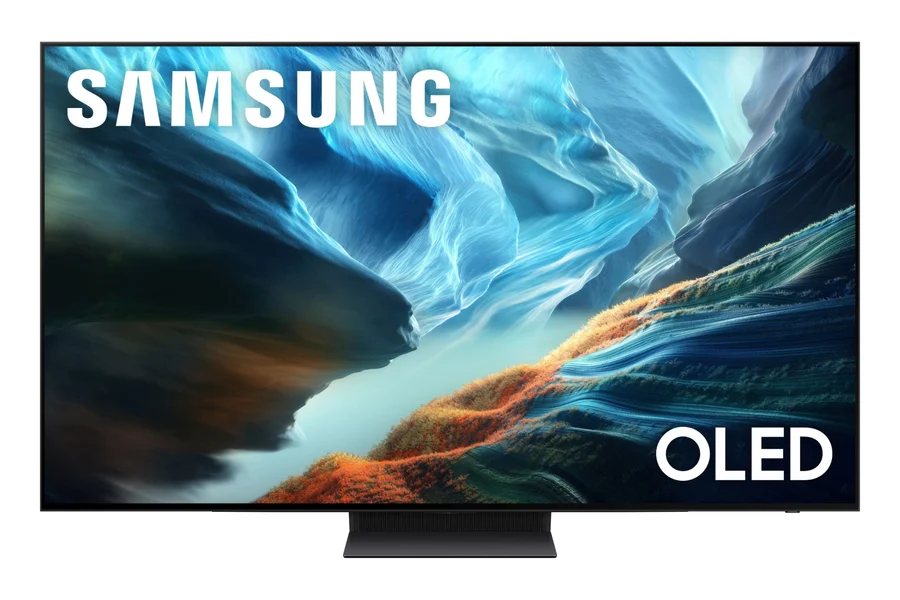
Key specs: OLED panel with Glare Free coating, Motion Xcelerator 165Hz, NVIDIA G-SYNC Compatible and FreeSync Premium Pro, HDR10 and HDR10+, Dolby Atmos, Filmmaker Mode. Sizes 42 to 83 inches. List price: $2,699.99 for the 65-inch, $1,999.99 for the 55-inch, $1,399.99 for the 42-inch.
A game room with a skylight or patio door is the classic glare trap. The matte Glare Free finish keeps dark corners in shooters readable instead of mirroring the room.
The 42- and 48-inch sizes also make the S90H a good bright bedroom TV or desk-side gaming screen.
As with every Samsung TV, there is no Dolby Vision, and the 165Hz figure applies only to PC games. A PS5 or Xbox Series X tops out at 120Hz.
Check the Samsung S90H price on Amazon
TCL QM7L: the best budget TV for bright rooms
The TCL QM7L is the best budget TV for bright rooms. TCL rates it at up to 3,000 nits with up to 2,100 dimming zones, and it has an anti-reflection layer plus both HDR formats. The 65-inch lists at $1,499.99 and the 55-inch at $1,199.99.
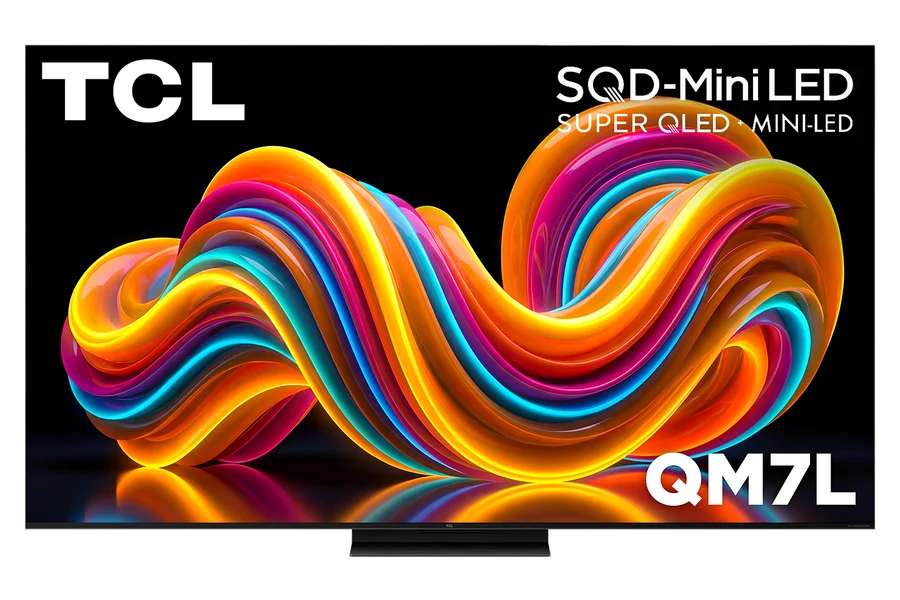
Key specs: SQD-Mini LED backlight, HVA 2.0 Pro panel with Anti-Reflection Layer, up to 2,100 local dimming zones, up to 3,000 nits peak brightness (TCL figures for the series), Dolby Vision IQ and HDR10+, Filmmaker Mode, Google TV. Sizes 55 to 98 inches. List price: $1,499.99 for the 65-inch, $1,199.99 for the 55-inch.
TCL’s own launch copy calls the QM7L “still brighter than premium OLED,” and the gap is real. In a family room where the TV runs all day, brightness per dollar beats perfect blacks.
The 55-inch is the best 55-inch bright-room TV here, since the Sony and QM8L start at 65 inches.
Expect weaker reflection handling than the premium picks, and more blooming at night, since it has about half the QM8L’s zones. Blooming is a soft halo around bright objects.
Check the TCL QM7L price on Amazon
Mini-LED vs OLED in a bright room comes down to the screen coating
Mini-LED vs OLED in a bright room used to be a simple brightness contest that LCD won. In 2026 the screen coating matters just as much. A bright mini-LED with a glossy screen can still lose to a Glare Free OLED facing a window.
Two kinds of light ruin a daytime picture. Ambient light makes dark scenes look grey. Reflections of windows and lamps sit on top of the picture as shapes.
Brightness fixes the first problem, which is why mini-LED sets like the TCL QM8L still look vivid at noon. Coatings fix the second. Samsung’s matte Glare Free finish blurs reflections the most, LG’s glossy Reflection Free Premium dims them, and Sony’s Immersive Black Screen Pro aims for both.
OLED still wins at night, when the same room turns dark. The best TV for dark rooms is usually an OLED, because every pixel switches fully off for black. A room that is sunny by day and dark by night suits the S95H, S90H or G6, which do both jobs well.
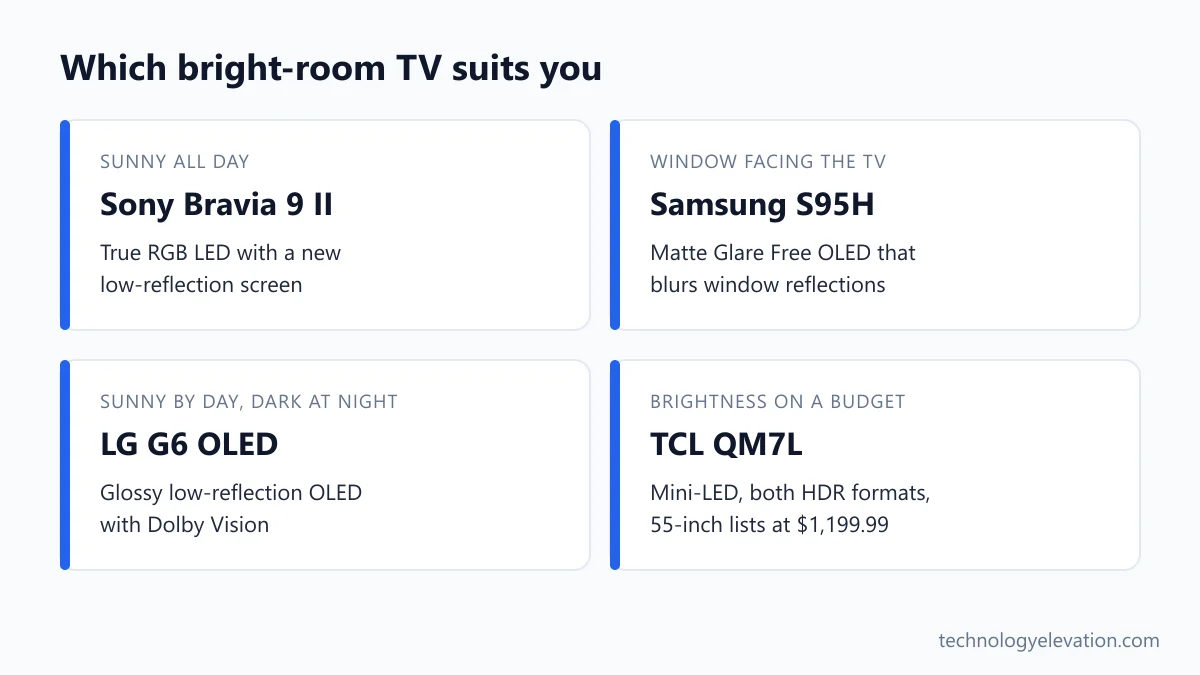
Where you put the TV matters as much as which one you buy
Where you put a TV in a bright room matters as much as the model. A screen on the wall opposite a big window faces the worst glare in the house, while a screen on the same wall as the window, or at right angles to it, avoids most reflections.
Sheer curtains soften direct sun without darkening the room, and moving a floor lamp to the side of the sofa removes a reflection for free.
Picture settings help too. Turn on the TV’s ambient light sensor so the screen brightens with the sun and dims at night. Dolby Vision IQ on the TCL sets does the same for Dolby Vision content.
For a bigger picture, daylight projectors exist, but even the brightest need an ambient-light-rejecting screen to beat a sunny room.
Six steps for choosing a TV for a bright room
Choose a bright-room TV by how much direct light hits the screen, then by coating, size and HDR format. Direct sun on the screen calls for a matte Glare Free OLED or a very bright mini-LED, while a shaded bright room suits any pick here.
- Map the light. Note where windows and lamps sit relative to the TV wall and what time the sun comes in.
- Pick the coating. A window directly opposite the screen points to Samsung’s matte Glare Free. Side windows suit glossy screens like the LG G6.
- Weigh brightness. A room that stays bright all day favors mini-LED, such as the TCL QM8L or Sony Bravia 9 II.
- Choose the size. At about 8 feet from the screen, 65 inches suits most living rooms. Bigger screens catch more reflections, so placement matters more at 85 inches and up.
- Match your HDR format. Heavy Netflix, Disney+ or Apple TV viewers want Dolby Vision. Prime Video fans gain from HDR10+. Only the TCL picks play both.
- Plan the sound. Daytime rooms are noisy rooms, and thin TVs have thin speakers.
A soundbar is the cheapest real upgrade. Soundbars under $100 already beat most TV speakers for dialogue, and Dolby Atmos soundbars add height effects if the living room doubles as a movie room. Gamers running a console at 120Hz should use proper HDMI cables for gaming.
Older and other bright-room TVs you will still see for sale
Older 2025 models and a few other brands still fill store shelves, and some are good bright-room buys at a discount. Samsung’s QN90F and S95F, Hisense’s mini-LED range and Roku’s Pro Series are the common ones.
Samsung has no QN90 or QN95 model for 2026. Its Neo QLED range stops at the QN80H, which lists at $1,599.99 for the 65-inch, and Samsung’s new Micro RGB TVs take the premium LCD slot. The 65-inch R85H lists at $2,099.99. A discounted 2025 QN90F is still a bright, capable LCD for a sunny room.
The 2025 Samsung S95F launched at $3,299 for the 65-inch and also has a Glare Free screen. At a big discount, it is a strong alternative to the S95H.
Hisense has moved its top UR8 and UR9 TVs to RGB mini-LED, the same idea as Sony’s True RGB. The 2025 U8 is still widely sold, but its prices have moved so often that list figures mean little.
Roku’s 2026 Pro Series is now OLED, while the mini-LED Pro Series is a 2025 model. Reviewers found the mini-LED version bright but weak with direct reflections.
Shoppers who want a more general pick can compare the best 4K TVs, which weigh dark-room and gaming performance too.
Frequently asked questions about TVs for bright rooms
What type of TV is best for a bright room?
A bright mini-LED or RGB LED TV with an anti-reflection coating is usually best for a bright room. Mini-LED gets far brighter than OLED. A matte Glare Free OLED like the Samsung S95H is the best option if you also watch in the dark.
Is OLED or mini-LED better for a sunny living room?
Mini-LED is better for a living room that stays sunny most of the day, because it is much brighter. A Glare Free OLED is better if the room is bright by day but dark at night, since OLED keeps perfect blacks after sunset.
What is an anti-glare TV?
An anti-glare TV has a screen coating that reduces reflections from windows and lamps. Samsung’s Glare Free OLEDs use a matte finish that blurs reflections, while LG’s G6 keeps a glossy screen and lowers how much light bounces off it.
What is the brightest TV you can buy?
Among the TVs in this list, the TCL QM8L has the highest maker-rated brightness, at up to 6,000 nits for the series. Maker figures are measured under ideal conditions. Real-world brightness is lower, but mini-LED sets still beat OLEDs by a wide margin.
Do Samsung TVs support Dolby Vision?
No. Samsung’s 2026 TVs, including the S95H and S90H OLEDs, support HDR10 and HDR10+ but not Dolby Vision. Films mastered in Dolby Vision still play on a Samsung, but in the basic HDR10 format.
What is the best budget TV for a bright room?
The TCL QM7L is the best budget TV for a bright room in this list. TCL rates it at up to 3,000 nits, it has an anti-reflection layer, and it plays both Dolby Vision and HDR10+. The 65-inch lists at $1,499.99.
Last checked and sources
Last checked on 15 November 2026 by Abdullah Kabeer. We compared the 2026 TVs sold in the US using the manufacturers’ launch announcements, press releases and specs, cross-checked features against independent reviews, and checked cpsc.gov and the makers’ support pages for recalls and safety notices.
- Sony Electronics, 27 May 2026 announcement of the Bravia 9 II and Bravia 7 II True RGB TVs, with US MSRPs
- Samsung Newsroom US, 2026 OLED lineup announcement for the S95H, S90H and S85H, and 2026 Neo QLED and Mini LED announcement
- LG, March 2026 pricing and availability announcement for the OLED evo C6 and G6, and CES 2026 G6 announcement
- TCL, April 2026 SQD-Mini LED announcement for the QM8L and QM7L
- Reviews of the Sony Bravia 9 II, Samsung S95H, LG G6, TCL QM8L and Roku Pro Series by TechRadar, What Hi-Fi, Tom’s Guide, Digital Trends, Stuff and Expert Reviews
- US Consumer Product Safety Commission recall database
We update this buying guide when new TVs launch or are discontinued.
Technology Elevation is reader-supported. As an Amazon Associate, we earn from qualifying purchases. When you buy through links on this page, we may earn a small commission at no extra cost to you.

GIPHY App Key not set. Please check settings
One Comment