

 Abdullah Kabeer
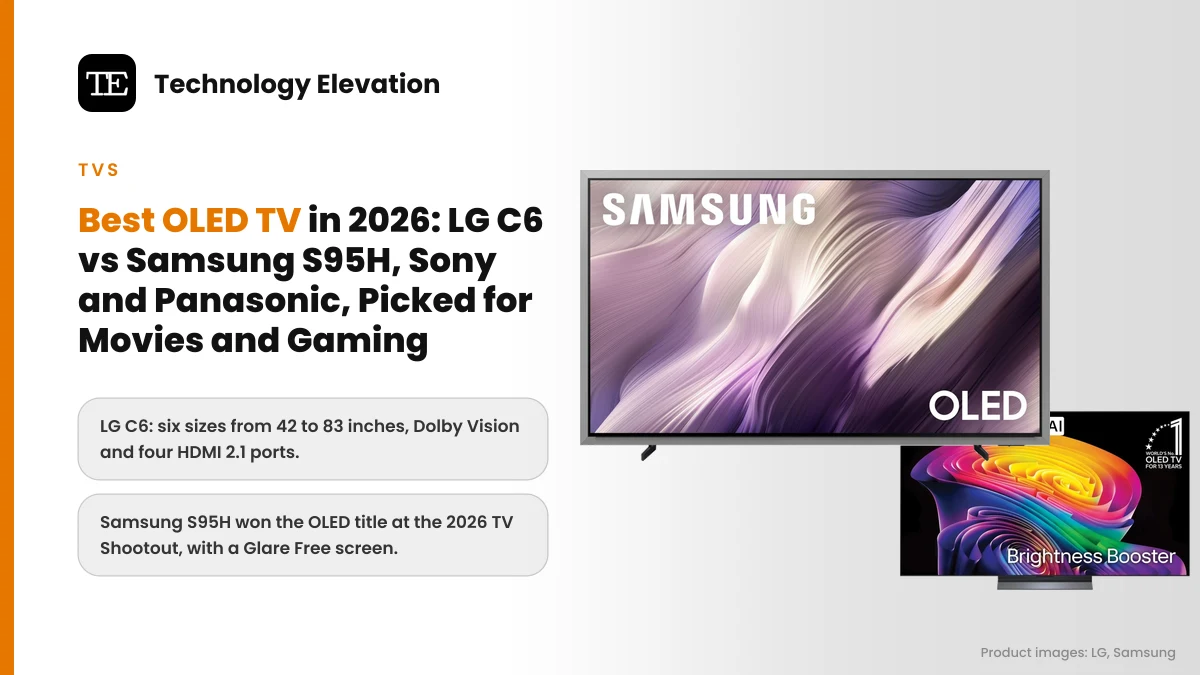
Stand in front of the TV wall at any electronics store this month and you can spot the OLEDs from across the aisle. Their black bars look like gaps cut in the wall, not a dim grey glow. Choosing the best OLED TV in 2026 is less about whether OLED is worth it and more about which of a dozen very similar sets fits your room, your budget and your console.
The 2026 lineup is the most crowded yet. LG sells the B6, C6 and G6. Samsung answers with the S85H, S90H and S95H. Sony keeps the Bravia 8 II as its top OLED, and Panasonic is back in US stores with the Z95B.
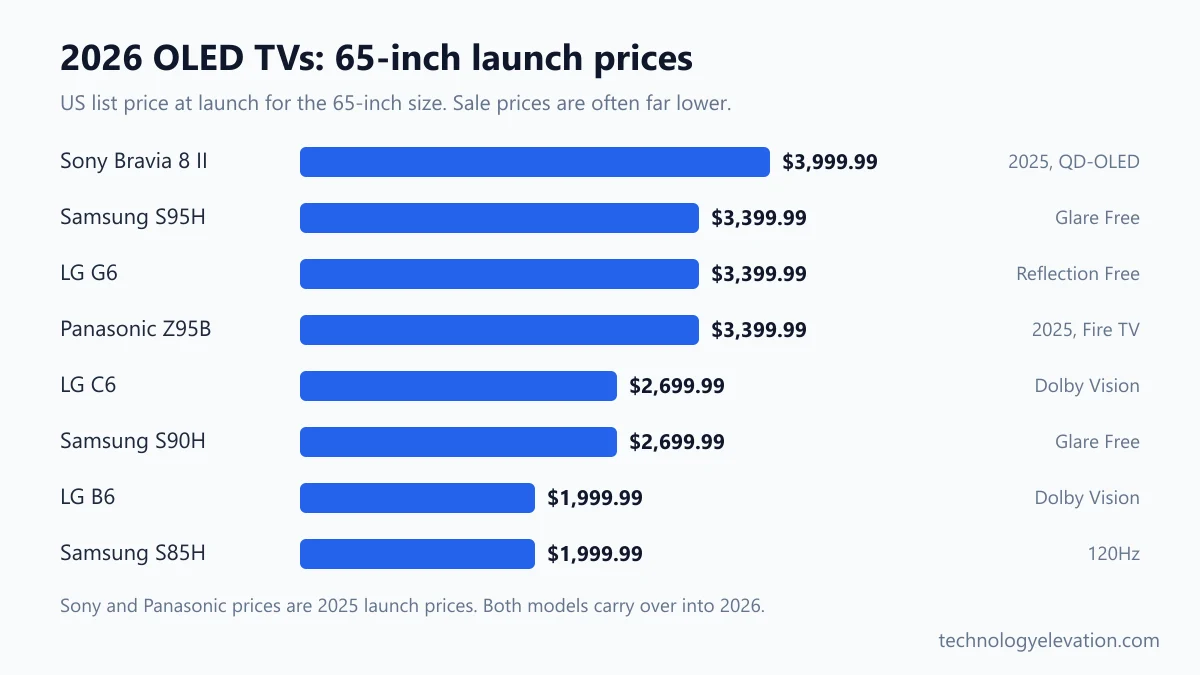
Prices line up almost to the cent. Samsung’s S90H launched at $1,399.99 for the 42-inch model up to $5,299.99 for the 83-inch, the same list prices LG set for the C6. So the choice comes down to features, not sticker shock.
We compared every current OLED series sold in the US using the makers’ own specs and launch prices, then checked picture and gaming claims against independent reviews. Black Friday lands on November 27, so treat every launch price below as a ceiling.
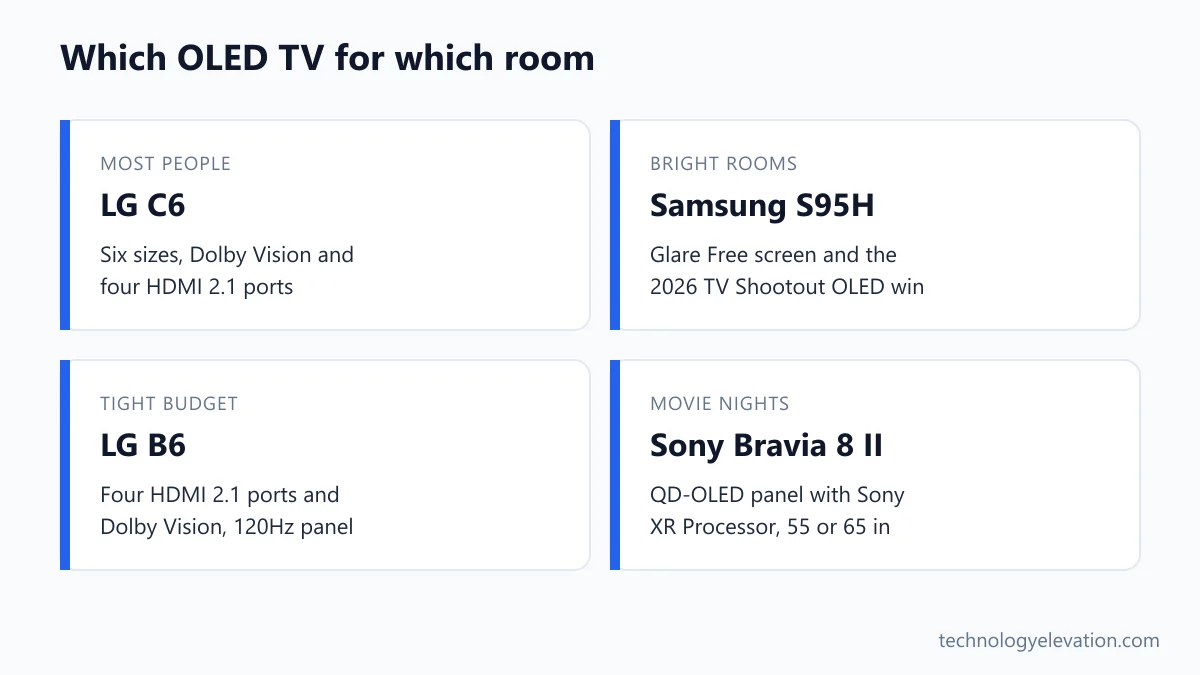
The best OLED TV for most people is the LG C6
The LG C6 is the best OLED TV for most people. It comes in six sizes from 42 to 83 inches, supports Dolby Vision, runs games at up to 165Hz on all four HDMI 2.1 ports, and launched at $2,699.99 for the 65-inch.
Every pick, by the job it does best:
- Best overall: LG C6
- Best picture: Samsung S95H
- Best LG flagship and biggest screen: LG G6
- Best for bright rooms on a budget: Samsung S90H
- Best cheap OLED: LG B6, with the Samsung S85H as the alternative
- Best for movies and PS5: Sony Bravia 8 II
- Best built-in sound: Panasonic Z95B
| Model | US sizes | Max refresh | Dolby Vision | 65-inch launch price |
|---|---|---|---|---|
| LG C6 | 42 to 83 in | 165Hz | Yes | $2,699.99 |
| Samsung S95H | 55 to 83 in | 165Hz | No (HDR10+) | $3,399.99 |
| LG G6 | 55 to 97 in | 165Hz (97 in: 120Hz) | Yes | $3,399.99 |
| Samsung S90H | 42 to 83 in | 165Hz | No (HDR10+) | $2,699.99 |
| LG B6 | 48 to 83 in | 120Hz | Yes | $1,999.99 |
| Samsung S85H | 48 to 83 in | 120Hz | No (HDR10+) | $1,999.99 |
| Sony Bravia 8 II | 55 and 65 in | 120Hz | Yes | $3,999.99 |
| Panasonic Z95B | 55 and 65 in | 144Hz | Yes | $3,399.99 |
OLED prices drop hard between March launches and the holidays. The 65-inch C6, for example, is already selling well below its launch price on LG’s own store.
LG C6: the best all-round OLED TV
The LG C6 is the best all-round OLED because it does everything well and skips nothing important. You get Dolby Vision, four full HDMI 2.1 ports, 165Hz for PC gaming and LG’s Alpha 11 Gen3 processor, in six sizes from 42 to 83 inches.
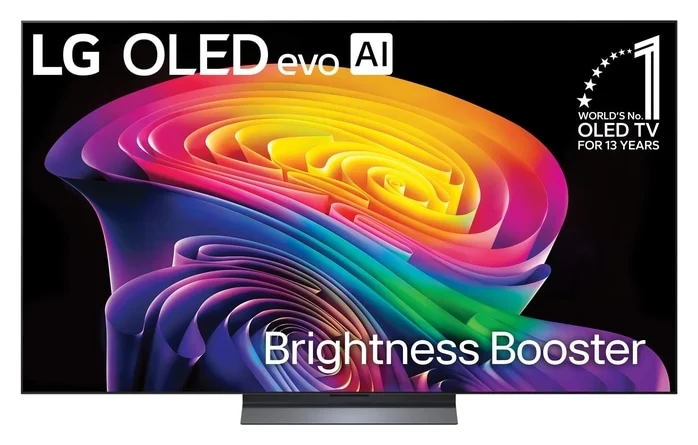
Key specs: 4K OLED evo panel (Primary RGB Tandem on the 77 and 83-inch models), Alpha 11 AI Processor Gen3, up to 165Hz with a PC, NVIDIA G-Sync and AMD FreeSync Premium, four HDMI 2.1 ports, Dolby Vision and Dolby Atmos, webOS. Launched in March 2026 at $1,399.99 (42-inch) to $5,299.99 (83-inch).
The C series has been the default OLED recommendation for years, and the C6 keeps the formula. Nothing about it is the best in class. Nothing about it is weak either.
Size matters more than usual this year. LG’s own footnotes reserve its Hyper Radiant Color feature for the 77 and 83-inch C6, which also get a stronger Brightness Booster Pro and a tandem panel with stacked light layers. So a 77-inch C6 is a slightly better TV than a 65-inch one, not just a bigger one.
The small sizes have a fan club of their own. A 42 or 48-inch C6 on a desk makes a superb PC monitor, and it keeps the full 165Hz refresh rate that the cheaper B6 lacks.
The honest catch is bright daylight. The C6 has no special anti-glare coating like the G6’s Reflection Free Premium or Samsung’s Glare Free, and it is not as bright as the G6. In a living room you mostly use at night, you will never notice.
Samsung S95H: the best OLED picture of 2026
The Samsung S95H has the best OLED picture you can buy in 2026. A panel of expert judges at the 2026 TV Shootout picked it as the top OLED by a healthy margin, and its Glare Free screen keeps that picture clean in daylight.
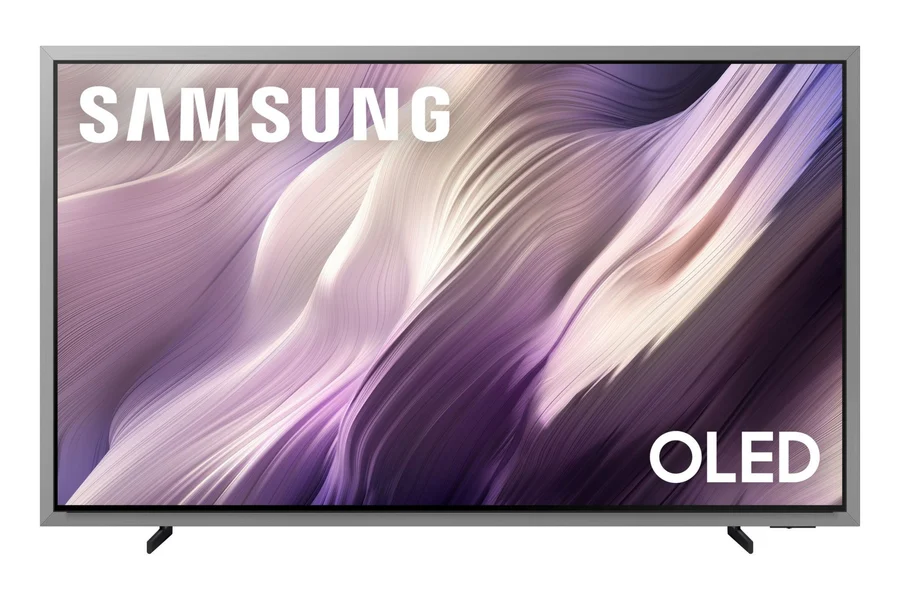
Key specs: 4K OLED with Glare Free screen, NQ4 AI Gen3 Processor, Motion Xcelerator 165Hz, NVIDIA G-Sync Compatible and FreeSync Premium Pro, four HDMI 2.1 ports, HDR10+, Dolby Atmos with Object Tracking Sound+, FloatLayer metal-bezel design, Samsung Art Store, up to 7 years of OS updates. Launch prices: $2,499.99 (55-inch) to $6,499.99 (83-inch).
The TV Shootout is an annual head-to-head run by the dealer Value Electronics in Scarsdale, New York. On July 18, 2026, judges put the 65-inch S95H next to the LG G6 and Sony Bravia 8 II. Samsung won the OLED title.
Samsung also rethought the look. The new FloatLayer design mounts flush against the wall behind a thin metal frame, and the S95H is the first Samsung OLED with the Art Store, so it can show paintings when you are not watching. Cables can run into an optional Wireless One Connect Box, sold separately, instead of down the wall.
The catch is Dolby Vision. Samsung still does not support it, and uses its own HDR10+ format instead. Dolby Vision films on Netflix or Disney+ still play, but in plain HDR10. Most people will never spot the difference, though film fans who care about it should look at the LG G6 or Sony Bravia 8 II.
Buy the Samsung S95H now on Amazon
LG G6: the brightest LG OLED, up to 97 inches
The LG G6 is the OLED to buy if you want LG’s best picture or a giant screen. LG says it is up to 3.9 times brighter than a regular OLED, it adds Reflection Free Premium, and it stretches all the way to 97 inches.
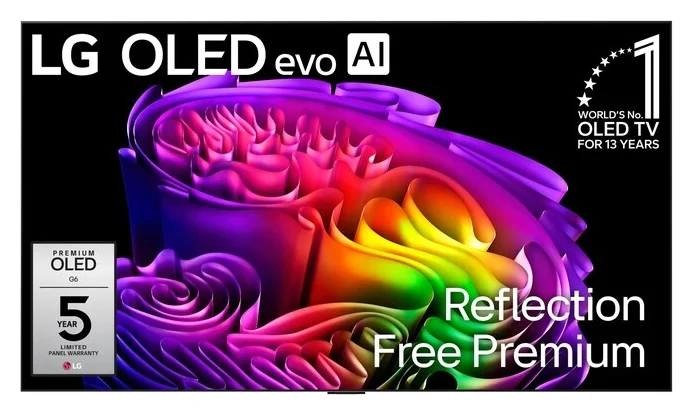
Key specs: 4K OLED evo with Brightness Booster Ultra (55 to 83-inch), Hyper Radiant Color (all but the 97-inch), Reflection Free Premium (55 to 83-inch), Alpha 11 AI Processor Gen3, up to 165Hz (120Hz on the 97-inch), NVIDIA G-Sync and AMD FreeSync Premium, Dolby Vision. Launched in March 2026 at $2,499.99 (55-inch) to $24,999.99 (97-inch).
The G6 is the TV for a room with windows that you still want to use for movies. Its anti-reflection coating and extra brightness close most of the gap with Samsung, and you keep Dolby Vision.
Read the box contents before you buy. The G6 ships with a wall mount, not a stand, because LG designs it to hang flat. If it has to sit on a cabinet, budget for a stand or a separate TV base.
LG also backs the G series with a 5-year limited panel warranty, which covers parts and labor only in the first year. On a TV this expensive, that longer panel cover is worth knowing about.
The 97-inch model is a different beast. It runs at 120Hz rather than 165Hz and skips Hyper Radiant Color, and its $24,999.99 launch price puts it in projector-and-screen territory.
Samsung S90H: the best OLED for bright rooms on a budget
The Samsung S90H is the best OLED for a bright room without flagship money. It launched at the same price as the LG C6 in every size, and adds Samsung’s Glare Free screen to cut reflections from windows and lamps.
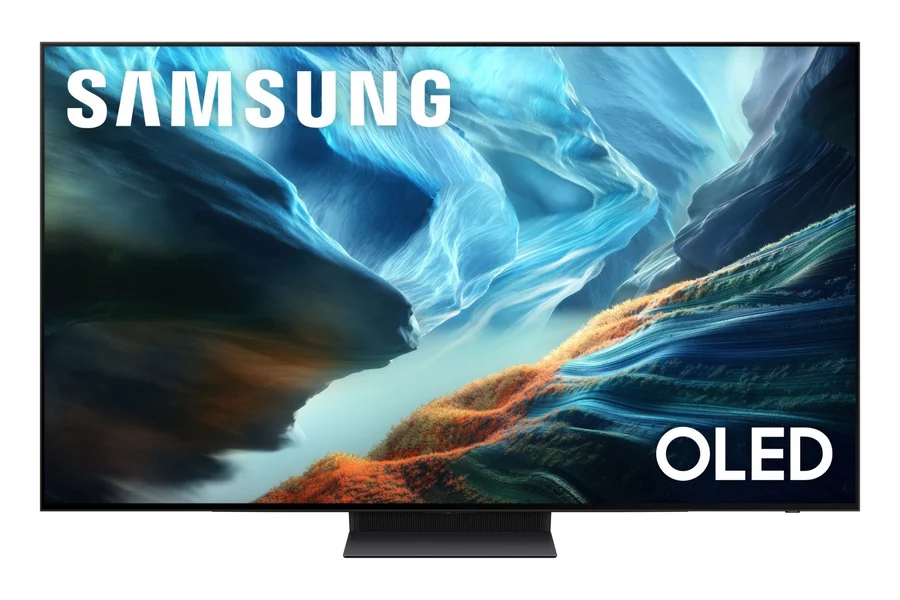
Key specs: 4K OLED with Glare Free screen, NQ4 AI Gen3 Processor, Motion Xcelerator 165Hz, NVIDIA G-Sync Compatible and FreeSync Premium Pro (FreeSync Premium on the 42-inch), OLED HDR+ (OLED HDR on the 42 and 48-inch), HDR10+, Dolby Atmos with Object Tracking Sound Lite. Launch prices: $1,399.99 (42-inch) to $5,299.99 (83-inch).
Glare Free is the headline. Samsung first kept its matte anti-reflection screen for the flagship, and for 2026 it reaches the S90H too. Lamps and windows show up as soft smudges rather than sharp mirror images.
The S90H also gets the same processor and full gaming pack as the S95H. What it gives up is the FloatLayer design, the Art Store and the Wireless One Connect option.
The C6 against S90H decision is really Dolby Vision against Glare Free. Watch a lot of Dolby Vision streams in a dark room? Buy the C6. Watch daytime sports with the curtains open? Buy the S90H.
If sunlight is the bigger worry than black levels, the wider field of TVs for bright rooms includes Mini LED sets that get brighter still.
Buy the Samsung S90H now on Amazon
LG B6: the best cheap OLED TV
The LG B6 is the best cheap OLED TV. It keeps the four HDMI 2.1 ports, Dolby Vision and G-Sync support of the C6, and drops to a 120Hz panel and a simpler Alpha 8 processor. The 65-inch launched at $1,999.99.
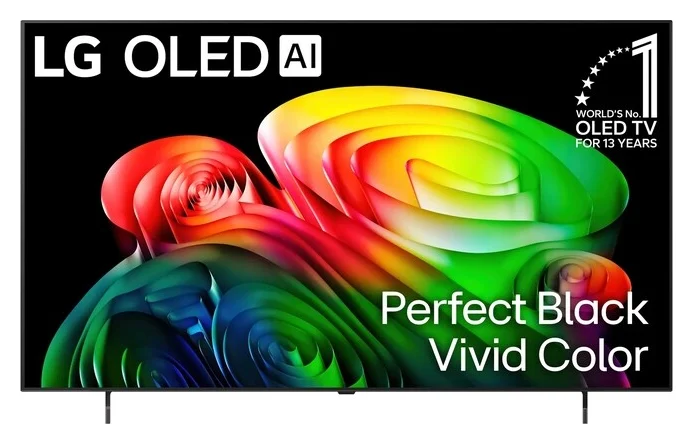
Key specs: 4K OLED, Alpha 8 AI Processor Gen3, 120Hz, NVIDIA G-Sync and AMD FreeSync Premium, four HDMI 2.1 ports, Dolby Vision and Dolby Atmos, Filmmaker Mode. LG promises software updates for up to 4 years.
For console gamers, 120Hz is no real loss. PS5 and Xbox Series X games top out at 4K 120Hz, so the C6’s extra headroom only matters with a gaming PC.
Brightness is the real gap. Tom’s Guide measured the 65-inch B6 at 695 nits in HDR, against 1,251 nits for the C6. In a dim room that barely matters. In a sunny one, it shows.
Samsung’s answer is the S85H. It comes in 48 to 83 inches, launched at $1,199.99 for the 48-inch and $1,999.99 for the 65-inch, and pairs a 120Hz panel with G-Sync Compatible and FreeSync Premium. It uses the older NQ4 AI Gen2 processor and skips Glare Free, and like every Samsung, it has no Dolby Vision. That makes the B6 the better all-round buy at the same launch price.
Sony Bravia 8 II: the best OLED for movie fans and PS5 owners
The Sony Bravia 8 II is the OLED for people who care most about film. Sony’s processing is known for natural color and smooth gradients, and its Perfect for PlayStation 5 features pair it neatly with a PS5. The catch is only two HDMI 2.1 ports.
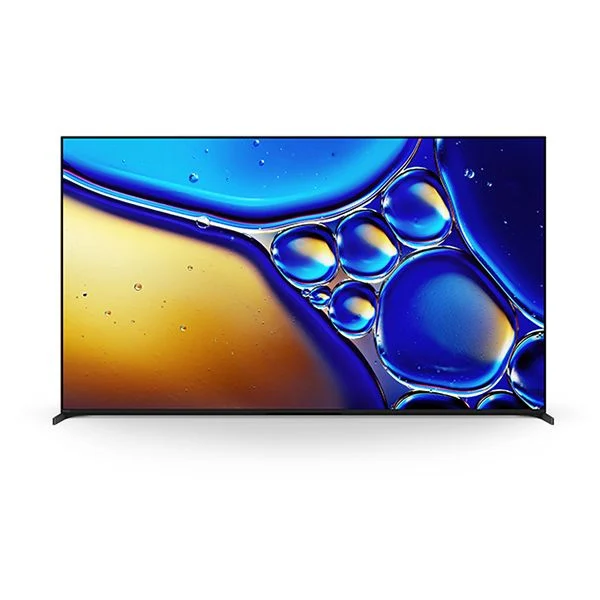
Key specs: 4K QD-OLED panel, XR Processor, Acoustic Surface Audio+ (the screen itself vibrates to make sound), 4K 120Hz, VRR and ALLM, Dolby Vision and Dolby Atmos, four HDMI inputs of which two are HDMI 2.1. Sizes: 55 and 65 inches. Launched in 2025 at $3,499.99 (55-inch) and $3,999.99 (65-inch).
Sony did not launch a new OLED for 2026. Its new flagships are RGB LED sets, and the Bravia 8 II stays at the top of its OLED range. Despite the name, it succeeds the A95L rather than the Bravia 8, which stays on sale below it with a WOLED panel in 55, 65 and 77 inches.
Judges at the 2026 TV Shootout placed it against the brand-new Samsung S95H and LG G6. Holding its own a year after launch says a lot about how good Sony’s picture processing is.
The ports are the real compromise. One of the two HDMI 2.1 inputs doubles as the eARC port for a soundbar. Own a PS5, an Xbox and a soundbar? Something ends up on a slower port.
And the price is the highest here. At launch, the 65-inch cost $600 more than a 65-inch S95H, which is why Sony owners tend to wait for holiday sales.
Buy the Sony Bravia 8 II now on Amazon
Panasonic Z95B: the best OLED with built-in sound
The Panasonic Z95B is the best OLED if you want strong sound without a soundbar. Its redesigned speaker system is built for 360-degree spatial audio, its Primary RGB Tandem panel adds brightness, and Fire TV with Alexa+ handles the apps.
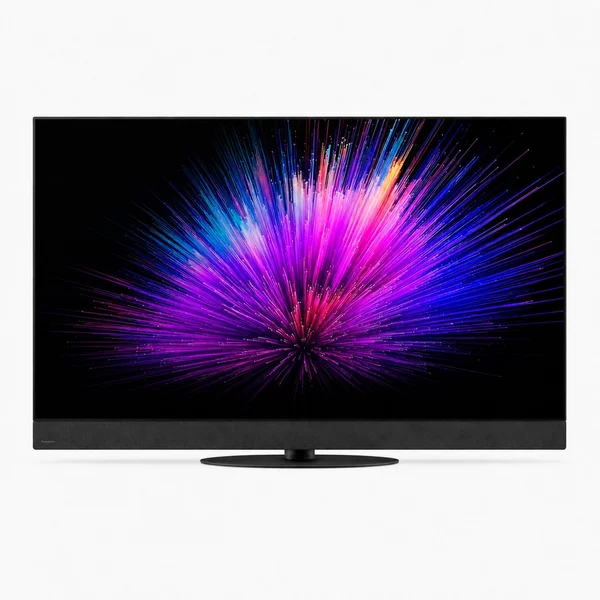
Key specs: 4K Primary RGB Tandem OLED panel with four light-emitting layers, ThermalFlow cooling, Game Mode Extreme up to 144Hz, AMD FreeSync Premium and NVIDIA G-Sync Compatible, Dolby Vision, Prime Video Calibrated Mode, Fire TV built in. US sizes: 55 and 65 inches. The 65-inch launched in 2025 at $3,399.99.
Panasonic stayed out of the US TV market for years before returning in 2025. For 2026, SKYWORTH USA distributes its TVs here, and the Z95B carries over as the flagship.
The sound is the reason to choose it. Panasonic redesigned the built-in audio system for 2026 to widen the soundstage and spread spatial audio around the room. Most slim OLEDs sound thin without a soundbar, and the Z95B is built to skip one.
Fire TV is the other big difference. If your home already runs on Alexa and Prime Video, the Z95B fits right in, and Prime Video Calibrated Mode sets up the picture for Prime Video streams.
The catch is choice. Only two sizes, and fewer stores stock Panasonic than LG or Samsung.
Buy the Panasonic Z95B now on Amazon
Gaming on an OLED TV comes down to ports, refresh rate and VRR
For gaming, count the HDMI 2.1 ports first, then check the refresh rate and VRR support. LG and Samsung give you four full HDMI 2.1 ports. Consoles stop at 4K 120Hz, so 144Hz and 165Hz only pay off with a gaming PC.
OLED is already the best TV tech for games. Each pixel switches on and off almost instantly, so fast motion stays sharp without the smearing you see on many LCDs.
Variable refresh rate is the feature that makes the biggest visible difference. VRR lets the TV match the frame rate the console actually produces, which removes stutter and tearing when a game dips below 60 or 120 frames per second. G-Sync and FreeSync are NVIDIA’s and AMD’s versions of the same idea for PCs.
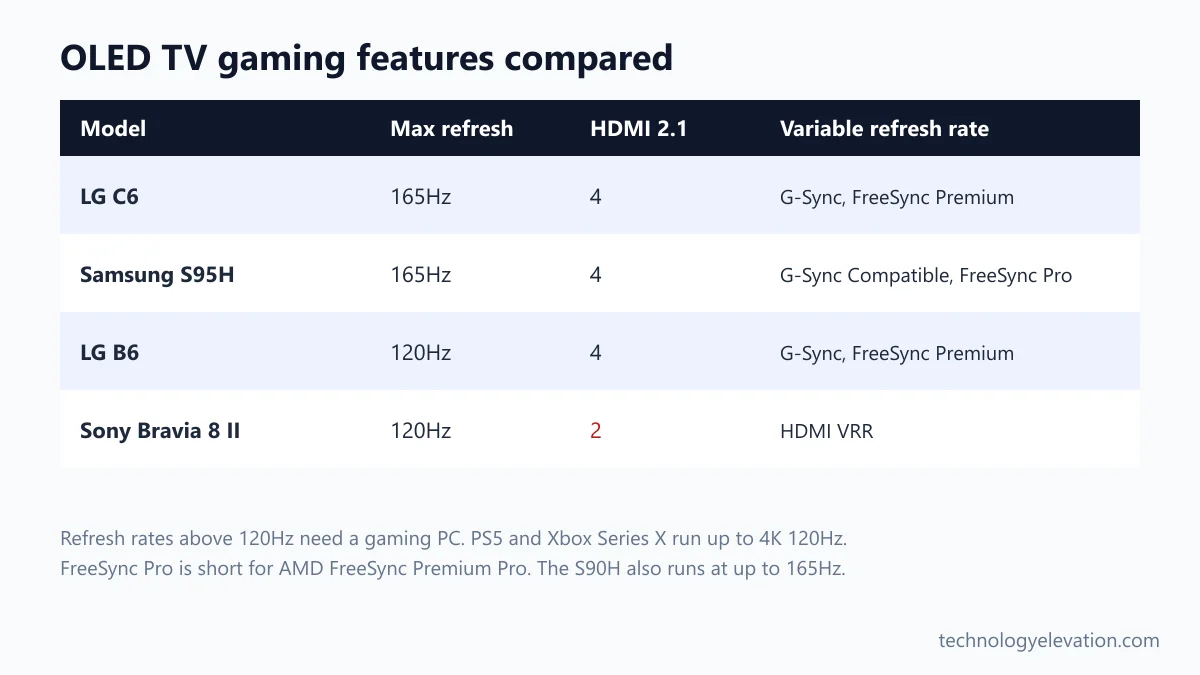
Ports matter more than most people expect. A PS5, an Xbox Series X and a soundbar need three good inputs. Every LG and Samsung pick here has four HDMI 2.1 ports, while the Sony Bravia 8 II has two.
Use the right cable too. Full HDMI 2.1 speed needs an Ultra High Speed HDMI cable rated for 48Gbps. Older cables can drop the signal at 4K 120Hz, so it is worth buying one of the HDMI cables for gaming that carry the official certification label.
PS5 owners get a small bonus from Sony’s Perfect for PlayStation 5 features on the Bravia 8 II. A spare controller and charging dock from the list of PS5 accessories will likely change your evenings more, though.
Screen size changes which OLED panel you actually get
The same model name can hide different hardware at different sizes. LG’s C6 gets a better tandem panel at 77 and 83 inches, Samsung’s 42 and 48-inch S90H use simpler HDR processing, and the 97-inch G6 drops to 120Hz.
Makers rarely shout about this, so read the footnotes before you pick a size. The pattern in 2026 is simple: mid-size and large models get the newest panels, while the smallest and very largest sizes lose a feature or two.
- LG C6: Hyper Radiant Color, Brightness Booster Pro and the Primary RGB Tandem panel only on the 77 and 83-inch models.
- LG G6: the 97-inch runs at 120Hz and skips Hyper Radiant Color and Reflection Free Premium.
- Samsung S90H: the 42 and 48-inch use OLED HDR instead of OLED HDR+, and the 42-inch has FreeSync Premium rather than Premium Pro.
- Samsung S85H: Motion Xcelerator 120Hz and the older NQ4 AI Gen2 processor at every size.
For most living rooms, 65 inches is the sweet spot, and 77 inches is the jump worth making if the wall and budget allow. On a desk, the 42-inch C6 and S90H bring 165Hz OLED gaming to monitor size.
How to choose the best OLED TV for your room
Choose an OLED TV by room light first, then HDR format, then gaming needs. Bright rooms want Glare Free or Reflection Free screens. Dolby Vision fans should buy LG, Sony or Panasonic. PC gamers want 165Hz, while console players are fine at 120Hz.
- Judge your room light. Big windows or daytime viewing point to the Samsung S95H, S90H or LG G6. A dark den suits any OLED here.
- Pick an HDR format. Samsung uses HDR10+. LG, Sony and Panasonic support Dolby Vision, which most streaming services use for their top shows.
- Count your devices. Two consoles plus a soundbar need four HDMI 2.1 ports, which rules out the Sony.
- Match the refresh rate to your hardware. 120Hz covers PS5 and Xbox Series X. Only a gaming PC uses 144Hz or 165Hz.
- Check the size footnotes. Some features only arrive at certain sizes, as the section above shows.
- Plan for sound. Thin OLEDs usually need a soundbar. The Panasonic Z95B and Sony Bravia 8 II need one least.
- Buy on sale. OLED prices fall sharply in the months after a spring launch, and Black Friday is usually one of the lowest points of the year.
Most OLED speakers sound thin next to the picture. A good pick from the list of Dolby Atmos soundbars fixes that, and you will hear the difference in dialogue straight away.
The built-in apps are the weakest part of most TVs. A separate streaming device such as an Apple TV 4K keeps menus fast long after the TV’s own software slows down.
OLED burn-in depends on what you watch, so check the warranty
Burn-in is still possible on any OLED, but normal mixed viewing rarely causes it. The risk comes from the same static image, such as a news ticker or game HUD, for hours every day. Check the panel warranty before you buy.
Burn-in means a faint ghost of an image left on screen for good. OLED TVs fight it with pixel shifting and panel refresh routines, and the refresh usually runs while the TV is in standby, so leave the set plugged in rather than switched off at the socket.
Warranty cover varies a lot. LG gives the G series a 5-year limited panel warranty, with parts and labor covered in the first year. Read the warranty terms on any other model, and price a store or credit card extended warranty if the TV will run a 24-hour news channel.
OLED is not right for every room, either. If the TV sits opposite a glass wall, a bright Mini LED often looks better at noon, and the wider list of best 4K TVs covers those. For a basement cinema, the picks for TVs for dark rooms lean heavily on OLED for good reason.
Frequently asked questions about OLED TVs
What is the best OLED TV in 2026?
The LG C6 is the best OLED TV for most people in 2026. It has Dolby Vision, four HDMI 2.1 ports and up to 165Hz, in sizes from 42 to 83 inches. The Samsung S95H has the best overall picture.
Is the LG C6 or Samsung S90H better?
The LG C6 is better for dark rooms and Dolby Vision content. The Samsung S90H is better for bright rooms, thanks to its Glare Free screen. Both launched at identical prices and both support 165Hz gaming.
Do Samsung OLED TVs support Dolby Vision?
No. Samsung OLED TVs use HDR10+ instead of Dolby Vision. Dolby Vision films and shows still play on a Samsung, but they fall back to standard HDR10.
Which OLED TV is best for PS5 and Xbox gaming?
The LG C6 is the best OLED for console gaming. It has four HDMI 2.1 ports with 4K 120Hz, VRR and G-Sync support, so two consoles and a soundbar all get full-speed inputs. The cheaper LG B6 offers the same ports.
What is the cheapest 2026 OLED TV?
The 48-inch Samsung S85H had the lowest launch price of any 2026 OLED, at $1,199.99. At 65 inches, the LG B6 and Samsung S85H both launched at $1,999.99.
Does the LG G6 come with a stand?
No. The LG G6 ships with a wall mount, not a stand, because it is designed to hang flat on the wall. A stand must be bought separately if the TV will sit on furniture.
Did Sony release a new OLED TV in 2026?
No. Sony’s new 2026 flagships use RGB LED backlighting, and the Bravia 8 II from 2025 remains its top OLED. The older Bravia 8 also stays on sale.
Last checked and sources
Last checked on 19 November 2026 by Abdullah Kabeer. We compared every 2026 OLED series on sale in the US using the manufacturers’ published specs, footnotes and launch prices, then checked picture, port and gaming claims against independent reviews. Only launch or list prices are printed.
- LG, 2026 OLED evo G6 and C6 pricing and availability press release, March 5, 2026, and LG US product pages for the B6, C6 and G6
- Samsung, 2026 OLED TV lineup announcement with US pricing (news.samsung.com), April 2, 2026
- Panasonic TV, 2026 US lineup announcement, August 18, 2026
- HDMI Licensing Administrator, HDMI 2.1 specification and VRR pages (hdmi.org)
- Value Electronics 2026 TV Shootout results, as reported by eCoustics
- Independent reviews by Tom’s Guide, TechRadar, What Hi-Fi, TFTCentral, Expert Reviews and RTINGS, for ports, panel details, Sony and Panasonic launch prices and the LG B6 list price
- US Consumer Product Safety Commission recall database: no recalls or safety notices for any pick
We update this buying guide when LG, Samsung, Sony or Panasonic launch, discontinue or significantly change a model.
Technology Elevation is reader-supported. As an Amazon Associate, we earn from qualifying purchases. When you buy through links on this page, we may earn a small commission at no extra cost to you.

GIPHY App Key not set. Please check settings