

 Haris Khan
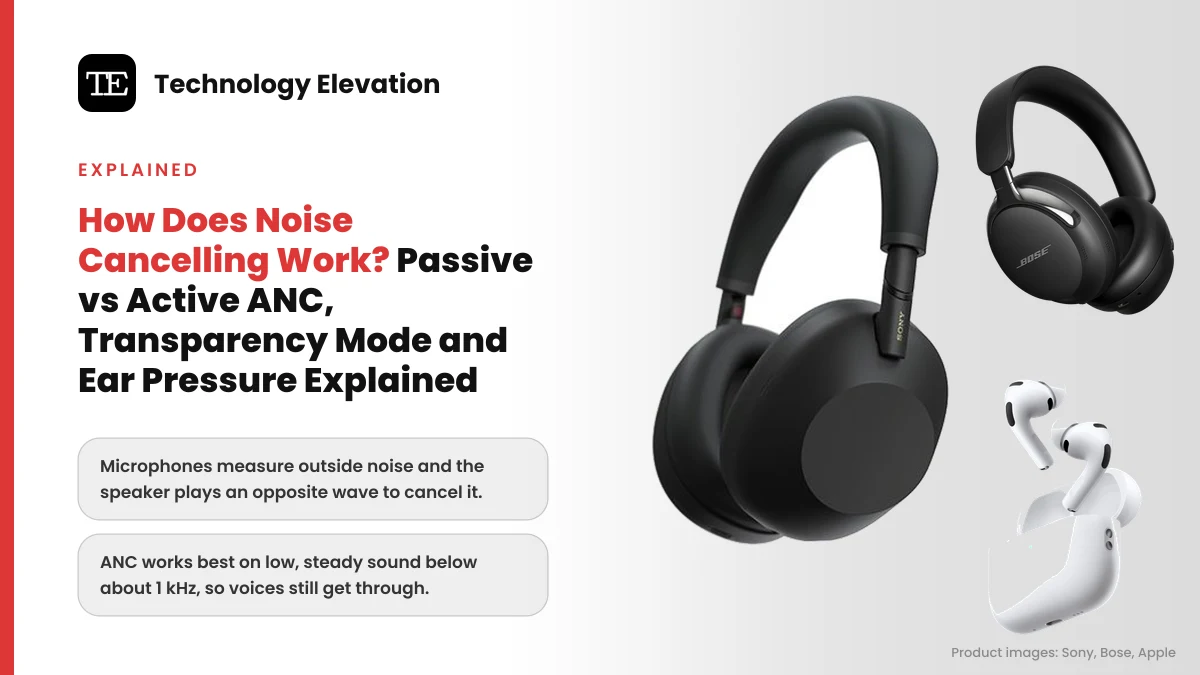
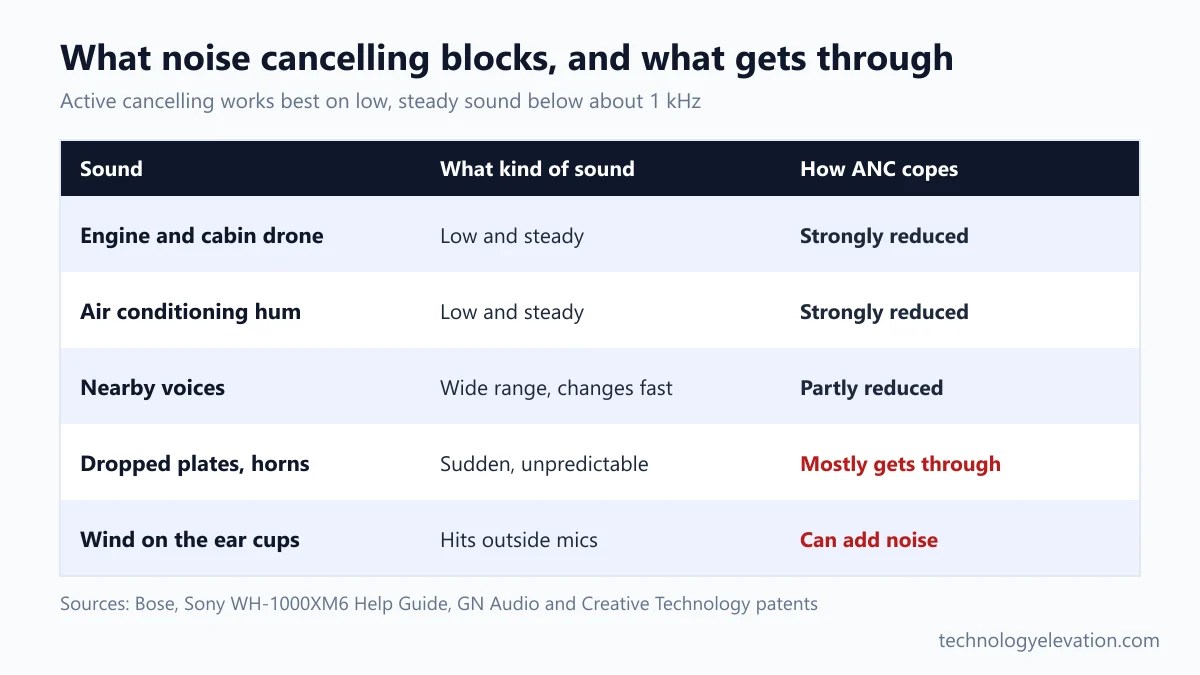
Switch on noise cancelling in a plane and the engine drone drops away in about a second. The flight attendant asking “chicken or pasta?” still comes through. So does the baby three rows back. That split is the whole story of how noise cancelling works, and it explains almost every complaint people have about it.
Headphones cut outside sound in two ways at once. The ear cushions or ear tips block sound physically, and electronics play a second sound that cancels the first. Bose puts it simply: noise cancelling uses microphones to detect ambient noise and digital processing to generate an opposing signal that reduces what you hear.
The idea is older than most people think. Paul Lueg was granted a US patent for a “process of silencing sound oscillations” on 9 June 1936. Bose sold the first commercially available active noise reducing headset to pilots in 1989.
Below: what passive and active cancelling each do, where the microphones sit, how adaptive ANC and transparency mode work, why voices leak through, what causes that odd “ear suck” feeling, and how to use noise cancelling safely.
How noise cancelling works: microphones, an opposite sound wave and a good seal
Noise cancelling works by measuring outside sound with small microphones, then playing a mirror-image sound wave through the speaker. Where a peak in the noise meets a trough in the anti-noise, the two cancel. A tight seal blocks the higher sounds the electronics miss.
Every active noise cancelling (ANC) headphone follows the same loop, many times a second:
- A microphone on the outside of the ear cup or earbud picks up the noise around you.
- A processor works out the shape of that sound wave.
- The processor creates the opposite wave, called anti-noise or antiphase sound.
- The speaker plays the anti-noise along with your music.
- A second microphone inside the cup or earbud listens for any noise that got through.
- The processor corrects the anti-noise and starts again.
Speed matters. When Apple launched the first AirPods Pro in 2019, it said their noise cancellation adapted the signal 200 times per second. Sony says the QN3 processor in its WH-1000XM6 is seven times faster than the chip in the previous model.
And you do not need music playing. Bose notes that active noise cancellation works independently of your audio, so you can wear a pair just for quiet on a train or in an open office.
Passive isolation blocks high sounds and active cancelling handles the low ones
Passive isolation is the physical barrier: ear cushions, ear tips and a snug fit. It works best on higher-pitched sound. Active cancelling is the electronic layer, and it works best on low, steady sound. Good noise cancelling headphones need both, because each covers the other’s weak spot.
Think of passive isolation as earplugs built into the headphones. Thick, sealed over-ear cushions are very good at muffling clatter, chatter and keyboard taps. They are poor at stopping the deep rumble of a bus engine, which passes straight through foam and plastic.
Active cancelling flips that. Sony’s help guide for the WH-1000XM6 says its noise cancelling works mainly on low-frequency noise, such as vehicle noise and indoor air conditioning, and reduces it rather than removing it completely.
A poor seal weakens both layers at once. Thick glasses arms, long hair under the cushions or ear tips one size too small all let sound leak in around the edge. Apple made the same point when it launched AirPods Pro 3, saying the foam-infused tips, now in five sizes including a new XXS, improve passive noise isolation.
One quick test: press the ear cups gently against your head while noise cancelling is on. If the world gets noticeably quieter, the fit is leaking.
Feedforward, feedback and hybrid ANC put the microphones in different places
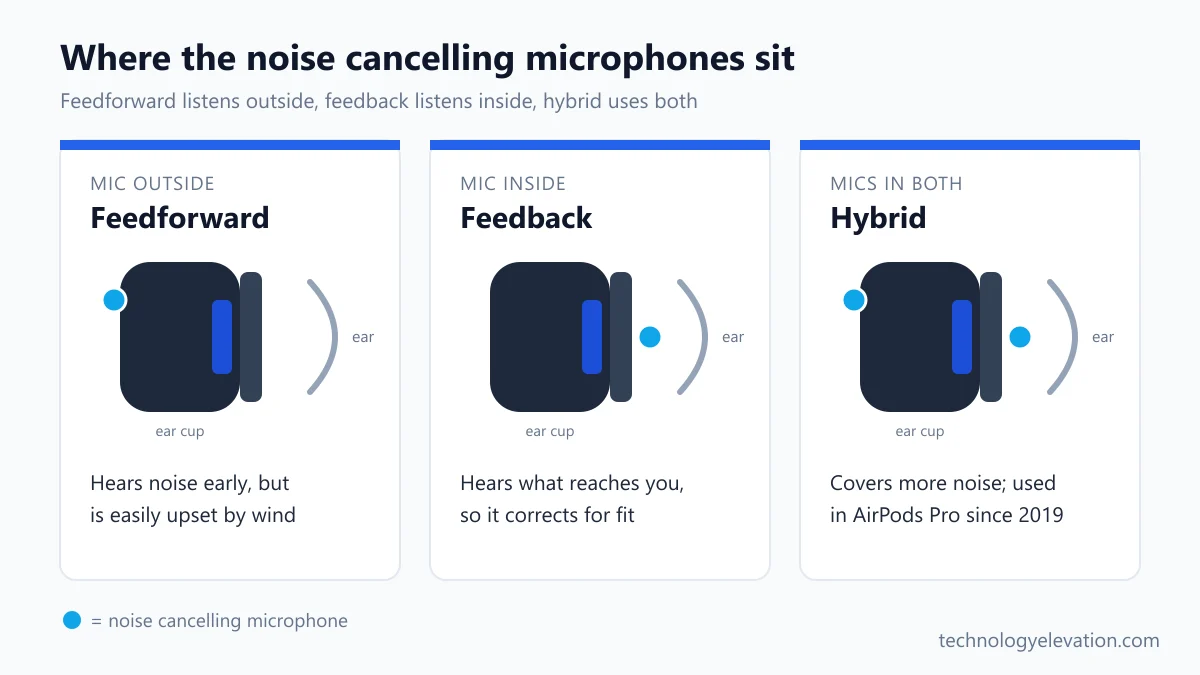
Feedforward ANC uses a microphone outside the ear cup to hear noise before it reaches you. Feedback ANC uses a microphone inside, near your ear, to hear what got through. Hybrid ANC uses both, and Apple has used that layout in AirPods Pro since 2019.
| Type | Where the mic sits | What it does well | Weak spot |
|---|---|---|---|
| Feedforward | Outside the ear cup or earbud | Reacts to noise early, before it reaches your ear | Cannot hear how the headphones actually sit on you; picks up wind |
| Feedback | Inside, between the speaker and your ear | Hears the noise you actually hear, so it corrects for fit | Has to cancel noise that is already in the cup |
| Hybrid | Both outside and inside | Covers a wider range of noise and adjusts to fit | More microphones and processing use more battery |
Apple described the first AirPods Pro exactly this way: one outward-facing microphone detects external sound, and a second inward-facing microphone listens toward the ear and cancels the remaining noise. The headset maker GN Audio describes the same split in its patents, with feedforward microphones on the outer side of the earphone and feedback microphones inside it.
Premium headphones now use far more than two. Sony’s WH-1000XM6 has 12 microphones for noise cancelling, which Sony says is 1.5 times more than the WH-1000XM5. More microphones give the processor a clearer picture of where the noise is coming from.
Wind is the classic feedforward problem. A gust hitting an outside microphone sounds like a roar to the processor. Sony’s help guide warns that wind noise may increase in Ambient Sound Mode, and suggests turning that mode’s level down in the Sony Sound Connect app when it does.
Adaptive noise cancelling retunes itself to your fit and surroundings
Adaptive noise cancelling constantly measures how the headphones sit on your head and how loud the room is, then changes the anti-noise to match. Fixed ANC uses one setting for everyone. Adaptive ANC is why a new pair can sound quieter on you than on a friend.
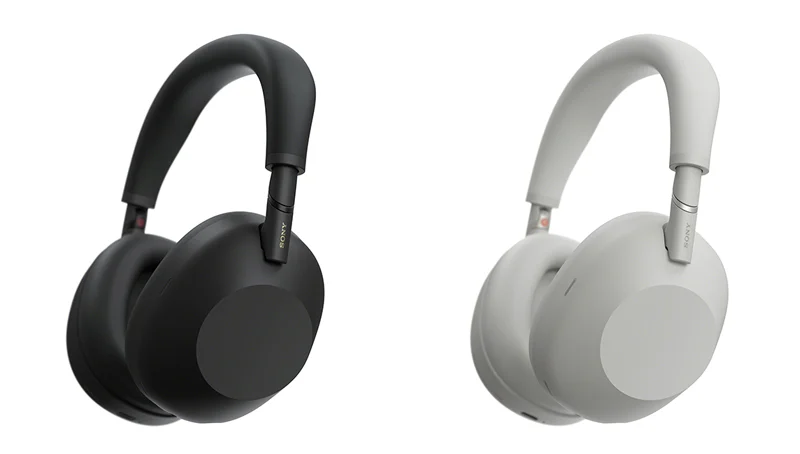
Each maker gives the feature its own name. Sony’s WH-1000XM6 uses an Auto NC Optimizer, which Sony says automatically measures the headset’s wearing condition and usage environment. Its launch release adds that the system adjusts to external noise and air pressure, which helps on a plane as cabin pressure changes.
Apple’s version goes further. Adaptive Audio blends Active Noise Cancellation and Transparency mode, letting in more or less outside sound as conditions change. Apple lists it on AirPods Pro 2, AirPods Pro 3, AirPods 4 with ANC, both AirPods 5 models and AirPods Max 2. Picking between those comes down to fit and budget, which the comparison of which AirPods to buy lays out model by model.
Bose’s QuietComfort Ultra Headphones (2nd Gen), on sale since 2 October 2025 at $449, use CustomTune, which Bose says adapts the sound to the shape of your ears and adjusts automatically each time you put them on.
Sony warns of one side effect: because the system keeps adjusting, the noise cancelling effect may fluctuate. A brief “breathing” change in the background hiss as you walk into a louder room is normal.
Transparency mode uses the same microphones to let the world back in
Transparency mode, also called ambient or aware mode, uses the outside microphones to pipe surrounding sound into your ears on purpose. You hear traffic, announcements and people talking without taking the headphones off. Good versions also keep your own voice sounding natural.
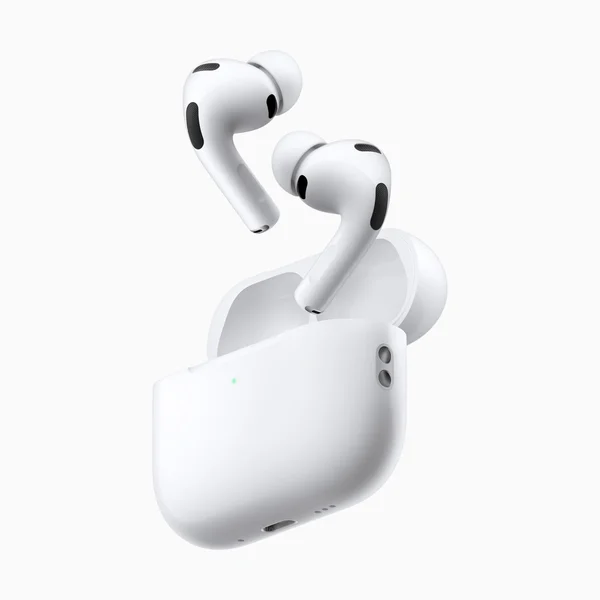
Think of it as noise cancelling in reverse. Instead of playing anti-noise, the processor plays a cleaned-up copy of the outside world. Apple said at the 2019 AirPods Pro launch that Transparency mode was designed so a user’s own voice sounds natural while audio keeps playing.
Apple now lets you customise it in detail. On an iPhone, go to Settings, Accessibility, Audio & Visual, Headphone Accommodations, then Customize Transparency. There you can change amplification, balance and tone, turn on Ambient Noise Reduction, or switch on Conversation Boost to focus on the person in front of you.
Conversation Awareness is the related trick. Start talking, and supported AirPods lower your media volume and enhance voices in front of you, then turn the volume back up when you stop.
Sony’s version comes with a practical warning. Its help guide says that with Ambient Sound Mode on, fingers or hair touching the external microphones can make a loud sound. Adjust the cups by the headband, not the outside of the cups.
Voices and sudden noises get through because ANC works best below about 1 kHz
Noise cancelling struggles with voices because speech changes quickly and spreads across a wide range of pitches. ANC is most effective below about 1 kHz, a low-to-middle pitch. Above that, the anti-noise has to line up almost perfectly, so makers deliberately roll the cancelling off.
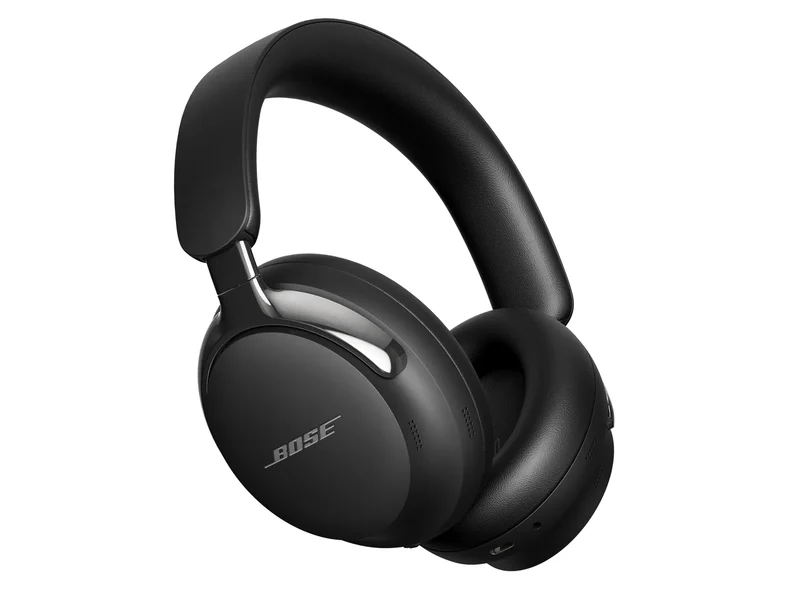
Patents from two different audio companies give the same figure. A GN Audio patent says active noise cancelling is generally most effective below about 1 kHz. A Creative Technology patent says manufacturers commonly limit the cancellation range to frequencies below 1 kHz.
The physics is about wavelength. A 100 Hz engine hum has a wavelength of about 3.4 metres, so a tiny delay in the anti-noise barely matters. At 1 kHz, the wavelength shrinks to about 34 cm. A small timing error there no longer cancels the noise. It can even add to it.
Bose sums up the result on its own explainer page: voices are harder to cancel than steady background noise because they change quickly and cover a wider range of sound, and some speech may still come through, especially nearby conversation. That is where the passive seal earns its keep.
Sudden sounds are hard for a different reason. A dropped plate or a car horn arrives before the system can predict it. In Aware Mode, Bose’s QuietComfort Ultra Headphones (2nd Gen) shift their noise cancelling more gradually when they react to sudden noise spikes, which avoids a jarring jump in the background sound.
The eardrum suck feeling is usually not real air pressure
The “eardrum suck” pressure feeling with noise cancelling on is mostly a perception, not real air pressure. Independent measurements found no pressure difference when ANC switched on. The feeling links to how sharply the headphones cut low sound, and lowering the ANC level usually helps.
The sensation is easy to describe: a plugged, underwater feeling, like a plane descending or a fast lift. Some people never notice it. Some get used to it after a while. A few find it uncomfortable enough to switch ANC off.
Audio writer Brent Butterworth built a pressure test rig for SoundStage! Solo that could detect a light finger tap on an ear cup, and it showed no pressure change when ANC was toggled. The headphone engineer he consulted put it down to the sudden loss of low sound your ears normally hear, made stronger in models whose cancelling drops off steeply.
Earbuds can add a real, physical version on top. Pushing a sealed tip into your ear canal traps a little air. Apple designed AirPods Pro with a vent system to equalise pressure, which it said minimised the discomfort common in other in-ear designs.
If the feeling bothers you, try these in order:
- Lower the noise cancelling strength in the headphone app instead of using the maximum setting.
- Switch to an adaptive mode, which uses less cancelling in quieter rooms.
- Try a different ear tip size, or reseat over-ear cushions so they surround the ear rather than press on it.
- Turn ANC on after you sit down, not while you are moving between loud and quiet places.
Pain, dizziness or ringing that lasts after you take the headphones off is a different matter. See a doctor rather than adjusting settings.
Noise cancelling costs battery life, about 10 hours on Sony’s flagship
Running the microphones and processor for ANC uses power, so battery life drops when it is on. On the Sony WH-1000XM6, Sony lists up to 30 hours of music with noise cancelling on and up to 40 hours with it off, over AAC or SBC.
Other processing costs battery too. Bose rates the QuietComfort Ultra Headphones (2nd Gen) at up to 30 hours in Quiet and Aware modes, falling to 23 hours with its Immersive Audio spatial mode on. Spatial audio needs its own share of processing power.
Earbuds run much shorter because the batteries are tiny. Apple lists up to five hours with ANC for the AirPods 5 with Wireless Charging Case, with the case topping them up between sessions.
Codec choice matters too. Sony’s table drops to 26 hours with noise cancelling on when you stream in its high-resolution LDAC format. If a long flight is the goal, the standard codec gets you further. Full battery figures for each current pair sit in the list of the best noise cancelling headphones.
Noise cancelling is safe for your ears, with three limits
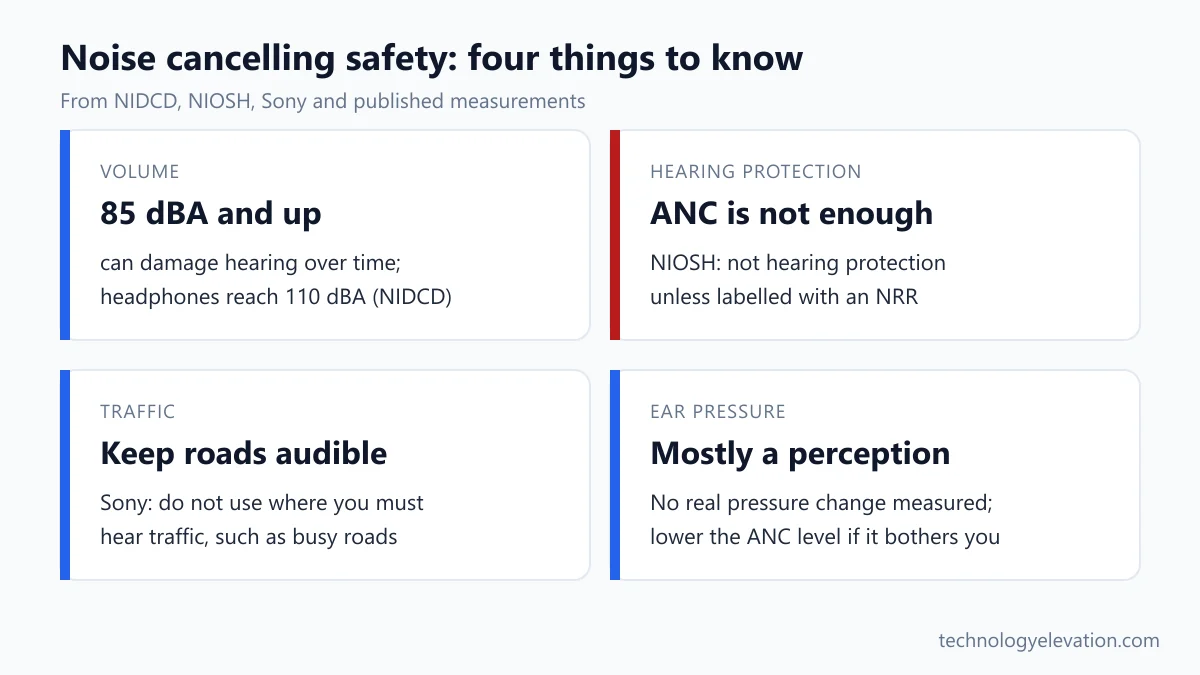
Noise cancelling headphones do not harm your hearing, and they can help, because you no longer turn the volume up to drown out an engine. The limits: they are not certified hearing protection, loud volume still causes damage, and blocking traffic sounds is a real risk outdoors.
First, volume. The US National Institute on Deafness and Other Communication Disorders says sounds at or above 85 dBA can damage hearing over time, that headphones can reach 110 dBA at full volume, and that 110 dBA can damage hearing after about 2 minutes. ANC helps here only if you actually use the quiet to turn the volume down.
Second, hearing protection. NIOSH, the US workplace safety agency, says active noise cancellation in headphones or earbuds should not be considered hearing protection unless the product is labelled with a Noise Reduction Rating (NRR). Mowing the lawn or running a table saw calls for rated earmuffs or plugs.
Third, awareness. Sony’s help guide tells owners not to use its headphones where it would be dangerous not to hear ambient sound, such as roads with car and bicycle traffic. Transparency mode helps, but it is still a microphone feed, and wind can swamp it.
Apple adds one useful safeguard. Loud Sound Reduction on AirPods Pro 2, AirPods Pro 3 and AirPods Max 2 reduces exposure to loud environmental noise in Transparency and Adaptive modes. Leave it on.
Open-ear and bone conduction headphones suit runners and cyclists better than ANC
If you need to hear cars, bikes and people around you, open-ear or bone conduction headphones are a better choice than noise cancelling. They leave your ear canal open, so outside sound reaches you naturally. The trade-off is that they block almost nothing on a plane or train.
The two designs work in different ways. Bone conduction sends vibrations through your cheekbones, while air-conduction open-ear models aim a small speaker at your ear canal. The full comparison of open-ear vs bone conduction headphones covers leakage and safety for each.
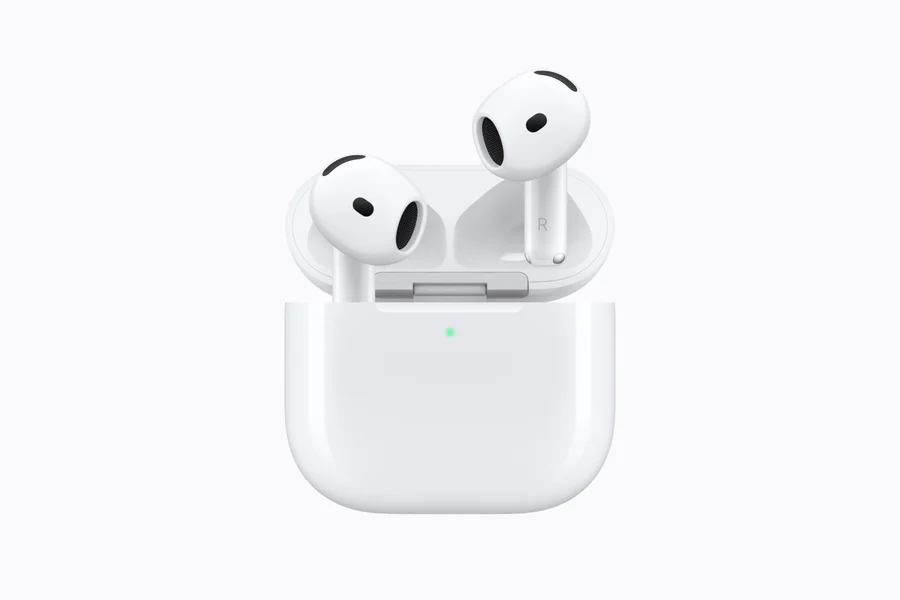
The line is blurring. Apple launched AirPods 5 in September 2026 with what it calls open-ear active noise cancellation, claiming they remove up to 50 percent more noise than AirPods 4 with ANC. Without a sealed tip, though, no open design matches the quiet of a sealed over-ear pair.
Many runners keep two pairs: a set of open-ear earbuds for the road and noise cancelling headphones for commuting and travel.
Five checks for getting the most from noise cancelling
To get the most from noise cancelling, start with the fit, then tune the ANC level and modes in the app, and match the headphone type to where you use it. Over-ear pairs give the deepest quiet. Earbuds win on size and for sleeping on a plane.
- Get the seal right. Run the fit test in the app if it has one, and try every ear tip size before you judge the ANC.
- Update the firmware. Makers improve their noise cancelling and transparency algorithms through updates.
- Use adaptive mode by default. Save maximum ANC for planes, trains and loud offices.
- Set up a quick switch. Map a button or a long press to jump to transparency for announcements and conversations.
- Pick the right type for the job. Over-ear for travel, earbuds for portability, open-ear for running and cycling.
Call quality is a separate skill. The same microphones that cancel noise also try to clean up your voice for the other person, and some pairs do it far better than others. If you take a lot of calls, look at earbuds for making phone calls alongside pure ANC performance.
Travellers who need something that packs flat can look at noise cancelling folding headphones. For the strongest cancelling at every budget, compare the current noise cancelling headphones from Sony, Bose, Apple and others.
Frequently asked questions about noise cancelling
How does noise cancelling work in simple terms?
Noise cancelling headphones listen to outside sound with small microphones and play the opposite sound wave through their speakers. The two waves cancel each other out. Ear cushions or ear tips block the higher sounds that the electronics miss.
What is the difference between passive and active noise cancelling?
Passive noise cancelling is physical blocking from ear cushions, ear tips and a tight fit, and it works best on higher sounds. Active noise cancelling uses microphones and anti-noise to reduce low, steady sounds such as engine drone. Most good headphones combine both.
Why can I still hear voices with noise cancelling on?
Voices change quickly and cover a wide range of pitches, while active noise cancelling works best below about 1 kHz. The higher parts of speech are left to the passive seal, so nearby conversation often comes through more quietly but still clearly.
Why does noise cancelling make my ears feel pressure?
The pressure feeling is mostly a perception caused by the sudden loss of low-frequency sound, not real air pressure. Lowering the noise cancelling level, using an adaptive mode or changing ear tip size usually helps. See a doctor if pain or ringing continues.
Is noise cancelling bad for your ears?
No. Noise cancelling does not damage hearing and can protect it by letting you listen at a lower volume. Volume is the risk: the NIDCD says sounds at or above 85 dBA can damage hearing over time.
Do noise cancelling headphones work without music?
Yes. Active noise cancelling works whether or not audio is playing, so you can wear the headphones just to quieten a flight, train or office. Battery life is the only cost.
Are noise cancelling headphones the same as hearing protection?
No. NIOSH says active noise cancelling headphones and earbuds should not be considered hearing protection unless they are labelled with a Noise Reduction Rating. Use rated earmuffs or earplugs for power tools, mowers and loud workplaces.
Last checked and sources
Last checked on 19 November 2026 by Haris Khan. We compared the makers’ own explanations, help guides and launch releases with US health agency guidance and published patents, and kept only what those sources state.
- Bose: How do noise cancelling headphones work (bose.com), QuietComfort Ultra Headphones (2nd Gen) launch release and product page, Bose company timeline (1986 and 1989)
- Sony: WH-1000XM6 Help Guide (What is noise canceling, Auto NC Optimizer, Ambient Sound Mode, operating time) and WH-1000XM6 launch release
- Apple: AirPods Pro launch release (2019), AirPods Pro 3 launch release (2025), AirPods 5 launch release (2026), Apple Support articles on Adaptive Audio and Transparency mode
- US National Institute on Deafness and Other Communication Disorders: How Loud Is Too Loud
- NIOSH (CDC): Provide Hearing Protection
- US patents 2,043,416 (Paul Lueg, 1936), 7,177,433 (Creative Technology) and 10,074,355 (GN Audio)
- SoundStage! Solo: eardrum suck measurement feature by Brent Butterworth
We update this guide when headphone makers change how their noise cancelling, transparency or safety features work.


GIPHY App Key not set. Please check settings