

 Abdullah Kabeer
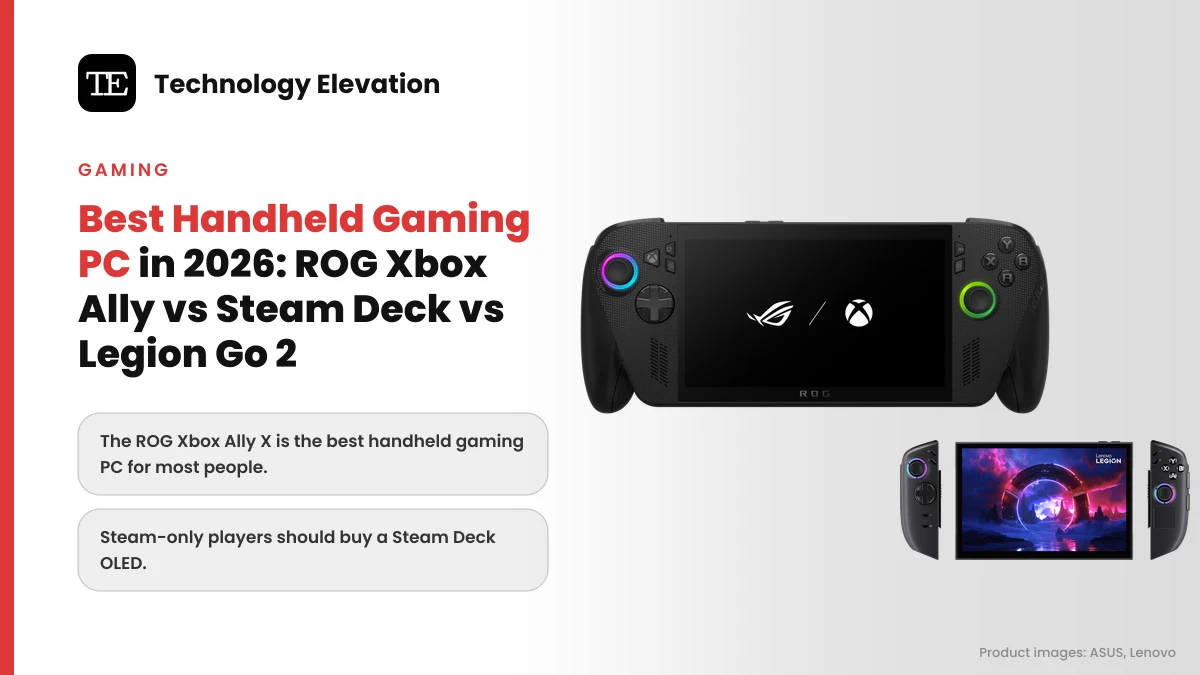
Walk past any airport gate this winter and you will see at least one person hunched over a chunky handheld with glowing sticks, playing a game that used to need a desk. Picking the best handheld gaming PC used to be easy. You bought a Steam Deck and got on with it. In 2026 the choice is harder, and a lot more expensive.
Microsoft and ASUS now sell three Xbox-branded handhelds. Lenovo has a big 8.8-inch OLED model with detachable controllers, MSI has a new Intel chip that tops the speed charts, and Valve’s Steam Deck is still the one most people mean when they say “handheld PC”. Nintendo’s Switch 2 sits off to the side as the console alternative.
Then came the price rises. Valve raised the Steam Deck OLED from $549 to $789 in May 2026, blaming component costs, and Nintendo followed with its own Switch 2 price revision, which moved the console from $449.99 to $499.99 on September 1, 2026. Memory chips got pricier across the industry, and handhelds felt it hardest.
So this guide does one job: match the right handheld to the games you already own, the operating system you want and the money you are willing to spend on a holiday gift.
The best handheld gaming PC for most people is the ROG Xbox Ally X
The ROG Xbox Ally X is the best handheld gaming PC for most people. It pairs AMD’s Ryzen AI Z2 Extreme chip with 24GB of memory, a 1TB SSD and an 80Wh battery, runs every Windows store, and launched at $999.99. Steam-only players should buy a Steam Deck OLED.
Every pick, by the job it does best:
- Best overall: ASUS ROG Xbox Ally X
- Best for Steam libraries: Valve Steam Deck OLED
- Best cheaper Windows handheld: ASUS ROG Xbox Ally
- Best OLED Windows handheld: ASUS ROG Xbox Ally X20
- Best big screen: Lenovo Legion Go 2
- Fastest handheld: MSI Claw 8 EX AI+
- Best console alternative: Nintendo Switch 2
| Model | Software | Screen | Battery | Storage | Launch or list price |
|---|---|---|---|---|---|
| ROG Xbox Ally X | Windows 11 | 7 in, 1080p, 120Hz IPS | 80Wh | 1TB | $999.99 |
| Steam Deck OLED | SteamOS | 7.4 in, 1280 x 800, 90Hz OLED | 50Wh | 512GB or 1TB | $789 or $949 |
| ROG Xbox Ally | Windows 11 | 7 in, 1080p, 120Hz IPS | 60Wh | 512GB | $599.99 |
| ROG Xbox Ally X20 | Windows 11 | 7.4 in, 1080p, 120Hz OLED | 80Wh | 1TB | $1,299.99 |
| Lenovo Legion Go 2 | Windows 11 or SteamOS | 8.8 in, 1920 x 1200, 144Hz OLED | 74Wh | Up to 2TB | From $1,199 (SteamOS, Lenovo estimate) |
| MSI Claw 8 EX AI+ | Windows 11 | 8 in, 1920 x 1200, 120Hz IPS | 80Wh | 1TB | $1,799.99 |
| Nintendo Switch 2 | Nintendo system | 7.9 in, 1080p, up to 120Hz LCD | 2 to 6.5 hours (Nintendo) | 256GB | $499.99 |
Black Friday will knock money off some of these, especially the older Windows models. Treat the prices above as the ceiling, not what you should pay in late November.
ROG Xbox Ally X: the best handheld gaming PC overall
The ROG Xbox Ally X wins because it does the most with the fewest headaches. Its Z2 Extreme chip is near the top of the class, the grips suit long sessions, and Windows runs Game Pass and every PC store. The screen is the weak spot.
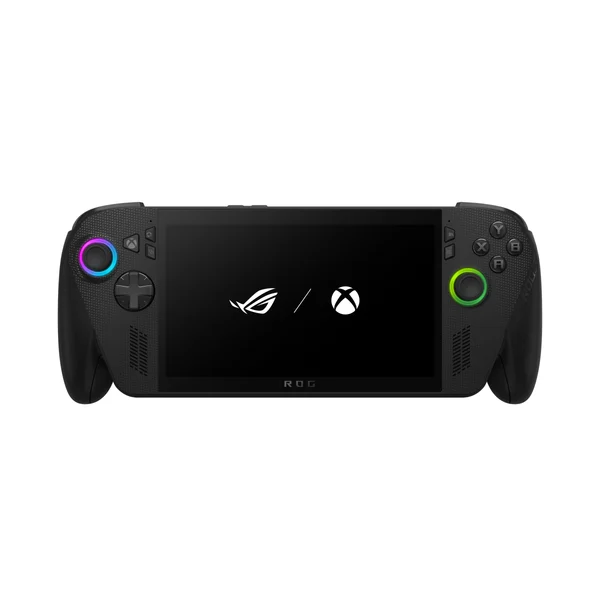
Key specs: AMD Ryzen AI Z2 Extreme (8 cores, 16 threads), 24GB LPDDR5X memory, 1TB PCIe 4.0 M.2 2280 SSD, 7-inch 1920 x 1080 IPS screen at 120Hz and 500 nits, 80Wh battery, one USB4 port (Thunderbolt 4 compliant) plus one USB 3.2 Gen 2 port, UHS-II microSD reader, 715 g. Launched October 16, 2025, at $999.99.
Microsoft and ASUS built this one together, and you notice it the moment it boots. Instead of a cramped Windows desktop, it opens straight into the Xbox full screen experience. Microsoft says that mode cuts background activity and defers non-essential tasks so more of the chip goes to the game. Your library from Xbox, Game Pass and other PC stores sits in one list.
The grips are the other big win. They are shaped like an Xbox controller rather than a flat slab, so your hands settle in naturally. On a three-hour train ride that matters more than a few extra frames per second.
Storage is easy to grow. The SSD is a full-size M.2 2280 drive, the same type desktop PCs use, so a 2TB upgrade costs less and is easier to find than the tiny 2230 drive inside a Steam Deck. A USB4 port lets you plug into a monitor or a dock.
The catch is the screen. A 7-inch IPS panel looks fine, but it is plainly duller than the OLED on a Steam Deck or the X20 sitting next to it on the shelf. And $999.99 is a lot for a device whose real job is playing games you probably already own.
Buy it if you play on Windows, pay for Game Pass or keep games spread across several PC stores.
Buy the ROG Xbox Ally X now on Amazon
Steam Deck OLED: the best handheld for Steam libraries
The Steam Deck OLED is still the best handheld if most of your games live on Steam. SteamOS feels like a console, sleep and resume work instantly, and the 7.4-inch HDR OLED screen looks better than any IPS rival. The 2026 price rise is the only real problem.
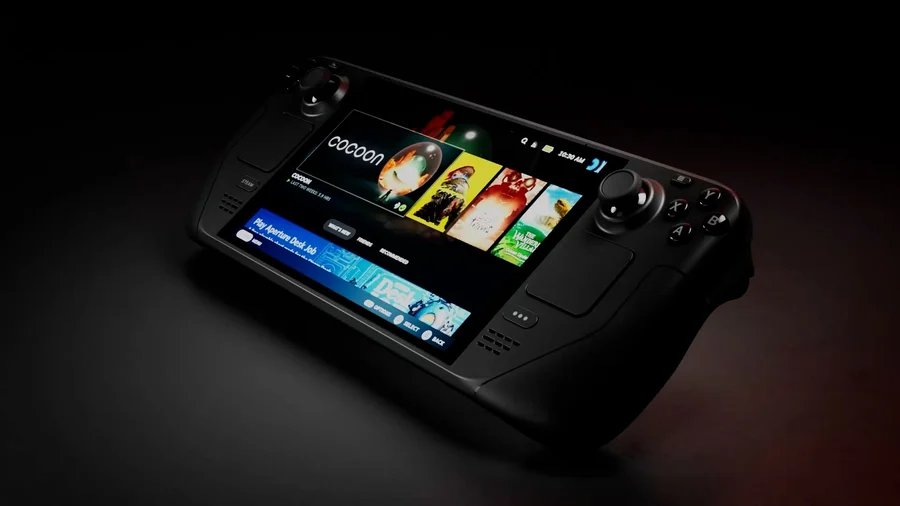
Key specs: custom AMD APU, 16GB LPDDR5 memory, 512GB or 1TB NVMe SSD, 7.4-inch 1280 x 800 HDR OLED at up to 90Hz with 1,000 nits peak HDR brightness, 50Wh battery, Wi-Fi 6E, about 640 g. Valve rates the battery at 3 to 12 hours of gameplay. List price: $789 (512GB) or $949 (1TB) since May 27, 2026, up from $549 and $649.
Valve’s software is the reason to buy it. Press the power button mid-boss fight, drop it in a bag, and pick up exactly where you left off later that evening. Windows handhelds have improved, but none get this right quite as reliably.
Valve’s Deck Verified badges help too. Every game in your Steam library shows whether it runs well on the Deck, so you know before you buy. Trackpads on both sides also make mouse-heavy strategy games playable, which Windows handhelds without trackpads struggle with.
But the value story changed this year. At $549 the Deck was an easy gift. At $789 it costs about $190 more than the ROG Xbox Ally and only about $210 less than the far faster ROG Xbox Ally X. Valve also stopped making the cheaper LCD model, so the OLED is now the only new Steam Deck. And some online games with strict anti-cheat software block Linux-based systems like SteamOS altogether.
Storage upgrades are possible, but fiddly. The internal drive is a small M.2 2230 module, and Valve describes it as not intended for end-user replacement. A fast microSD card is the easier answer for most owners.
Buy the Steam Deck OLED now on Amazon
ROG Xbox Ally: the best cheaper Windows handheld
The ROG Xbox Ally is the best Windows handheld for less money. It shares the Ally X’s comfortable body, 7-inch 120Hz screen and Xbox full screen experience, but uses a slower Ryzen Z2 A chip, 16GB of memory and a 60Wh battery. It launched at $599.99.
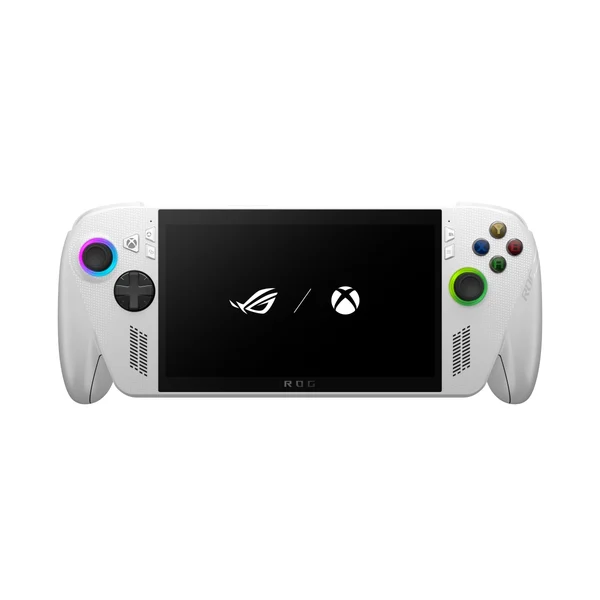
Key specs: AMD Ryzen Z2 A (4 cores, 8 threads), 16GB LPDDR5 memory, 512GB PCIe 4.0 M.2 2280 SSD, 7-inch 1920 x 1080 IPS screen at 120Hz, 60Wh battery, two USB 3.2 Gen 2 USB-C ports, UHS-II microSD reader, 670 g. Launch price: $599.99.
Think of it as the Ally X with a smaller engine. You get the same grips, the same software and the same aggregated game library. For indie games, older hits and Game Pass titles that are not too demanding, it is plenty.
The $400 gap to the Ally X is real money. Over a holiday season it can buy a year of games, a good headset and a case.
The trade-off is performance on new big-budget games, where the Z2 A runs out of breath faster than the Z2 Extreme. You also lose USB4, so there is no Thunderbolt-class port for fast docks. And the battery is 60Wh instead of 80Wh. Pair it with a pair of gaming earbuds rather than a bulky headset and it makes a great travel machine.
Buy the ROG Xbox Ally now on Amazon
ROG Xbox Ally X20: the best OLED Windows handheld
The ROG Xbox Ally X20 is the Ally X with the screen it should have had. It adds a 7.4-inch 1080p OLED panel rated at 1,400 nits peak HDR, TMR joysticks and a faster microSD Express slot, with the same chip. It launched October 15, 2026, at $1,299.99.
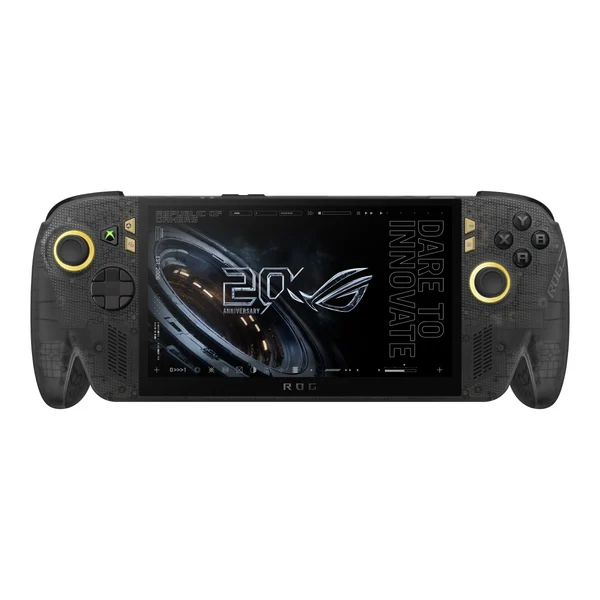
Key specs: AMD Ryzen AI Z2 Extreme, 24GB LPDDR5X memory, 1TB PCIe 4.0 M.2 2280 SSD, 7.4-inch 1920 x 1080 OLED at 120Hz with 30 to 120Hz variable refresh, 600 nits SDR and 1,400 nits HDR, 80Wh battery, USB4 with DisplayPort 2.1, microSD Express reader, 756 g. Launch price: $1,299.99, or $2,499.99 for a bundle with ROG XREAL R1 AR glasses.
ASUS made the X20 to mark 20 years of its ROG brand, and you can tell from the translucent shell with gold accents. The screen is the real reason to care. OLED panels light each pixel on its own, so dark scenes look properly black instead of grey.
The TMR joysticks are a quiet upgrade. TMR stands for tunnelling magnetoresistance, a magnetic sensor that avoids the worn contacts that cause stick drift. ASUS says it is more precise than the Hall effect sticks on many rivals.
The catch is price. You pay $300 more than the Ally X for the same performance, plus 41 g of extra weight. If games matter more than the screen, the Ally X on a holiday sale is the smarter buy.
Buy the ROG Xbox Ally X20 now on Amazon
Lenovo Legion Go 2: the best big screen, if you can find one
The Lenovo Legion Go 2 has the biggest and best screen here: an 8.8-inch 1920 x 1200 OLED at up to 144Hz. Its controllers detach like a Switch, and a kickstand props it on a tray table. The problem is patchy US stock and prices that keep moving.
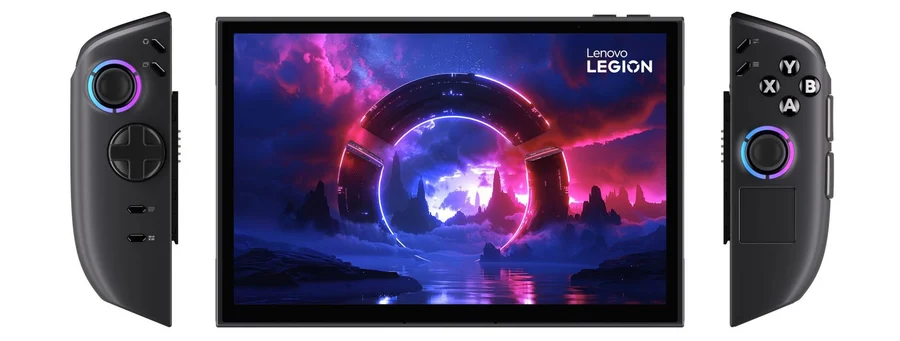
Key specs: up to AMD Ryzen Z2 Extreme, up to 32GB LPDDR5X memory, up to 2TB PCIe Gen 4 SSD plus microSD up to 2TB more, 8.8-inch WUXGA OLED with 30 to 144Hz variable refresh and HDR TrueBlack 1000, 74Wh battery, detachable TrueStrike controllers, kickstand, a USB4 port on the top and bottom, fingerprint reader in the power button. Lenovo estimated the SteamOS version at $1,199 when it announced it at CES 2026.
The screen is the headline. At 8.8 inches, text in strategy games and RPG menus is noticeably easier to read than on a 7-inch handheld. Pop the controllers off, flip out the kickstand and you have a tiny gaming monitor on a plane tray.
Lenovo also offers a choice most rivals do not: Windows 11 or SteamOS on the same hardware. Lenovo’s CES 2026 announcement called the SteamOS version its most powerful handheld to ship with Valve’s software.
Buying one has been the hard part. Lenovo’s store listed the 2TB Windows model at $2,849.99 in April 2026, and the SteamOS version has been slow to reach US shelves since its planned June launch. Check what the configuration includes before you pay, because a Ryzen Z2 model is a lot slower than a Z2 Extreme one.
Buy it if screen size beats everything else for you, and only at a price close to the Ally X.
Buy the Lenovo Legion Go 2 now on Amazon
MSI Claw 8 EX AI+: the fastest handheld, at laptop money
The MSI Claw 8 EX AI+ is the fastest handheld gaming PC you can buy, and it costs like a gaming laptop. It is the first handheld with Intel’s Arc G3 Extreme chip, pairs it with 32GB of memory and an 80Wh battery, and launched at $1,799.99.
Key specs: Intel Arc G3 Extreme with Arc B390 graphics, 32GB LPDDR5X memory, 1TB PCIe 4.0 M.2 2280 SSD, 8-inch 1920 x 1200 IPS touchscreen at 120Hz, 80Wh battery, two Thunderbolt 4 ports, microSD reader, Wi-Fi 7, 785 g. Launched June 23, 2026, at $1,799.99.
PC Gamer calls it the fastest handheld it has measured, and Tom’s Hardware’s launch review praised its unmatched performance. If you want new releases to look their best on the go, this is the one.
The 8-inch 16:10 screen gives you a taller picture than the 16:9 panels on the Ally range, which helps with menus and maps. Two Thunderbolt 4 ports make docking simple.
The catch is obvious. At $1,799.99 it costs $800 more than the Ally X, and the screen is IPS, not OLED. At 785 g it is also 70 g heavier than the Ally X. For that money, plenty of buyers would be better off with thin and light gaming laptops that have bigger screens and keyboards.
Buy the MSI Claw 8 EX AI+ now on Amazon
Nintendo Switch 2: the best console alternative
The Nintendo Switch 2 is the better buy if you want a handheld for family games rather than a PC library. It has a 7.9-inch 1080p screen, a TV dock in the box, 256GB of storage, and now lists at $499.99. It cannot run PC games.
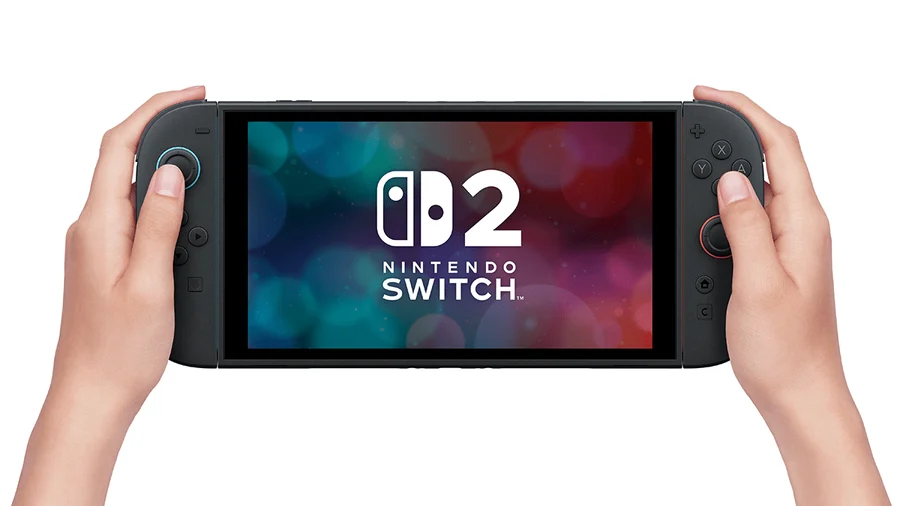
Key specs: 7.9-inch 1920 x 1080 LCD with HDR10 and variable refresh up to 120Hz, 256GB internal storage, microSD Express slot for cards up to 2TB, up to 4K output on a TV through the included dock, detachable Joy-Con 2 controllers, about 1.18 lb with controllers attached. Nintendo rates the battery at about 2 to 6.5 hours.
The Switch 2 does things a handheld PC still struggles with. Hand a Joy-Con to someone on the sofa and you are playing together in seconds. Drop it into the dock and the game moves to the TV without a setup screen.
Nintendo’s own games are the other reason. Mario, Zelda and Pokémon games are not released for Windows or SteamOS, so if those are the games the gift is for, no handheld PC replaces it.
The catch is that your PC library stays behind. Nothing from Steam or Game Pass runs on it. For a wider look at living room options, the comparison of the best gaming console for casual gamers covers PS5 and Xbox too.
Buy the Nintendo Switch 2 now on Amazon
Your game library decides the right handheld gaming PC
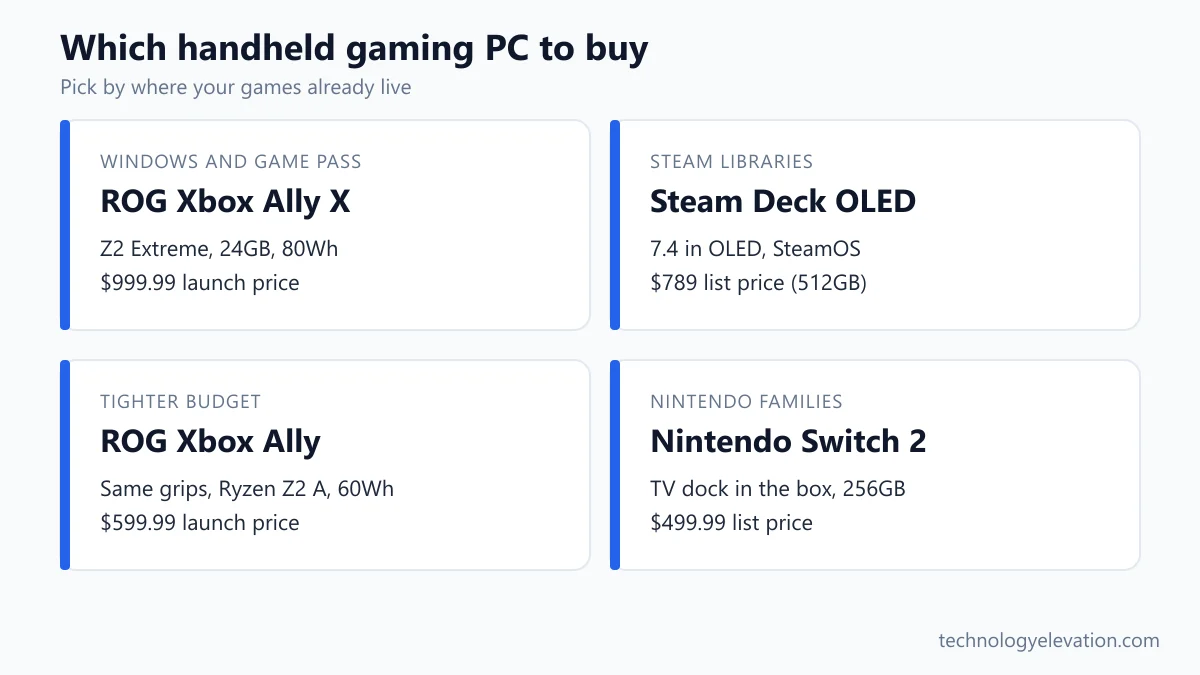
Choose a handheld gaming PC by where your games already live, then by screen, then by budget. Steam-heavy players suit SteamOS, Game Pass and multi-store players suit Windows, and Nintendo fans should buy a Switch 2. Battery capacity and storage come next.
- List your games. Open Steam, the Xbox app and any other launchers you use. If 90% of your library is on Steam, a SteamOS handheld is the simplest choice.
- Check the multiplayer games you care about. Some online games with strict anti-cheat do not run on SteamOS. Windows handhelds run them like a normal PC.
- Pick a screen. OLED (Steam Deck OLED, Ally X20, Legion Go 2) looks far better in dark scenes. An 8-inch or larger screen helps with small text.
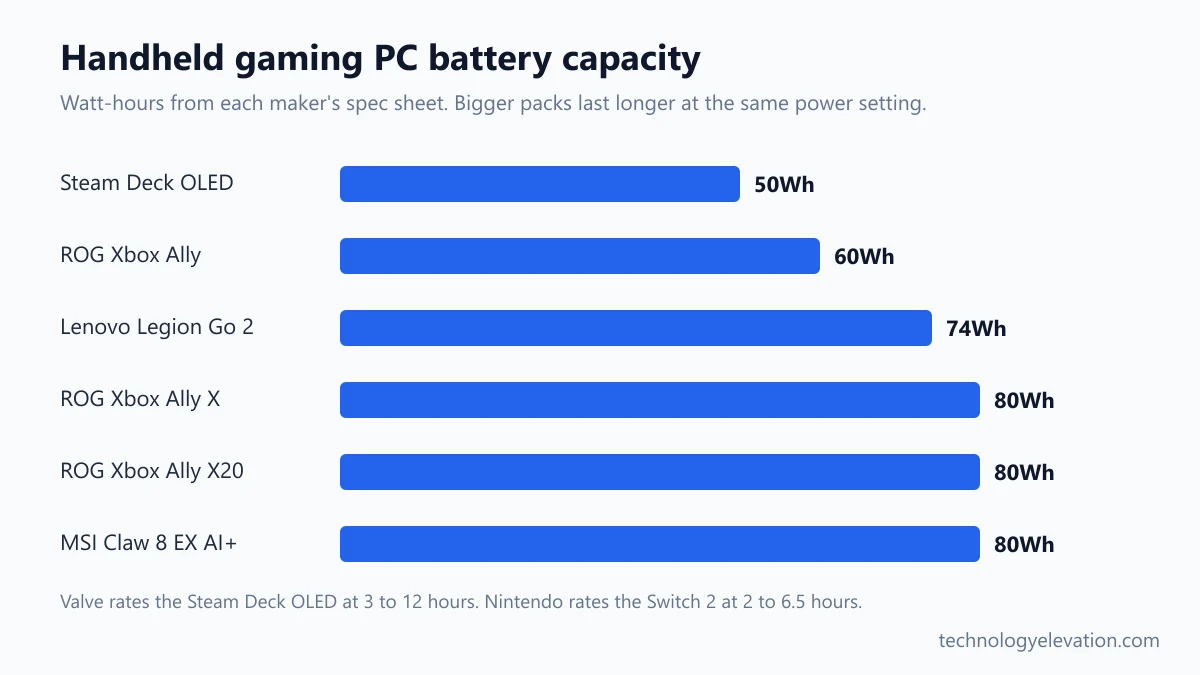
- Compare battery capacity, not only claims. An 80Wh pack lasts longer than a 50Wh one at the same power setting. Demanding games sit at the low end of every maker’s range.
- Check the storage type. A full-size M.2 2280 SSD is cheap and easy to upgrade. A 2230 drive or soldered storage limits you to memory cards.
- Feel the weight. The Steam Deck OLED weighs about 640 g and the Claw 8 EX AI+ weighs 785 g. That 145 g difference shows up an hour into a session.
- Set a real budget. Prices rose sharply in 2026. A discounted ROG Xbox Ally often makes more sense than stretching for a flagship, and if you mostly play at a desk, a gaming PC under $1,500 gives you far more power for the money.
Controls matter as well. If you play at a desk sometimes, a proper pad from the list of best PC controllers works with every handheld here over Bluetooth or USB.
Windows vs SteamOS comes down to game stores and convenience
Windows runs every PC game store and online game, including Game Pass, but takes more tinkering. SteamOS runs Steam games with console-like ease and fast sleep, but some anti-cheat games and non-Steam stores need workarounds or do not work at all.
Windows handhelds got a lot better with the Xbox full screen experience. Microsoft’s ROG Xbox Ally announcement describes it as a console-inspired mode that holds back background tasks so games get more resources. You still get the full Windows desktop when you need it, which is handy for mods, emulators and odd launchers.
SteamOS is built for one thing and does it well. Updates arrive through Steam, games show a Deck Verified rating, and cloud saves move between your desktop and the handheld without effort. The Lenovo Legion Go 2 is one of the few machines sold with either system.
A simple rule: if you would be annoyed to lose Game Pass, buy Windows. If you mostly play Steam games and hate fiddling, buy SteamOS.
Storage upgrades and docking turn a handheld into a home console
Most handheld PCs can plug into a TV and grow their storage. The Ally range and MSI Claw use standard M.2 2280 SSDs, the Steam Deck uses a smaller 2230 drive, and every model here takes a microSD card. USB4 and Thunderbolt ports make docking easiest.
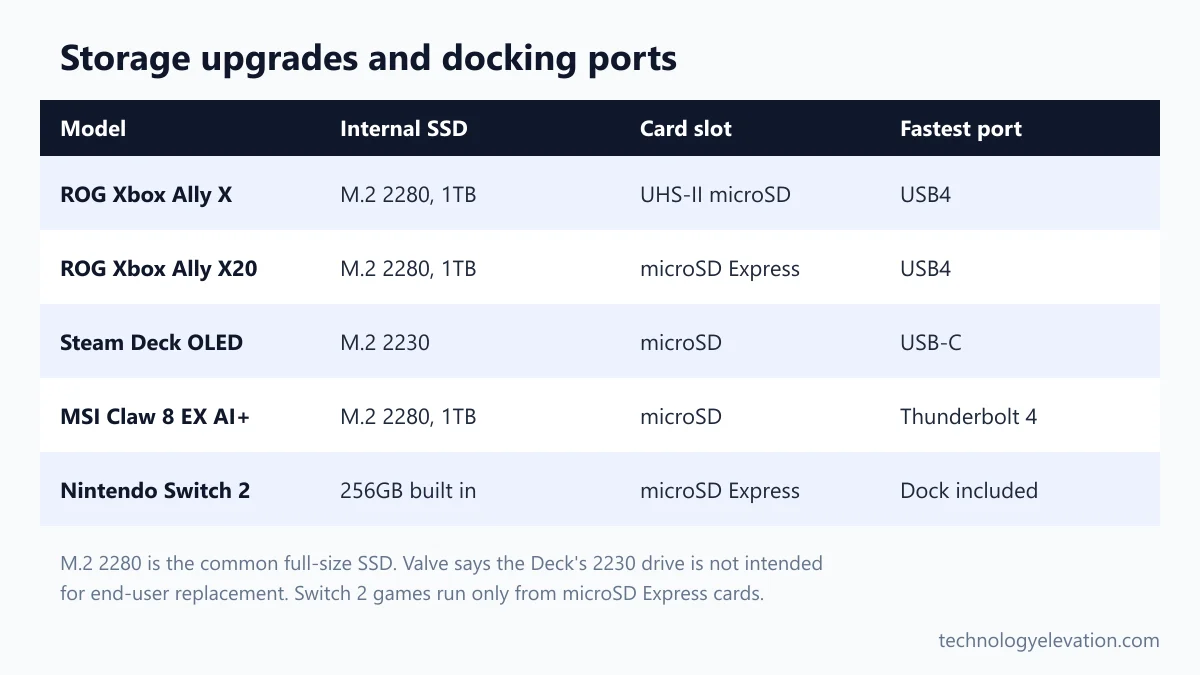
Storage fills faster than people expect. A single big-budget game can take more than 100GB, so a 512GB handheld fills up after a handful of installs. A microSD card is the painless fix. Newer machines such as the Ally X20 and Switch 2 support microSD Express, which is much faster than older cards. The Switch 2 accepts only microSD Express cards for games.
Docking is where handheld PCs become a second console. Connect a USB-C dock with HDMI, plug in a controller and the game shows up on the TV. A good model from the list of best USB-C hubs and docking stations does the job for Windows handhelds, and Valve sells its own Steam Deck Dock. The Switch 2 is the only device here with a dock in the box.
Ports decide how much a dock can do. The Ally X, Ally X20, Legion Go 2 and Claw 8 EX AI+ all have USB4 or Thunderbolt 4, which carry display, data and charging over one cable. The cheaper ROG Xbox Ally uses USB 3.2 Gen 2 ports, which still handle a TV and a charger fine.
Battery life claims are best treated as a range
Handheld PC battery life depends mostly on the game and the power mode. Valve rates the Steam Deck OLED at 3 to 12 hours and Nintendo rates the Switch 2 at 2 to 6.5 hours. Windows makers publish battery capacity instead, from 60Wh to 80Wh.
A big new game at full power sits at the bottom of every maker’s range, so plan on two to three hours. Lighter indie games, older titles and lower power modes stretch that a long way. The wide range in Valve’s claim is honest about exactly that.
Battery capacity is the fairest comparison between Windows models. The Ally X, Ally X20 and Claw 8 EX AI+ all carry 80Wh packs, the Legion Go 2 has 74Wh and the cheaper ROG Xbox Ally has 60Wh. Bring a USB-C power bank rated for laptop charging on long trips, and keep the charger for the hotel.
Frequently asked questions about handheld gaming PCs
What is the best handheld gaming PC right now?
The ASUS ROG Xbox Ally X is the best handheld gaming PC for most people. It has the Ryzen AI Z2 Extreme chip, 24GB of memory, a 1TB SSD and an 80Wh battery, and it launched at $999.99. Steam-focused players should consider the Steam Deck OLED.
Is the ROG Xbox Ally X better than the Steam Deck OLED?
The ROG Xbox Ally X is faster and runs Windows, so it plays Game Pass and every PC store. The Steam Deck OLED has the better screen and simpler software. Pick by where your games live.
Why did the Steam Deck OLED price go up?
Valve raised the Steam Deck OLED price on May 27, 2026, citing component costs. The 512GB model went from $549 to $789 and the 1TB model from $649 to $949. Valve also stopped making the cheaper LCD model.
Can you upgrade the storage on a handheld gaming PC?
Yes, on most models. The ROG Xbox Ally range and MSI Claw 8 EX AI+ use standard M.2 2280 SSDs. The Steam Deck uses a smaller 2230 drive that Valve does not intend owners to replace, so a microSD card is the easier option there.
How long does a handheld gaming PC battery last?
Battery life depends mostly on the game. Valve rates the Steam Deck OLED at 3 to 12 hours of gameplay and Nintendo rates the Switch 2 at about 2 to 6.5 hours. Windows handhelds such as the ROG Xbox Ally X use larger 80Wh batteries.
Can a handheld gaming PC connect to a TV?
Yes. Every handheld here can output to a TV or monitor over USB-C, usually through a dock with an HDMI port. Models with USB4 or Thunderbolt 4 ports handle display, charging and accessories over one cable.
Is the Nintendo Switch 2 a handheld gaming PC?
No. The Switch 2 is a hybrid console that plays Nintendo games, not PC games from Steam or Game Pass. It lists at $499.99 in the US and includes a dock for TV play.
Last checked and sources
Last checked on 15 November 2026 by Abdullah Kabeer. We compared every handheld using the makers’ published specs, launch announcements and official price notices, then checked launch prices against independent reviews and news reports. Models that are discontinued or hard to buy new are flagged in the text.
- ASUS ROG, official spec pages for the ROG Xbox Ally, ROG Xbox Ally X and ROG Xbox Ally X20 (rog.asus.com)
- Xbox Wire, ROG Xbox Ally pre-order announcement with US prices, September 25, 2025
- Valve, Steam Deck OLED tech specs (steamdeck.com)
- Lenovo StoryHub, Legion Go (8.8″, 2) announcement, September 5, 2025, and CES 2026 Legion announcement
- Nintendo of America, Switch 2 tech specs and price revision notice
- MSI Claw 8 EX AI+ launch reviews by Tom’s Hardware and Windows Central, June 23, 2026
- Steam Deck price change coverage by PocketGamer.biz and The Next Web; ROG Xbox Ally X20 pre-order coverage by T3; Legion Go 2 pricing coverage by GamesRadar+ and TweakTown
We update this buying guide when handhelds launch, change price or are discontinued.
Technology Elevation is reader-supported. As an Amazon Associate, we earn from qualifying purchases. When you buy through links on this page, we may earn a small commission at no extra cost to you.

GIPHY App Key not set. Please check settings